When crimes are solved and cases are closed, communities experience greater confidence in their justice systems, victims receive closure and potential offenders face meaningful deterrence. For Governors, clearance rates offer a data-driven approach to enhancing public safety while demonstrating tangible results to constituents. Higher clearance rates not only reflect more effective investigations but also contribute to safer communities and stronger trust between law enforcement and the public.
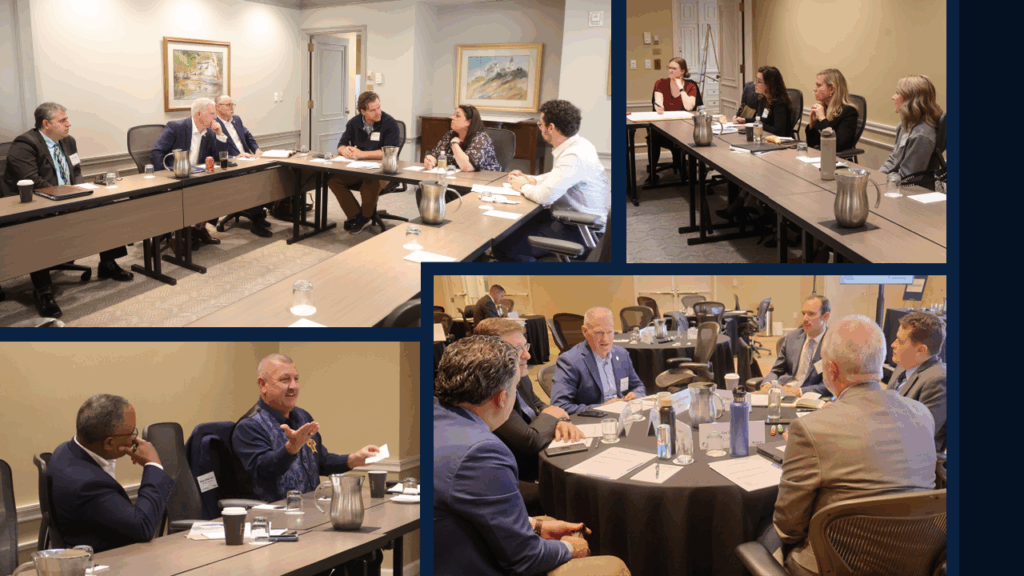
To assist Governors, NGA recently joined Arnold Ventures to welcome state teams from Colorado, North Carolina and Tennessee to Wilmington, Delaware, for a kick-off meeting of the Policy Academy to Improve Crime Clearance Rates. Teams heard from experts about using data to inform policy, leveraging capacity and staffing, harnessing forensic DNA tools to help solve crimes, and building state and local partnerships. Teams also held planning sessions to define their challenges and develop strategies for improving clearance rates in their states.
Delaware Governor Matt Meyer opened the event by honoring Delaware State Police Cpl. Matthew T. “Ty” Snook, who was shot and killed in the line of duty December 23, 2025. Governor Meyer also talked about the importance of law enforcement in providing public safety, thanking the assembled.
“I thank you for doing all the work. It’s easy for me to get up and talk about it, but if you’re not out there, and the people who serve with you are not out there doing the hard work, making sure we have the latest and greatest technologies, making sure officers and civilians are all operating within the law – if we’re not doing that, then we’re not going to have accountability, and we’re not going to have effective rule of law anywhere in this country.”
Governor Matt Meyer

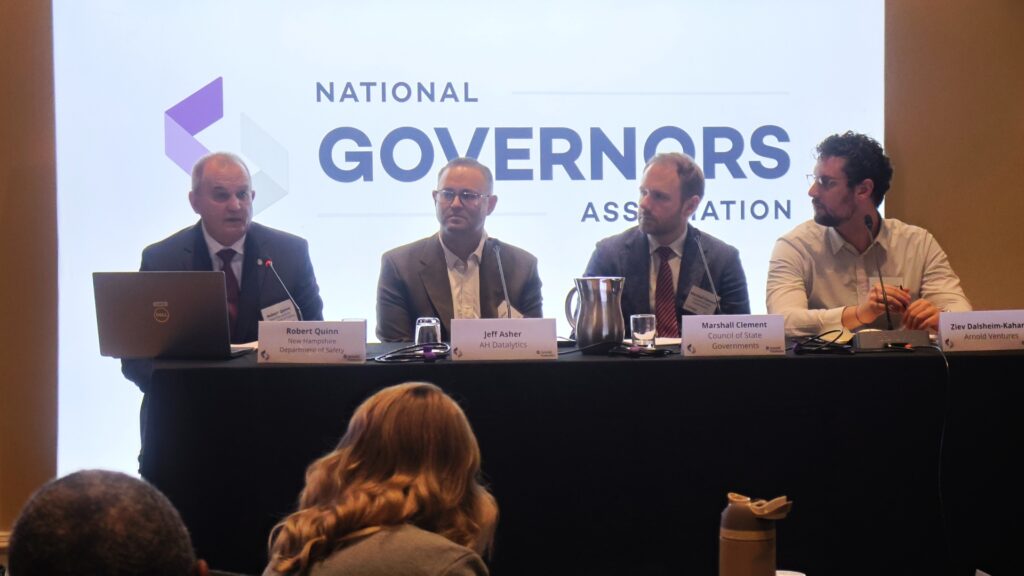
Overview of Crime Clearance Rates and Using Data to Inform Policies
Speakers
- Marshall Clement, Director, Council of State Governments Justice Center
- Jeff Asher, Co-Founder, AH Datalytics
- Robert Quinn, Commissioner, New Hampshire Department of Safety
- Moderator: Ziev Dalsheim-Kahane, Criminal Justice Policy Manager, Arnold Ventures
The meeting proceeded to review why clearance rates are important. Low solve rates reduce public trust and cooperation, leading to more violence. Research shows resource allocation is critical; cases with more investigators and faster evidence processing have substantially higher solve rates, and successful programs achieved major improvements through strategic investment rather than massive budgets. State leaders must set concrete solve rate targets, ensure adequate detective staffing, coordinate across agencies, prioritize non-fatal shootings equally with homicides, and recognize that deterrence depends on the likelihood of being caught—not punishment severity—making accountability the critical factor in crime prevention.
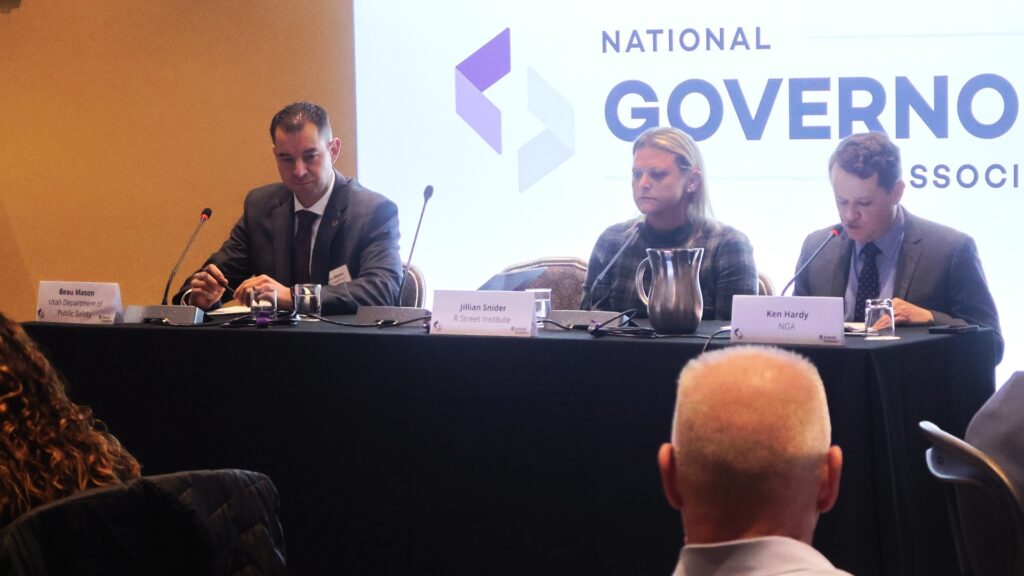
Leveraging Investigative Capacity & Staffing
Speakers
- Jillian Snider, Resident Senior Fellow, Criminal Justice and Civil Liberties, R Street Institute
- Beau Mason, Commissioner, Utah Department of Public Safety
- Moderator: Ken Hardy, Program Director, Public Safety and Legal Counsels, NGA Center for Best Practices
After robust lunch discussions, attendees gathered to discuss capacity and staffing. Clearance rates are primarily constrained by staffing capacity, not investigator effort, with detectives often carrying heavy caseloads which can prevent the ability for them to work during the critical first 48-72 hours of a new case. High-performing agencies address this through five strategies: specialized units, embedded civilian analysts, rapid ballistic intelligence, victim support and regional collaboration. However, modern investigations face new challenges including massive digital evidence storage needs and AI-generated misinformation. Pre-existing inter-agency relationships and training patrol officers in evidence collection are essential force multipliers when resources remain constrained.
Harnessing Forensic DNA Tools to Help Solve Crimes
Speakers
- John Roman, PhD, Director, Center on Public Safety and Justice, and Senior Fellow, Economics, Justice & Society, NORC at the University of Chicago
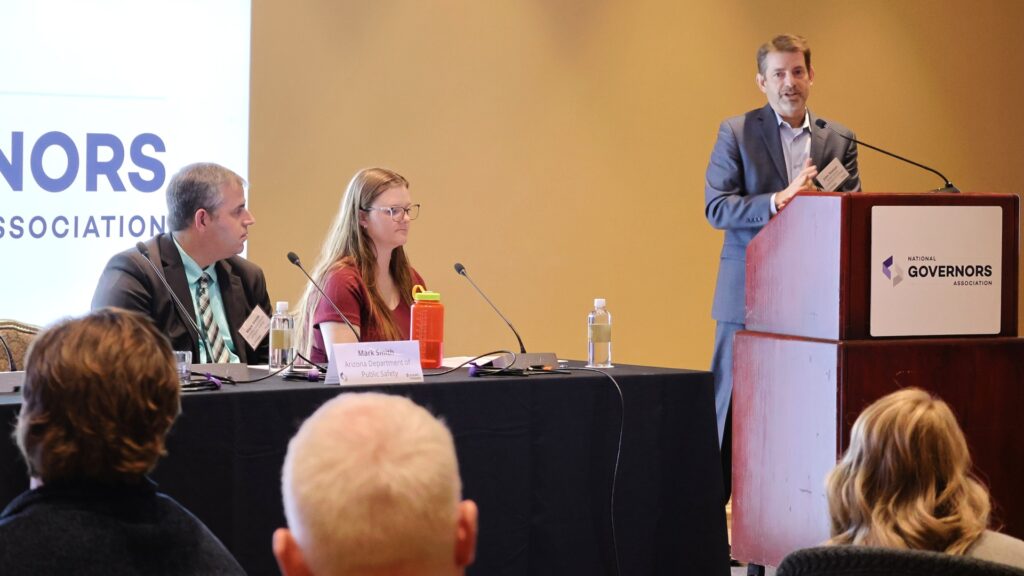
- Mark Smith, Crime Laboratory Manager, Arizona Department of Public Safety
- Moderator: Erin Daneker, Senior Policy Analyst,NGA Center for Best Practices
The next panel discussion focused on the transformative potential of DNA evidence in solving crimes. The speakers emphasized that property crimes deserve serious investigation due to their traumatic impact on victims and potential to escalate into violent encounters. Notably, suspects identified through DNA in burglary cases often had extensive criminal histories involving serious violent crimes. The panel highlighted rapid DNA technology, which can generate profiles in hours versus days, with impressive hit rates when matched against expanded databases. New quality assurance standards now allow rapid DNA profiles to be uploaded directly into national databases, streamlining the process. Key challenges discussed included securing consistent funding for equipment, supplies, and personnel, as well as building trust between laboratories and law enforcement agencies.
Building State and Local Partnerships
Speakers
- Joshua Bushweller, Secretary, Delaware Department of Safety and Homeland Security
- Josh Swindell, Lt. Colonel, Ohio State Highway Patrol
- Moderator: Erin Daneker, Senior Policy Analyst,NGA Center for Best Practices
The panel emphasized that effective state and local public safety partnerships require listening to communities and expanding collaboration beyond law enforcement to include private sector organizations, community groups, schools, and churches. Success depends on sharing intelligence, technology, and resources across jurisdictions while leveraging existing infrastructure like fusion centers rather than creating new systems. Real-time crime centers enhance strategic resource deployment by identifying crime patterns through data analysis. However, despite technological advances, building and maintaining strong relationships across all levels of public safety remains the cornerstone of effective partnerships. By ensuring local voices are heard and fostering multi-disciplinary cooperation, states can meaningfully support local jurisdictions in reducing and solving crime while achieving shared goals.

By bringing together state teams to examine staffing strategies, leverage forensic technologies and build stronger state-local partnerships, the Policy Academy provides Governors with the tools and collaborative framework needed to improve the criminal justice systems in their states. For more information on the Policy Academy, please contact Ken Hardy or Erin Daneker.