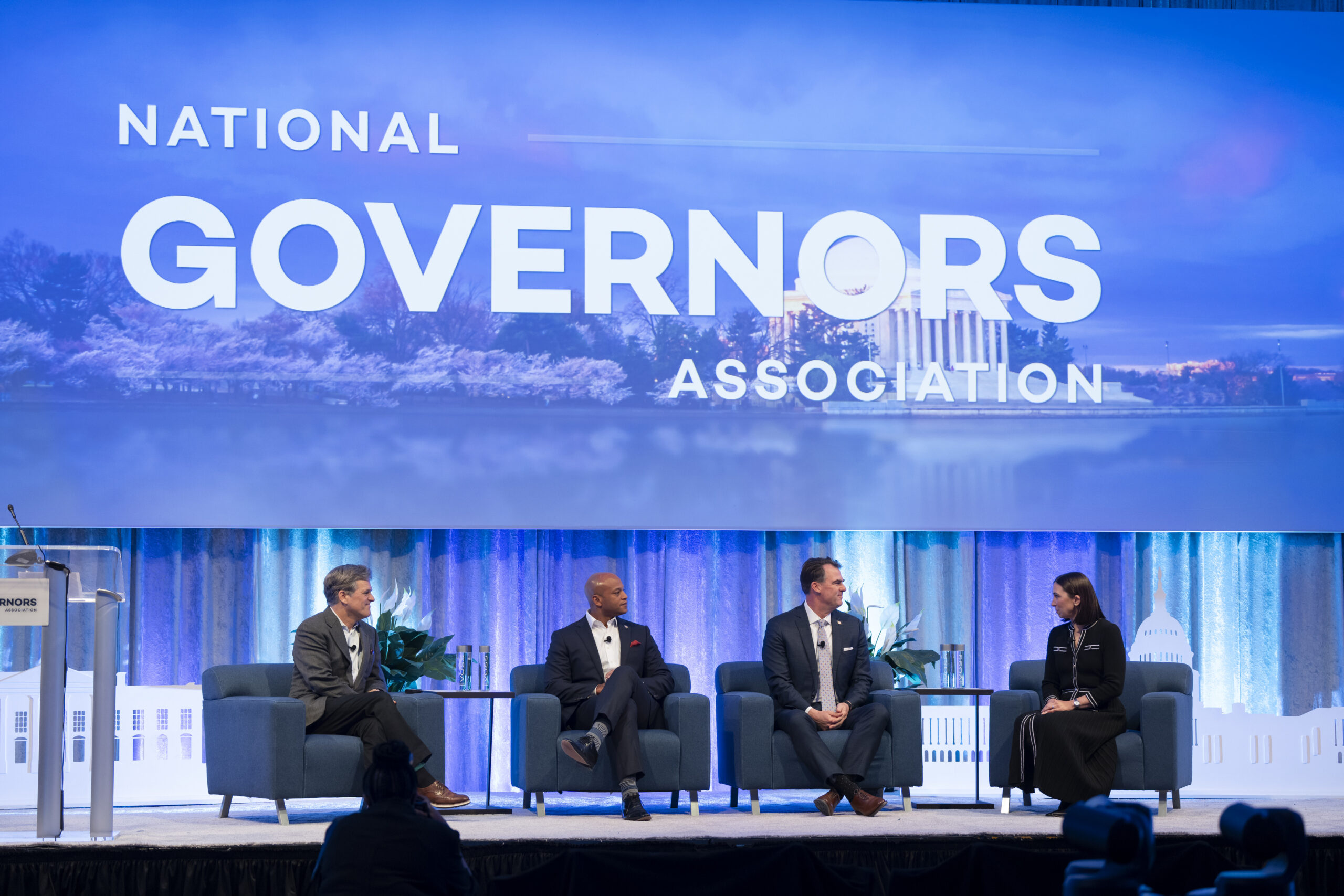
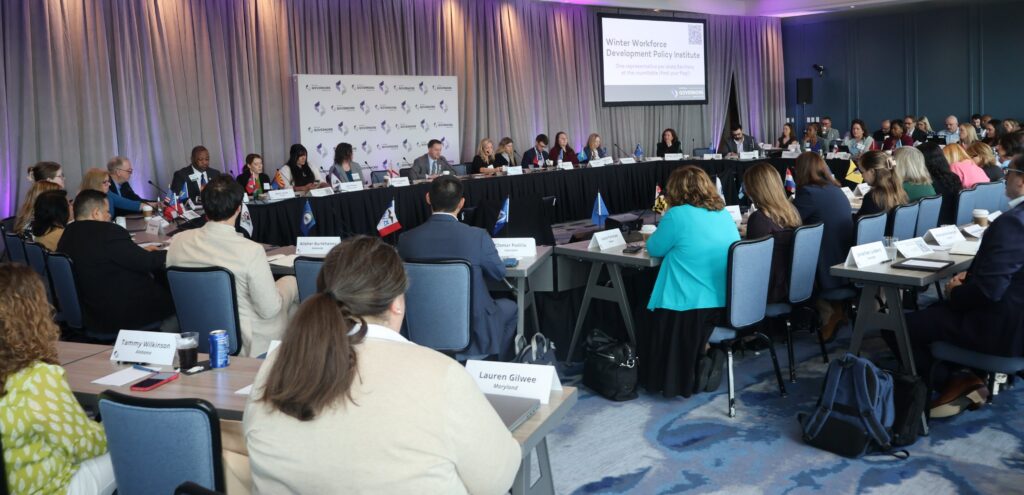
Governors’ workforce policy advisors, state workforce agency leaders, and Governors’ workforce board chairs from 39 states and territories convened in Washington, D.C., March 11–12 for the NGA Center for Best Practices’ Winter 2026 Workforce Development Policy Institute. Across two days of sessions, participants examined the structural forces reshaping state labor markets, from the rapid diffusion of AI to the rollout of Workforce Pell, and explored how Governors can lead systems-level change to prepare workers and businesses to thrive.
Governors’ 2026 Workforce Policy Priorities
The opening roundtable surfaced Governors’ top workforce development priorities for 2026. Expanding apprenticeship was a commonly cited goal, especially for in-demand sectors such as manufacturing, healthcare, cybersecurity, and public service. Several states are piloting apprenticeships within state government itself, using public sector vacancies as a testing ground for best practices.
Governors are also making bold changes to state workforce governance structures: reducing silos, rethinking accountability metrics, and empowering state workforce boards as strategic leaders. AI-driven displacement was a consistent undercurrent, with multiple states mapping occupational vulnerabilities and working with the private sector to prepare for possible displacements.
Several federal policy developments are also creating common challenges and opportunities for states. SNAP and Medicaid work requirements present a challenge in terms of the volume of individuals likely to flow into workforce systems in the coming months. Workforce Pell is a welcome investment of federal funding but will require significant preparation to define qualifying programs.
Reshaping Apprenticeship Governance and Strategy
Speakers:
- Laura Fortman, Commissioner, Maine Department of Labor
- John Ladd, Senior Advisor, Center for Apprenticeship & Work-Based Learning, Jobs for the Future
- Kendra Ringstmeyer, Director of Workforce Development, South Dakota Department of Labor and Regulation
- Moderator: Malena Dailey, Policy Analyst, NGA Center for Best Practices
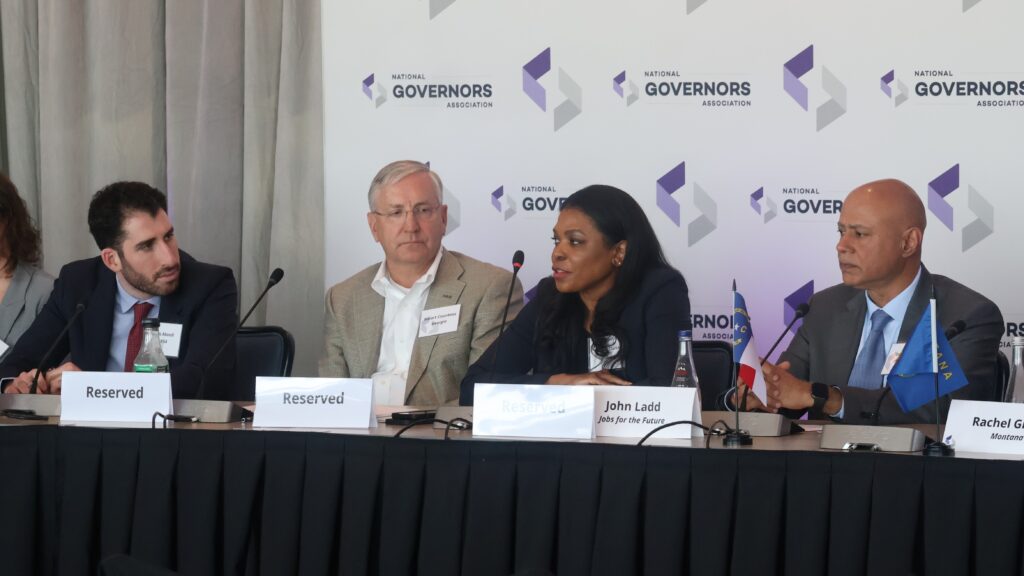
A consensus among panelists was that governance and strategy, more than any single program design, determines whether apprenticeship can scale. Federal grants have roughly doubled apprentice counts in most states but stop-and-start growth tied to changing administrations has left employers and sponsors cautious. Panelists strongly preferred formula grants for core operations as they allow states to build capacity for consistent growth, while competitive grants are better suited to experimentation.
Navigators were identified as a decisive variable in accessibility and expansion, particularly for small and rural employers who often assume apprenticeship applies only to skilled trades. States are also intentionally designing programs that expand the apprenticeship pipeline. For example, South Dakota grew its female apprentice count from one to over three hundred and Maine seen significant gains of women in building trades and men in education and healthcare. The panel closed with a call for career exposure starting in elementary school, drawing on German and Swiss apprenticeship models.
Strategies to Build the Advanced Manufacturing Workforce
Speakers:
- Michelle Clarke, Vice President and Director of Workforce Development, Empire State Development
- Stuart Countess, President & CEO, Kia Georgia Inc.; Chair, Georgia State Workforce Development Board
- Surya Iyer, President and COO, Polar Semiconductor; Chair, Minnesota Governor’s Workforce Development Board
- Moderator: Eric Aboodi, Policy Analyst, NGA Center for Best Practices
The scale of current investment in advanced manufacturing underscores the urgency of workforce pipeline development. Panelists converged on a core principle: industry must drive program design. Prioritizing credentials that map to actual hiring requirements requires ongoing employer engagement, not episodic consultation. Illustrating pathways for career development, with stackable credentials and advancement opportunities, is essential to attracting workers who might otherwise dismiss advanced manufacturing careers.
Opportunities to engage students early is a key strategy to fortify the advanced manufacturing talent pipeline: reaching students in middle school is critical, not waiting until eleventh or twelfth grade. Facility tours and direct engagement with robotics and cleanroom environments also reshape perceptions in ways that classroom instruction does not. The most acute gap across the sector is the skilled two-year technician: workers who can troubleshoot, diagnose, and apply practical judgment, a profile poorly served by existing credential pathways.
Governors Shaping Workforce Systems: New Research from NGA and the Harvard Project on Workforce
Speakers:
- Kerry McKittrick, Director, Harvard Project on Workforce
- Sophia Yager, Senior Policy Analyst, NGA Center for Best Practices
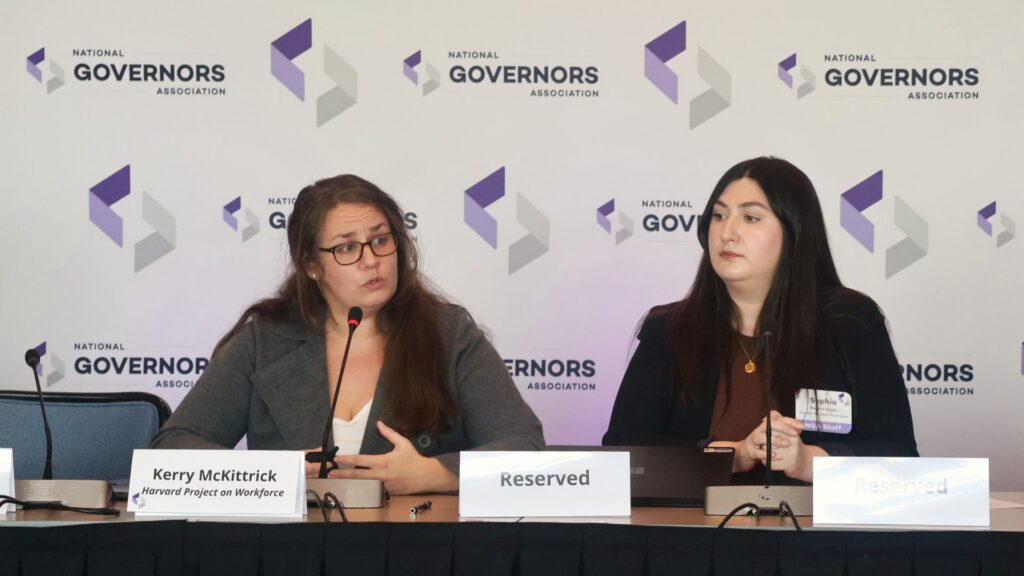
NGA and the Harvard Project on Workforce previewed a new round of research examining how Governors’ signature investments, governance structures, and performance metrics shape state workforce outcomes. Early research on Governors’ signature workforce investment surfaced two dominant models across five state case studies: broad-eligibility scholarships and targeted competitive grants, each with real trade-offs. Longitudinal data infrastructure emerged as the most persistent gap: states can track short-term enrollment but struggle to link outcomes across agencies and incorporate employer wage data over time.
Participants offered insights that will help to guide the research effort, including live polls on the current state of workforce system alignment and the ability to adapt to labor market changes. States also offered thoughts on the utility of federal workforce program metrics and what other indicators may be effective in capturing program outcomes and workforce system effectiveness.
Workforce Pell: Key Policy Choices for Governors
Speakers:
- Jennifer Mishory, Senior Advisor for Partnerships and Public Policy, America Achieves
- Portia Pratt, Senior Policy Analyst, NGA Center for Best Practices
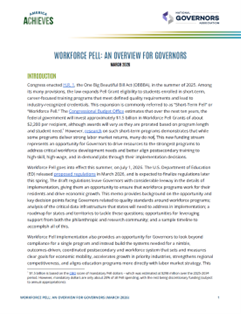
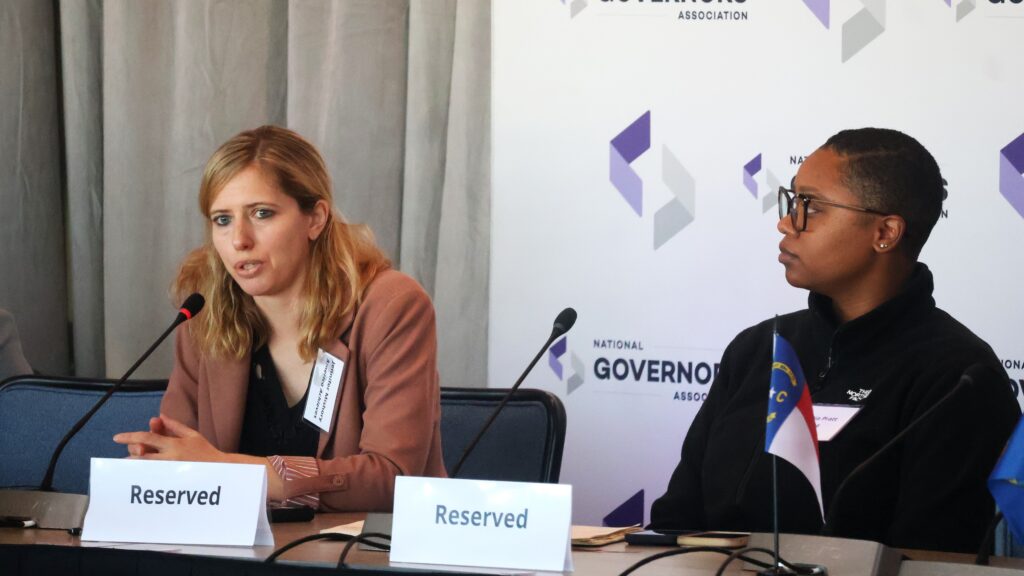
NGA and America Achieves provided an important reframe on Workforce Pell: July 1 is an effective date, not an implementation deadline. Workforce Pell is fundamentally a definitions challenge with three statutory criteria of high wage, high skill, and in demand must work together, and a program is only as strong as its weakest definition. States were advised to audit existing definitions in Perkins plans, WIOA policies, and state statute before drafting new ones. Workforce Pell also brings a significant cultural shift: bridging gaps in terminology used by the state workforce system versus language used by the higher education institutions.
Portability should be interpreted broadly across geographies and institutions, not just employers, with employer validation built in. Credit articulation (the requirement that non-credit programs connect to at least one related for-credit program) was flagged as an underestimated coordination challenge that will require careful collaboration to provide students with pathways to advancement.
Economic and Workforce Outlook
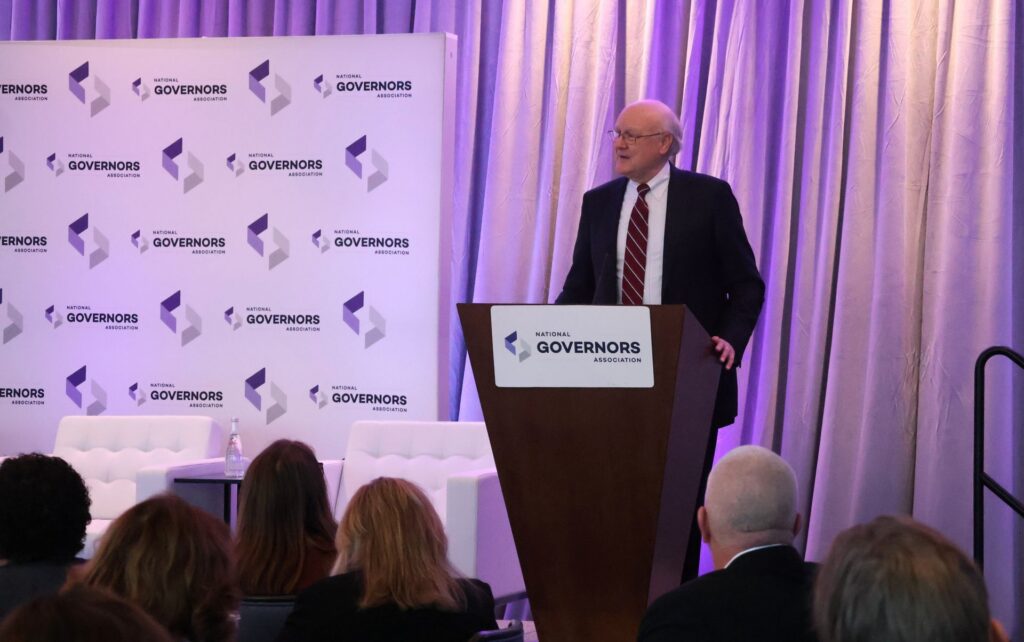
To open the second day of the Institute, Dr. Robert Wescott, President of Wescott Strategic Advisors, provided a national economic and workforce outlook. Dr. Wescott described the current labor market as operating at two simultaneous speeds: an “anticipation economy” of AI optimism and investment announcements and a “facts on the ground” economy of near-zero net job creation, with losses in five of the prior nine months and 92,000 jobs lost in February alone. Growth is concentrated in late-cycle sectors (healthcare, social assistance, and local government) while manufacturing, technology, and business services are contracting. Dr. Wescott also discussed real disposable income and household spending, and the effects of federal immigration policy and oil market disruptions.
AI and the Future of Work
Speakers:
- Cassandra Madison, Executive Director, Center for Civic Futures
- Kelsey Soderberg, Senior Policy and Partnerships Advisor, Office of Maryland Governor Wes Moore
- Moderator: Timothy Blute, Director, NGA Center for Best Practices
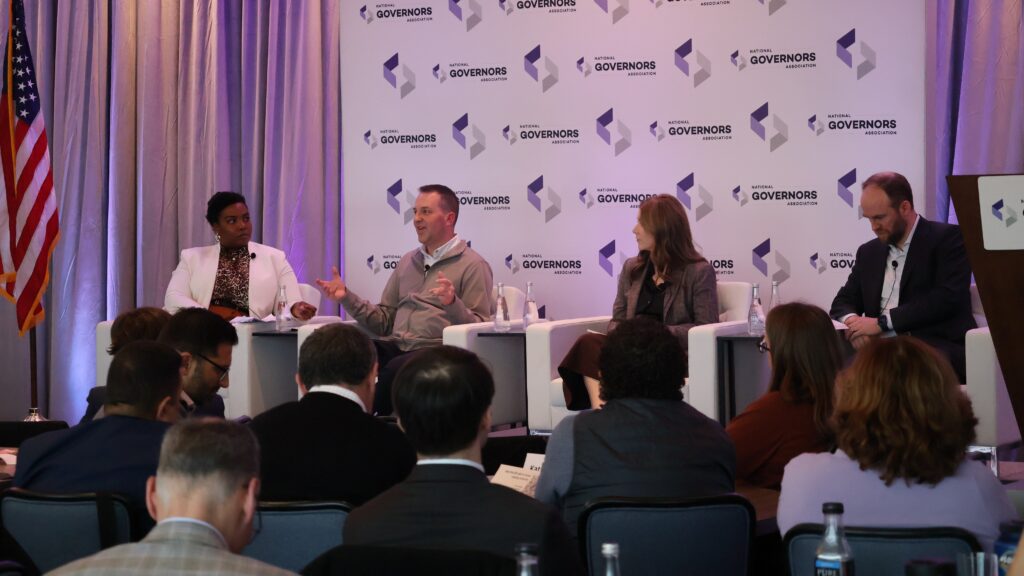
Panelists described a structural shift already underway related to AI: entry-level positions are disappearing, collapsing the traditional on-ramp into the workforce and reshaping a labor market with more middle-skill jobs. Customer service workers, high school-educated women, and recent college graduates are showing early signs of exposure and the panel cautioned against waiting for aggregate data to confirm displacement: by the time official statistics are clear, the intervention window will have narrowed. States should triangulate based on early signals and act on plausible indicators now, particularly for vulnerable populations and occupations.
Maryland is employing a trust-building approach: identify the worst part of a frontline worker’s job and use AI to improve it within three to six months, rather than starting with occupational transitions or transformations that may take years to show results. On leveraging AI in state government, the panel posited that banning AI may create more security risk by driving usage underground rather than thoughtful deployment that upskills state workers and improves state services.
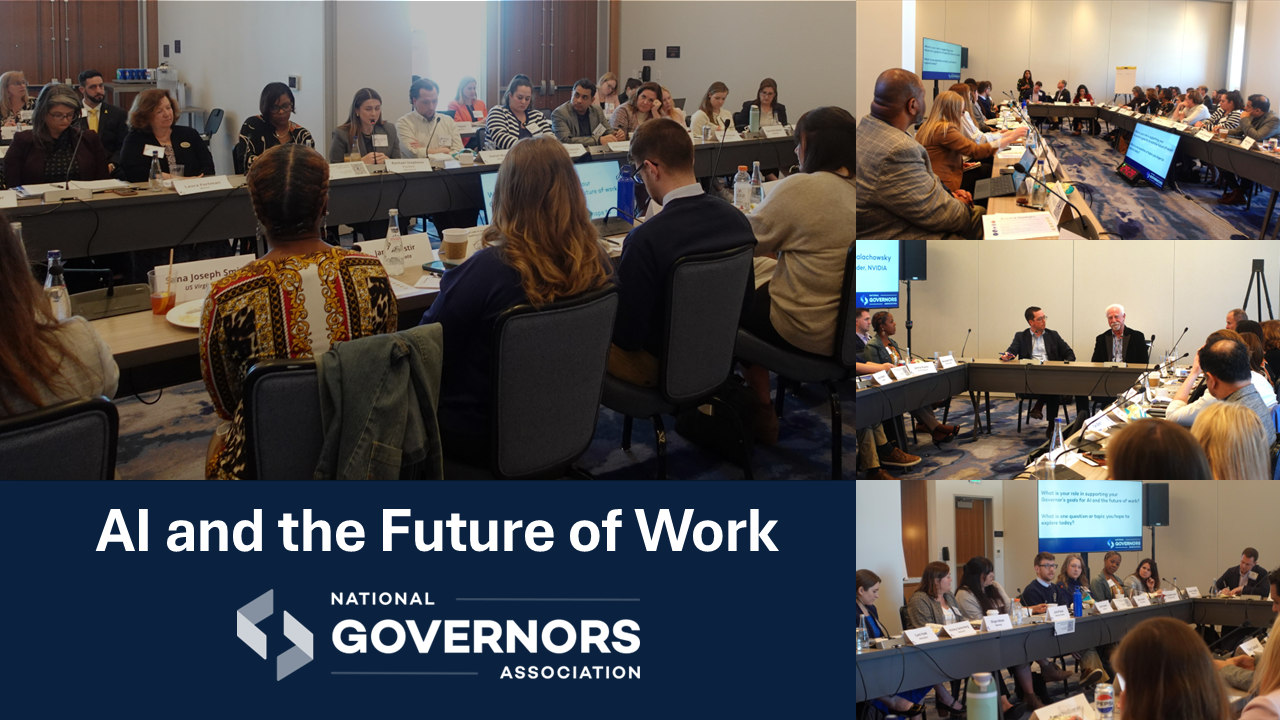
The panel built on conversations from NGA’s roundtable on AI and the Future of Work held the day prior.

From Care to Careers: Using Rural Health Transformation to Grow Rural Economies
Speakers:
- DJ Campbell, Vice President and Chief Human Resources Officer, Sanford Health; Chair, North Dakota Workforce Development Council
- Mary Foote, Director, Arizona Office of Economic Opportunity
- Lane McBride, Managing Director and Senior Partner, Boston Consulting Group
- Moderator: Brittney Roy-Morales, Program Director, Health, NGA Center for Best Practices
The Rural Health Transformation Program offers a rare vehicle for integrating workforce, healthcare, and economic development under a common framework. The panel’s most consistent message was that rural healthcare talent pipelines take time to develop, increasing the urgency under the five-year program window. The “grow your own” model drew strong endorsement: people from rural communities are more likely to stay there, making local recruitment and credentialing the most sustainable long-term strategy.
Anchor employers like rural hospitals are economic linchpins and should be treated accordingly. Earn-and-learn pathways that stack credentials while keeping workers rooted locally address both retention and financial barriers, and technology like telehealth, ambient listening tools, and AI-assisted documentation can improve job quality and increase access to care. Panelists also stressed that state data infrastructure is necessary to track workforce outcomes to meet federal requirements.
Fireside Chat with Deputy Assistant Secretary Marek Laco
Speakers:
- Marek Laco, Deputy Assistant Secretary, U.S. Employment and Training Administration
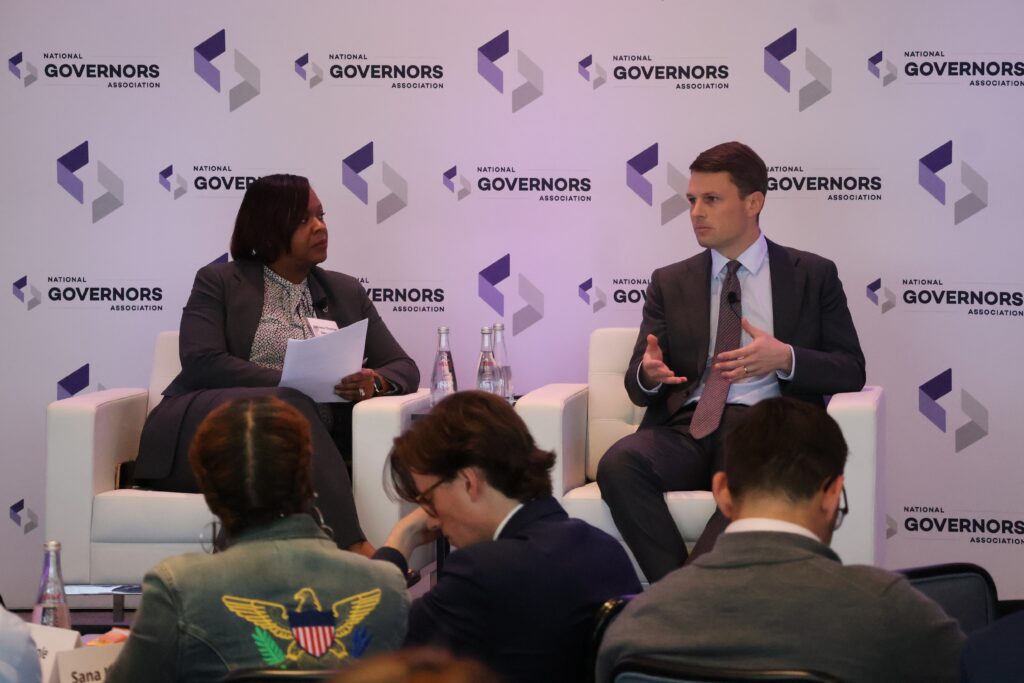
- Moderator: Deniece Thomas, Commissioner, Tennessee Department of Workforce Development
Deputy Assistant Secretary Laco delivered a direct message: the U.S. Department of Labor’s posture is bold action today, not deference to reauthorization. States that have long sought federal flexibility now have a genuine partner that is open to new solutions that reduce barriers to maximizing federal workforce funding. The Department’s central priority is real integration through combined plans and joint guidance to drive alignment across WIOA, Perkins, adult education, SNAP, and Medicaid. New SNAP and Medicaid work requirements represent a near-term opportunity: states that build seamless connections between benefits programs and workforce services now will be far ahead when volume surges.
The Department is prioritizing apprenticeship through pay-per-apprentice incentive payments rather than competitive grants and opportunities like the cooperative agreement with Arkansas to replicate the manufacturing apprenticeship model across sectors. On metrics, Laco acknowledged that programs may meet every current target while serving almost no one at meaningful scale, so the Department is exploring earnings change as a new core measure and wants states to experiment and share results. AI literacy is also a priority, and the Department’s new framework is a living document for states to contribute what is working to inform national practice.
Conclusions
The Institute surfaced a moment of unusual convergence: federal flexibility, large-scale private investment, and structural labor market disruption arriving simultaneously. Moving quickly to optimize workforce system governance, build data infrastructure, and integrate partners will allow states to capitalize on investments with a unified strategy. The through-lines were consistent across sessions: early intervention outperforms late-stage response, employer partnership is not optional, and AI requires a nimble, innovative state strategy.
For additional resources, bookmark the NGA Center Workforce Development & Economic Policy team page, and see the Workforce Pell overview for Governors and NGA’s work with the Harvard Project on Workforce.