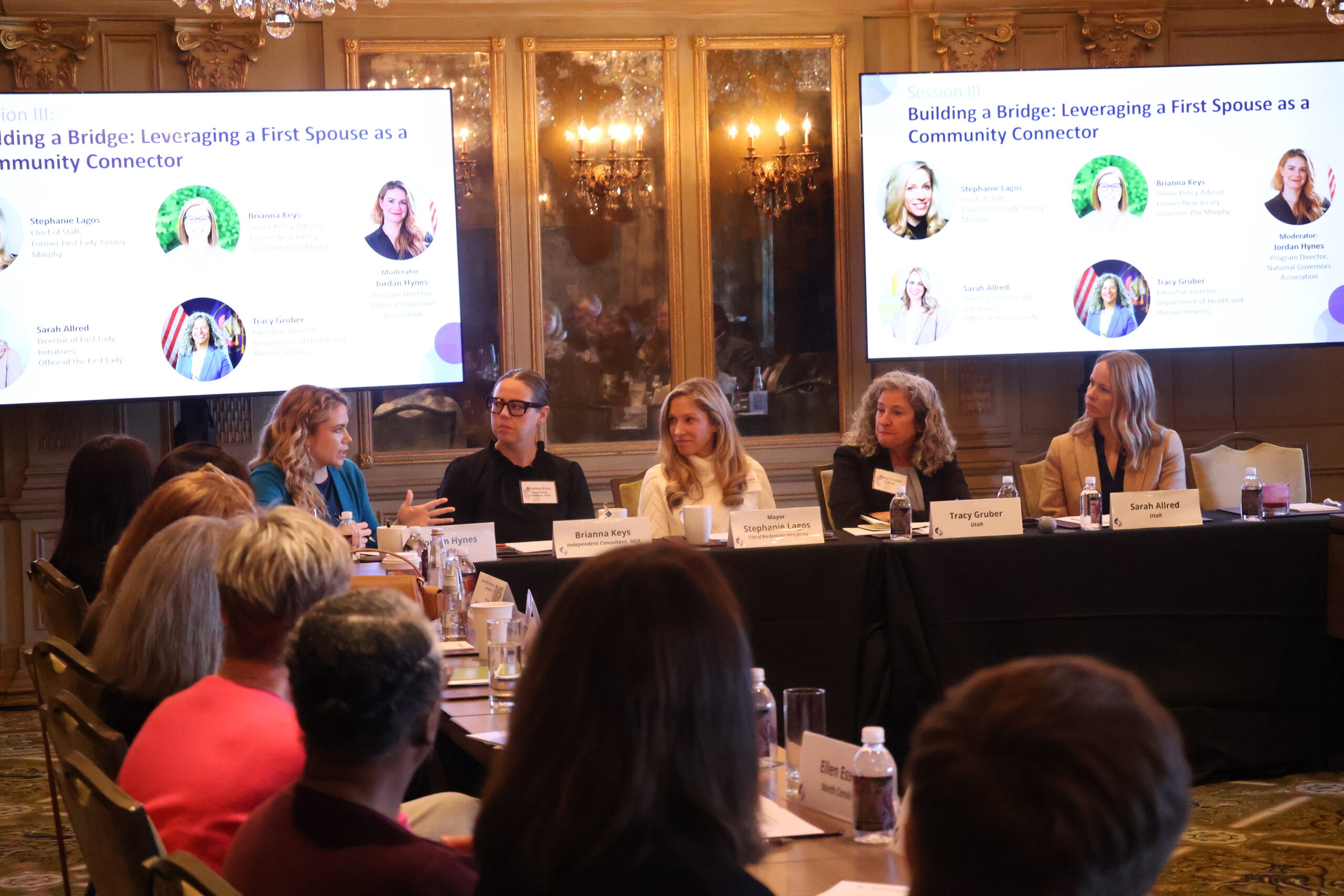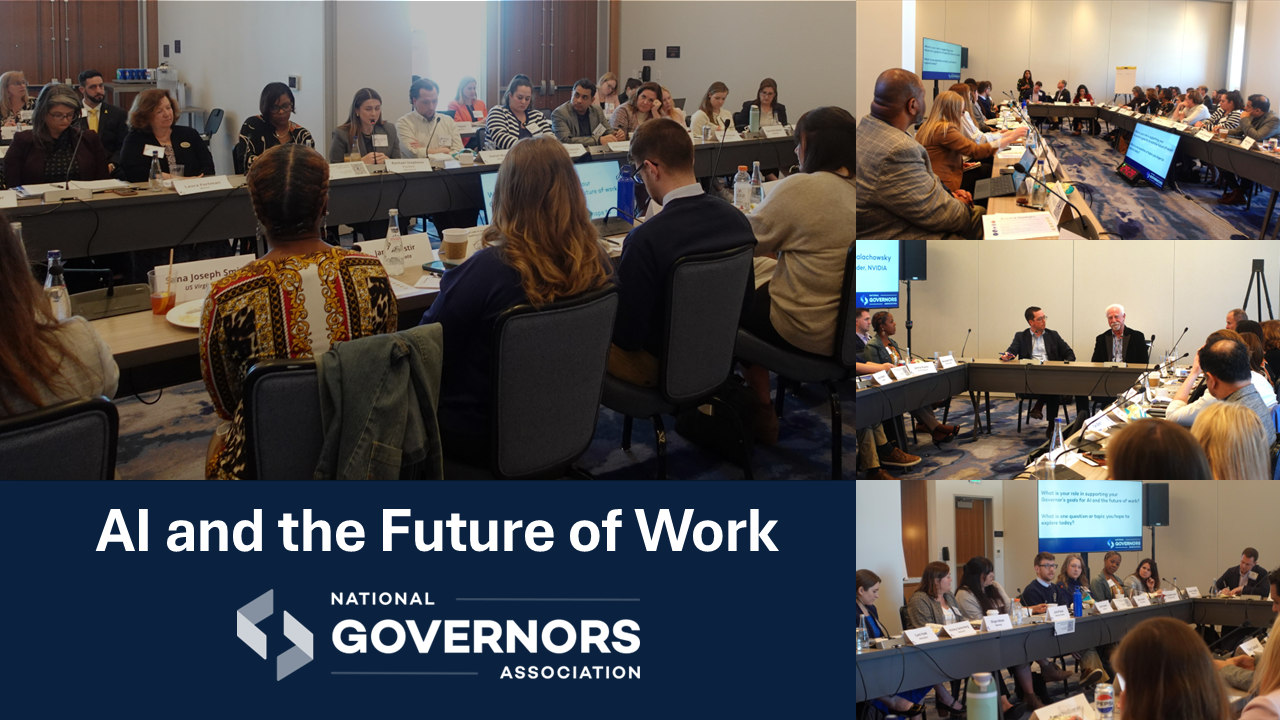

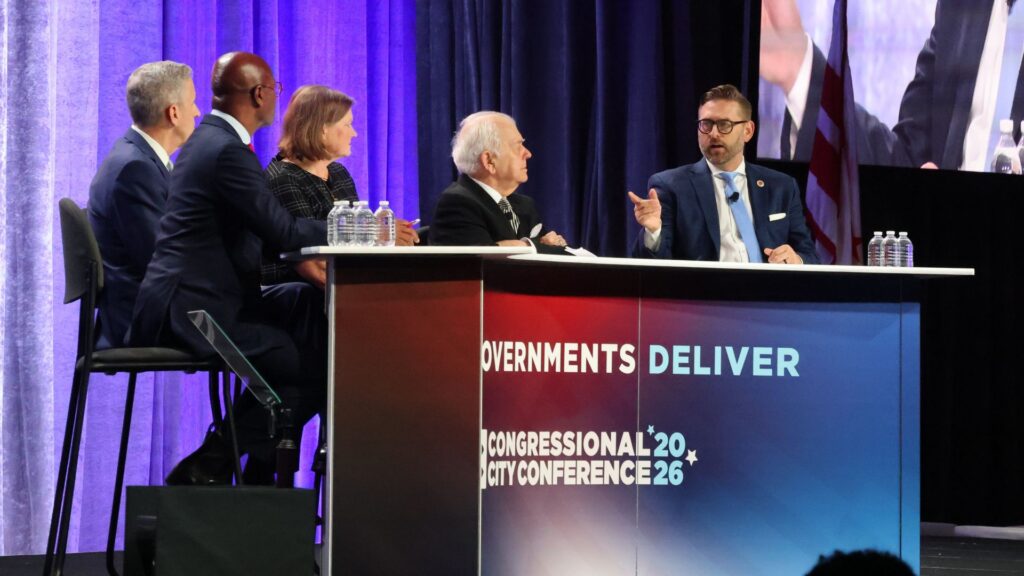
Last week, at the National League of Cities 2026 Congressional City Conference, I had the pleasure of joining leaders from the nation’s top public-sector associations for a candid conversation about the shifting dynamic between federal, state, and local governments, what it means for the communities they serve, and what stands in the way of improving it.
There was broad agreement that the stability and predictability state and local governments depend on, to plan and operate, have been significantly disrupted by shifting rules, funding reversals, and growing federal preemption. Achieving balance between different levels of government is, in many ways, a feature, not a bug, of our federalist system. Working to achieve “a more perfect union” is our national mission statement. But we are now facing a crisis that threatens the very foundation of public service.
What I heard was sobering: mayors receiving death threats, city planners berated at council meetings, officials waking up to find protesters outside their homes—not at city hall, but where their families live. These attacks are not limited to the local level. We have seen similar horrors at the state level: the murder of state legislators in Minnesota, a kidnapping plot against Governor Whitmer in Michigan, and an arson attack targeting Governor Shapiro and his family in Pennsylvania. Beyond the immediate danger these threats pose, my colleagues highlighted something often overlooked: the toxicity of our civic discourse is not just dangerous, it is eroding the pipeline of people willing to serve. Public servants at every level are bearing the costs of a coarsened political culture, and the next generation is watching, reconsidering whether serving the public is worth the risk.
State and local governments are where the work gets done. It’s where 911 calls are answered, where bridges get fixed, and where communities are kept safe. All of that depends on talented, committed people choosing to serve. Civility isn’t a soft issue; it’s the foundation of public service.
Reclaiming the Bully Pulpit
I’ve been spending a lot of time studying Theodore Roosevelt, and one thing that stands out is how he understood leadership as a moral responsibility. He helped shape what became the National Governors Association and coined the term “bully pulpit.” At the time, “bully” didn’t mean intimidation; it meant something closer to excellent or first-rate. For Roosevelt, the bully pulpit was the opportunity to use one’s platform to elevate the public good.
Today, that meaning has drifted. “Bully” has taken on a negative, even harmful, connotation. But there’s something powerful in reclaiming Roosevelt’s original intent: using the pulpit not to divide or diminish, but to call people upward; to set a tone of excellence; to model respect, dignity, and moral clarity in how we speak and lead.
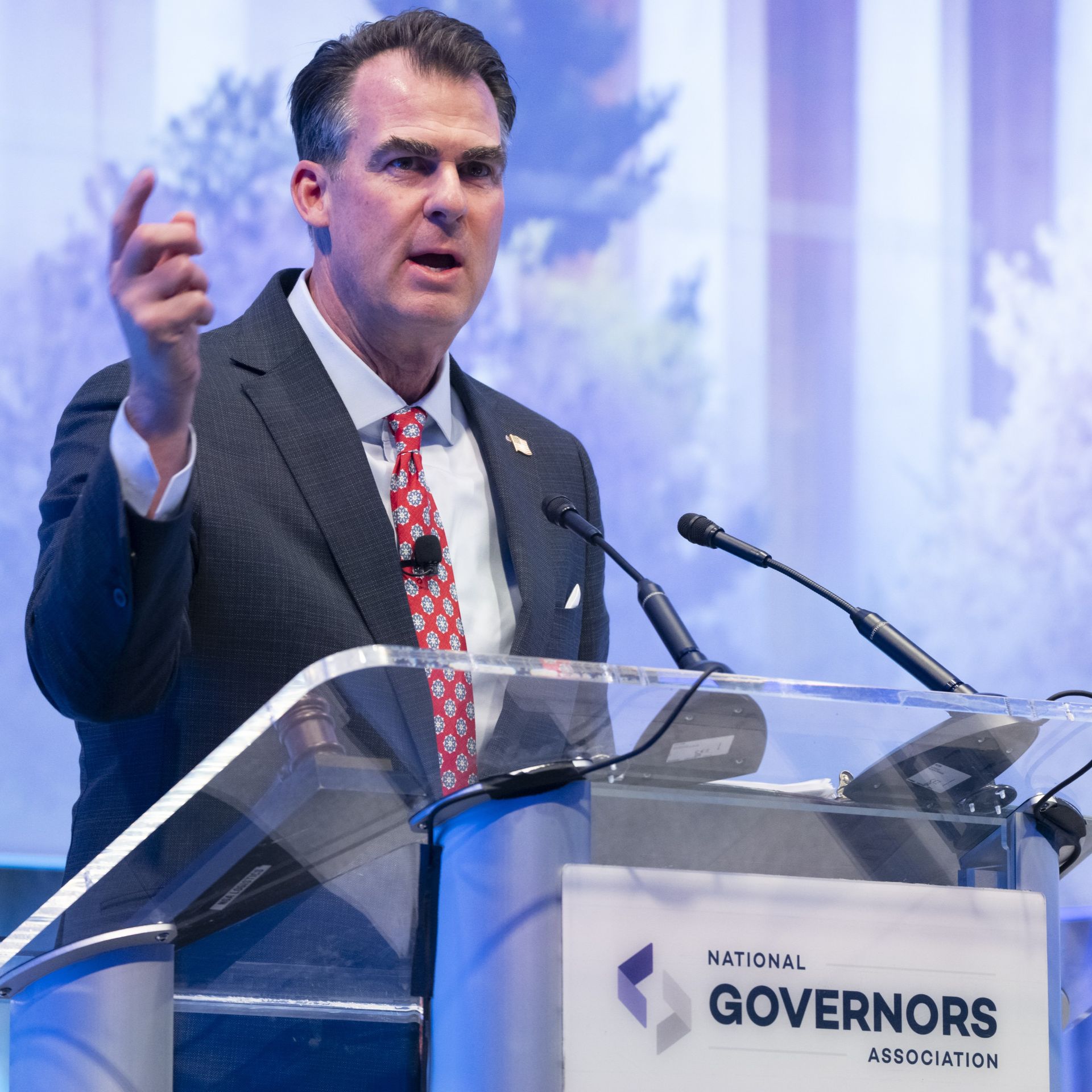
At the National Governors Association, we’re deeply focused on improving political rhetoric. One of the most important things I believe we can do in this moment is put a Democratic governor and a Republican governor on the same stage and show the country they can, and do, work together. That governing isn’t a reality show; it’s reality. Budgets passed, decisions made, people served.
That sounds simple. It isn’t. But it matters enormously.
On the research side, we’ve been drawing heavily on Tim Shriver’s work with the Dignity Index. It’s a scale from one to eight, with one representing the most contempt you can show another person, and eight representing the highest dignity. Crucially, it rates speech, not people. We’ve trained our staff on it and shared it with state and territorial staff as well. It gives us a common language. When something goes sideways publicly—and things do go sideways—I can sit with my team and ask: Where did that land on the scale? What would an eight look like? It reframes the conversation in a way that’s practical, not performative.
Right now, too much of our public discourse is being driven by grievance and contempt. Social media has hardwired anger into the attention economy, and everyone is incentivized to be outraged. And with AI accelerating into that same space, the window to get ahead of this problem is closing fast.
Governors, mayors, county commissioners, and many others have a bully pulpit. The question is what we use it for. I believe we have an obligation, those of us with platforms, to model something different. To reclaim the bully pulpit the way Roosevelt meant it: excellence, respect, first-rate.