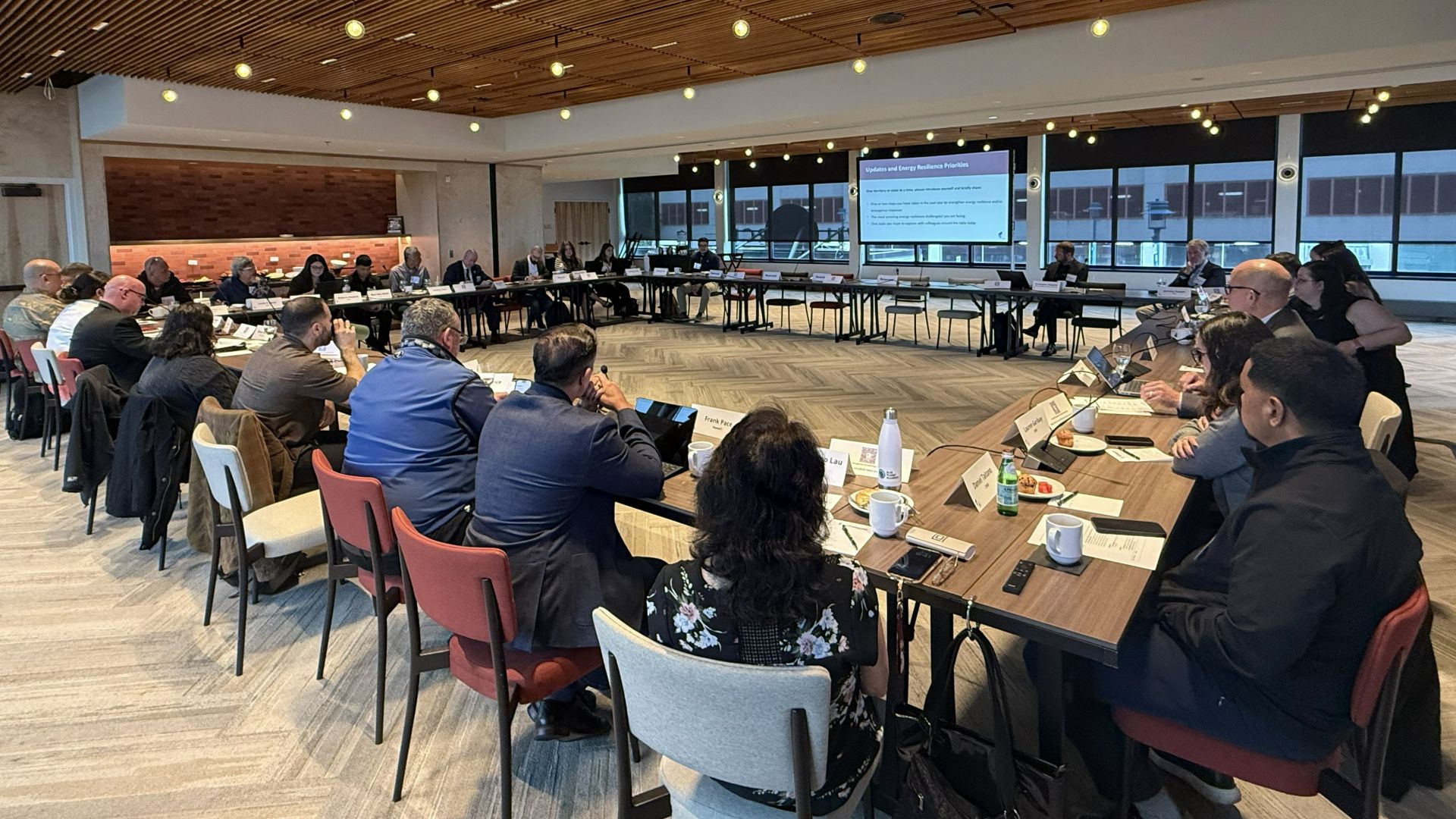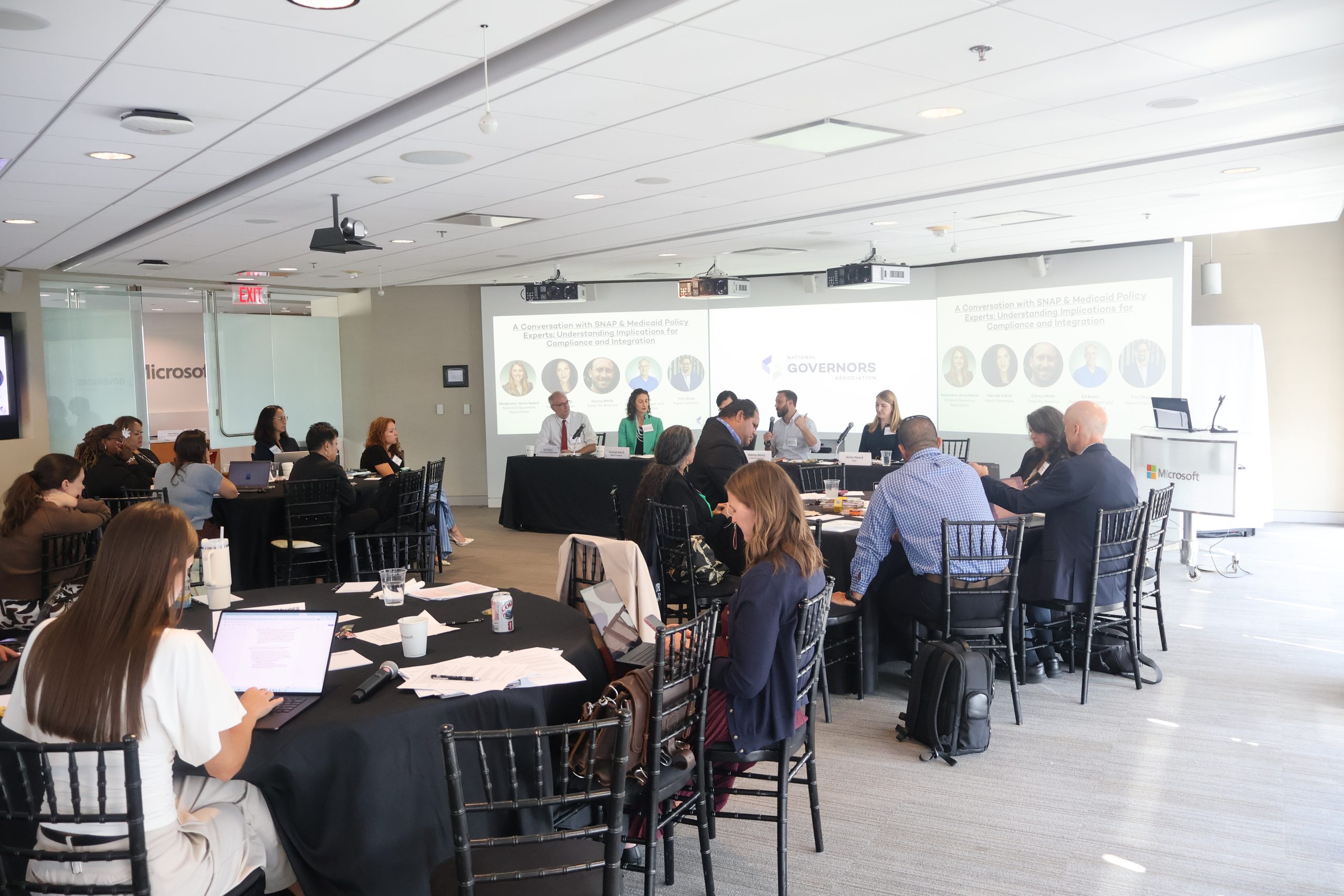
The National Governors Association (NGA) recently convened states for the final meeting of its SNAP Employment and Training Policy Academy, bringing together state administrators, workforce leaders, and policy experts for two days of peer exchange, collaborative problem-solving, and forward-looking planning. Held at the Hilton Garden Inn in Annapolis, Maryland, the convening marked the culmination of more than two years of intensive technical assistance and peer-to-peer engagement designed to strengthen SNAP E&T delivery across the country.
The April 30–May 1 gathering drew representatives from Idaho, Maryland, Minnesota, North Carolina, and South Carolina, the states at the heart of NGA’s Policy Academy cohort, along with facilitation support from Third Sector and Seattle Jobs Initiative. Over two days, participants exchanged peer-to-peer insights on state action plans, explored strategies to strengthen cross-agency and provider partnerships, and developed concrete plans to remove barriers to E&T service delivery.
Setting the Stage for Strategic Collaboration
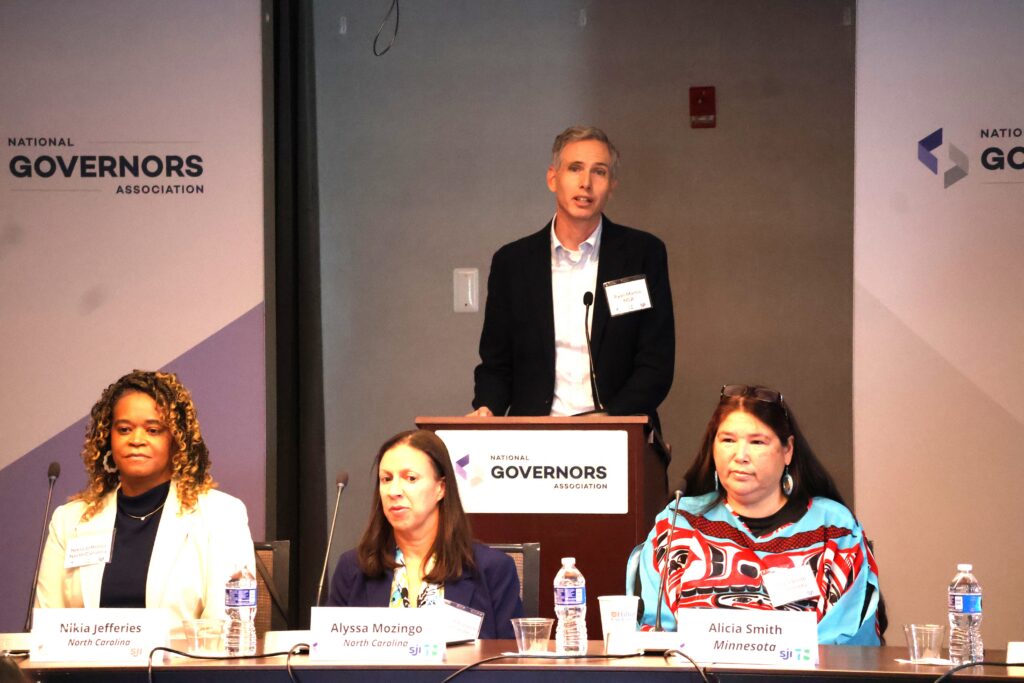
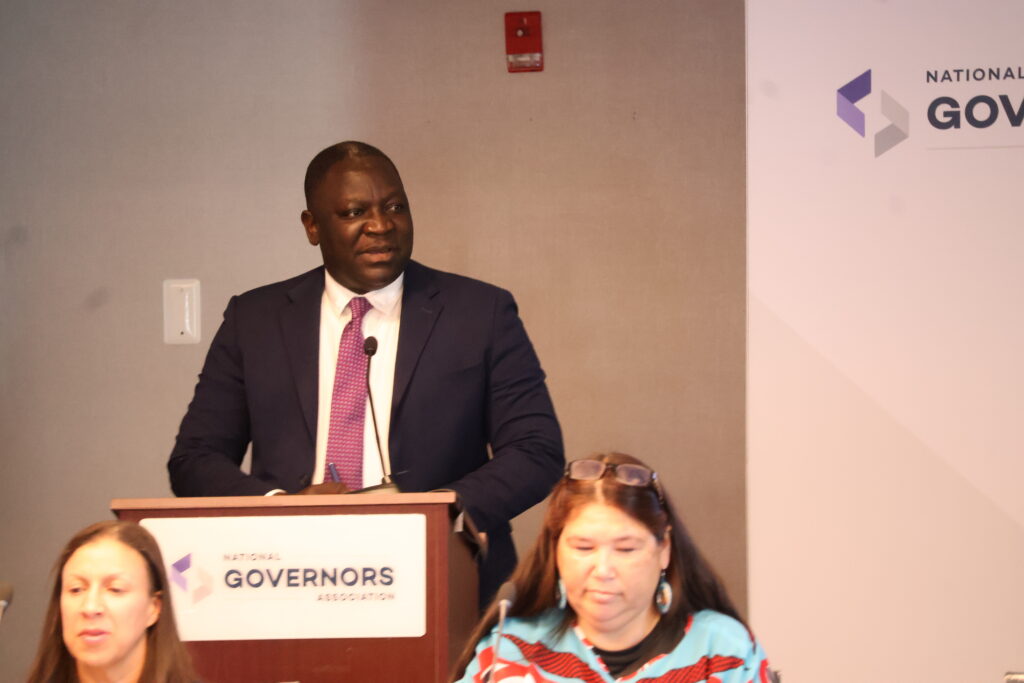
The convening opened on Thursday afternoon with welcome remarks from Ryan Martin, Managing Director of the NGA Center for Best Practices, followed by remarks from Augustin Ntabaganyimana, Executive Director of the Maryland Department of Human Services Family Investment Administration. Together, they established a tone that was both urgent and hopeful, acknowledging the weight of the policy moment while affirming the collective capacity of states to rise to meet it.
Martin framed the convening as more than a technical exchange. With the passage of H.R. 1 in July 2025, which enacted sweeping changes to SNAP work requirements for able-bodied adults without dependents, the stakes for SNAP E&T programs have never been higher. Ntabaganyimana’s remarks brought that policy context to ground level. As head of Maryland’s Family Investment Administration, he offered a perspective that underscored the human stakes at the center of the work. “We are honored to host such an educated group of leaders from across the country, leaders who understand that food security and economic opportunity are two sides of the same coin,” he said. “SNAP does more than put food on the table. It can serve as a powerful pathway to self-sufficiency, and a connection to the workforce.”
Following the welcome remarks, Senior Policy Analyst Portia Pratt led participants through an exercise that gave the room a shared vocabulary before the deeper work began, and signaling in real time that participants were arriving with a blend of cautious optimism and clear-eyed awareness of the challenges ahead. Themes that emerged pointed to a field in transition: workforce complexity, expanded eligibility questions, and the importance of relationships across agencies and with providers were among the earliest signals of what would become persistent throughlines across the two-day convening. What the opening session made clear was that SNAP E&T is no longer being viewed as a compliance function, it is being repositioned, deliberately and with increasing urgency, as a core economic mobility strategy.
Voices from the Front Lines
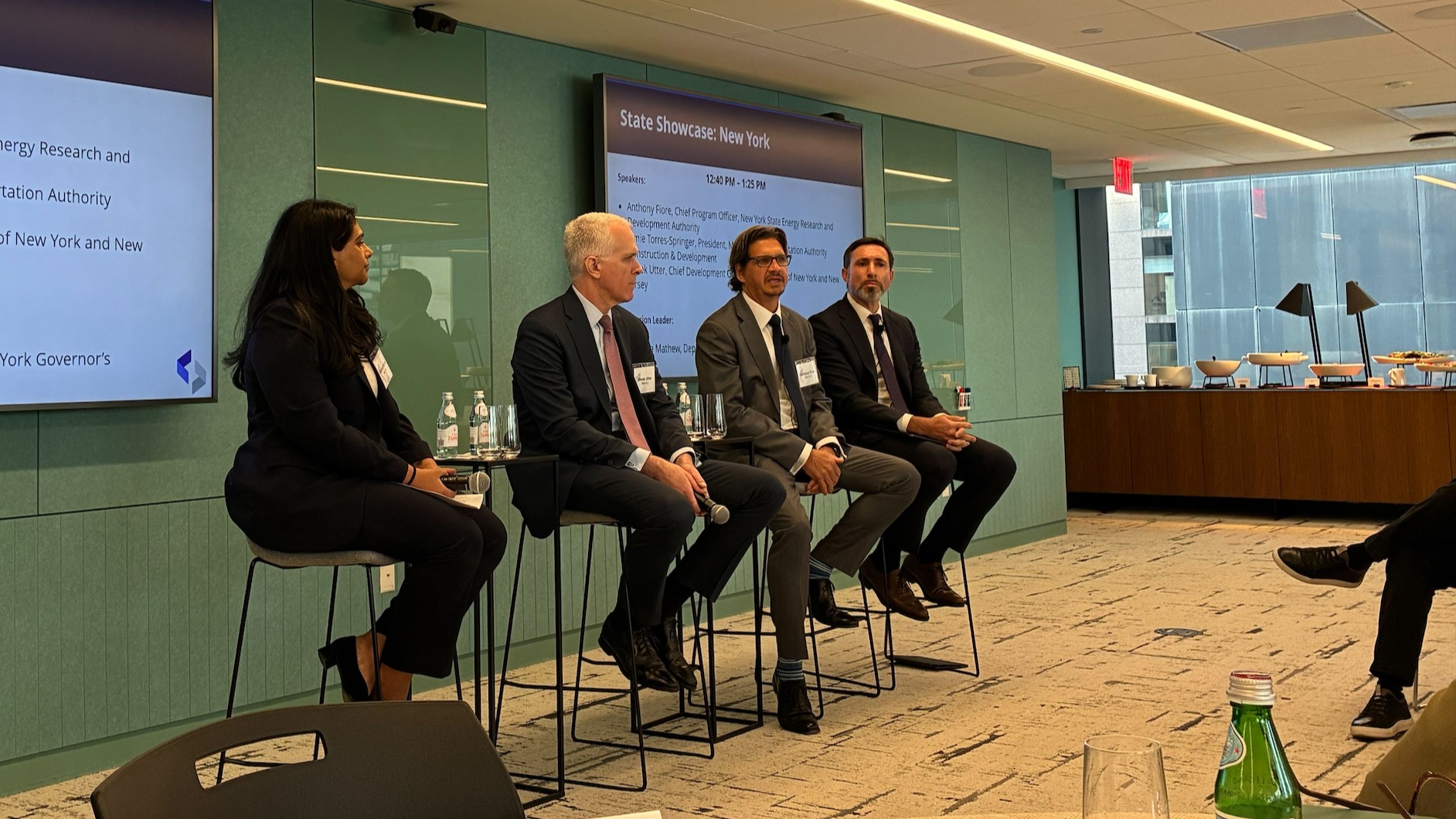
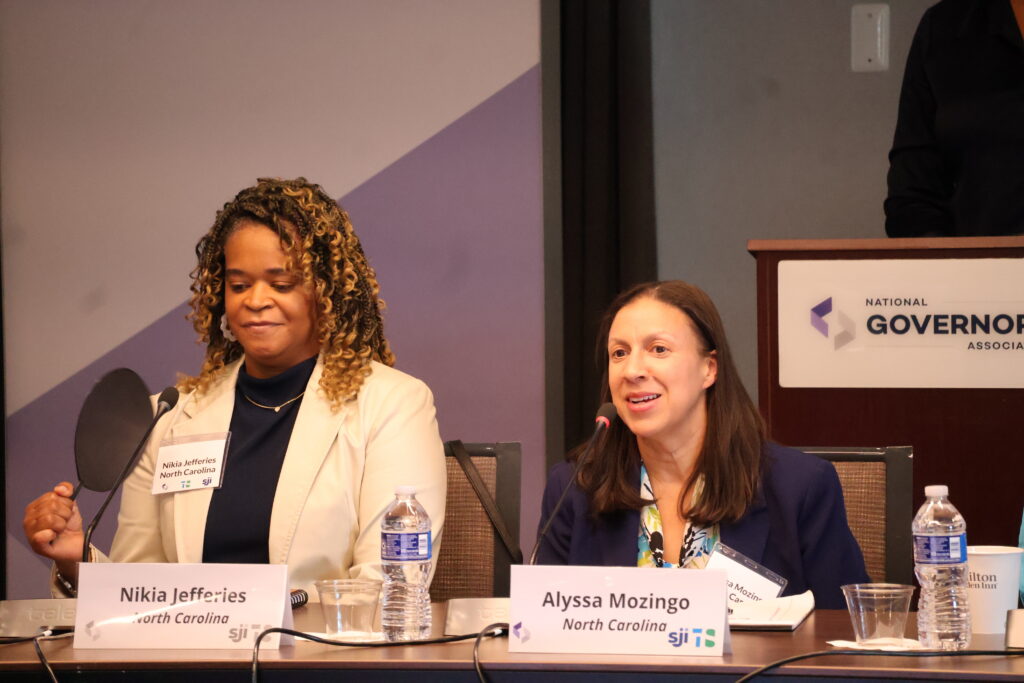
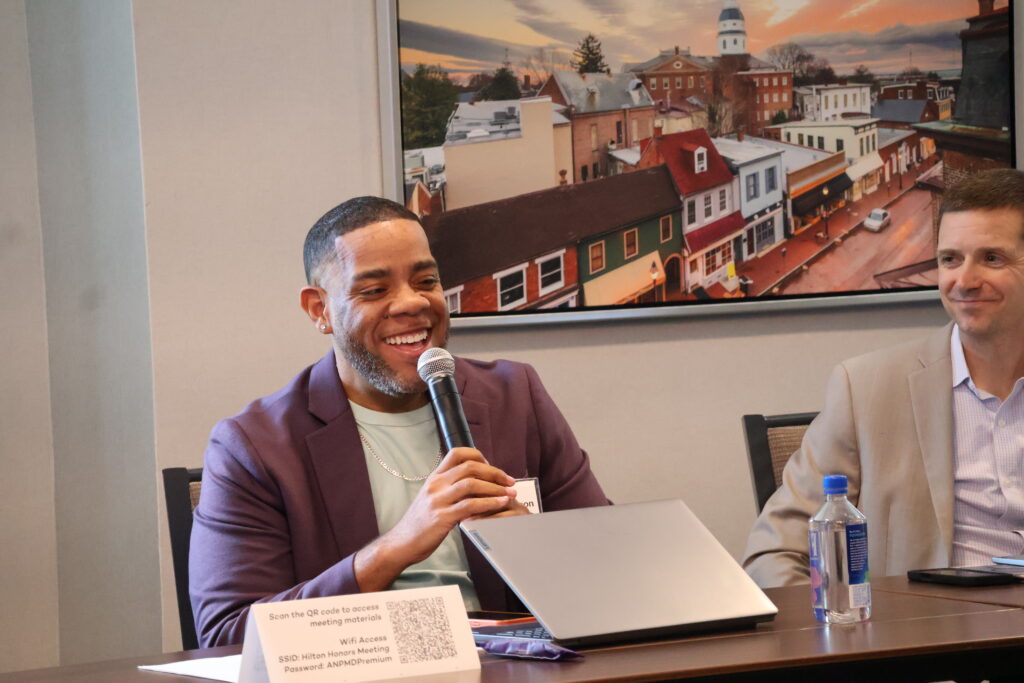
Jess Kirchner, NGA Senior Policy Analyst for Children and Families, then moderated a State Spotlights session which gave participating states a structured opportunity to share their top challenges, most promising innovations, and hard-won lessons from the field. The conversation was frank, substantive, and rich with the kind of insight that only comes from practitioners who have lived the work.
Representing their states on the panel were Sarah Nash (Idaho), Augustin Ntabaganyimana (Maryland), Alicia Smith (Minnesota), Ryan Phillips and Alyssa Mozingo (North Carolina), and Tamara James (South Carolina). Though each state arrived with a distinct program context, several themes emerged with striking consistency across the conversation.
Process Mapping as a Reform Tool: One of the most resonant themes was the transformative power of process mapping. Across multiple states, the act of visually documenting referral pathways, invoicing steps, and case handoffs revealed gaps, bottlenecks, and assumptions that had gone unexamined for years. As one panelist reflected, the discipline of mapping unlocked innovation that conversation alone could not.
Bureaucracy as a Universal Barrier: Procurement timelines, reimbursement model complexity, multi-agency coordination challenges, and budget constraints are not local anomalies, they are common features of the landscape. Yet within that shared acknowledgment of constraint, panelists consistently noted that these challenges are are an opportunity to rethink how the work gets done.
Relationships as Infrastructure: Perhaps the most consistent message from the State Spotlights panel was this: more than any policy or technology, cross-agency and cross-sector relationships determined what was possible. Silos persist for understandable reasons, different agency mandates, distinct funding streams, varying accountability structures, but intentional relationship-building breaks them down. Leadership buy-in emerged as a crucial catalyst: when leaders are visibly engaged, it signals to frontline staff and providers alike that the work is a genuine priority, not just a compliance exercise.
Documentation and Resilience: The panel also surfaced an underappreciated operational challenge: staff turnover and agency reorganizations can erase hard-won institutional knowledge almost overnight. Investing in creating roadmaps and process documents can help programs survive and recover from disruptions. Making sure that documentation is not just administrative overhead, but part of a resilience strategy.
Opportunity Within Pressure: Running through the entire panel discussion was a thread of guarded but genuine optimism. Expanded work requirements and broader federal shifts are opening the door to new funding conversations, stronger partnerships, and a greater audience for the case that SNAP E&T can deliver. States that can articulate a clear vision are finding that policymakers, philanthropic partners, and workforce systems are more ready to engage than ever before.
Strengthening Partnerships, Doing Things Differently, and State Action Planning
Following the State Spotlights panel, the rest of the convening featured a series of structured activities with rotating groups of cross-state peers shifting in problem-solving mode, translating learning from the policy academy into clear commitments for the months ahead. The Policy Academy will conclude its work with a report in September.
NGA’s engagement with states on SNAP and H.R. 1 will continue, including through participation in the American Public Human Services Association’s National Human Services Summit in June, where state and local executives, policy advisors, and Washington representatives will continue to share insights and address ongoing implementation challenges.