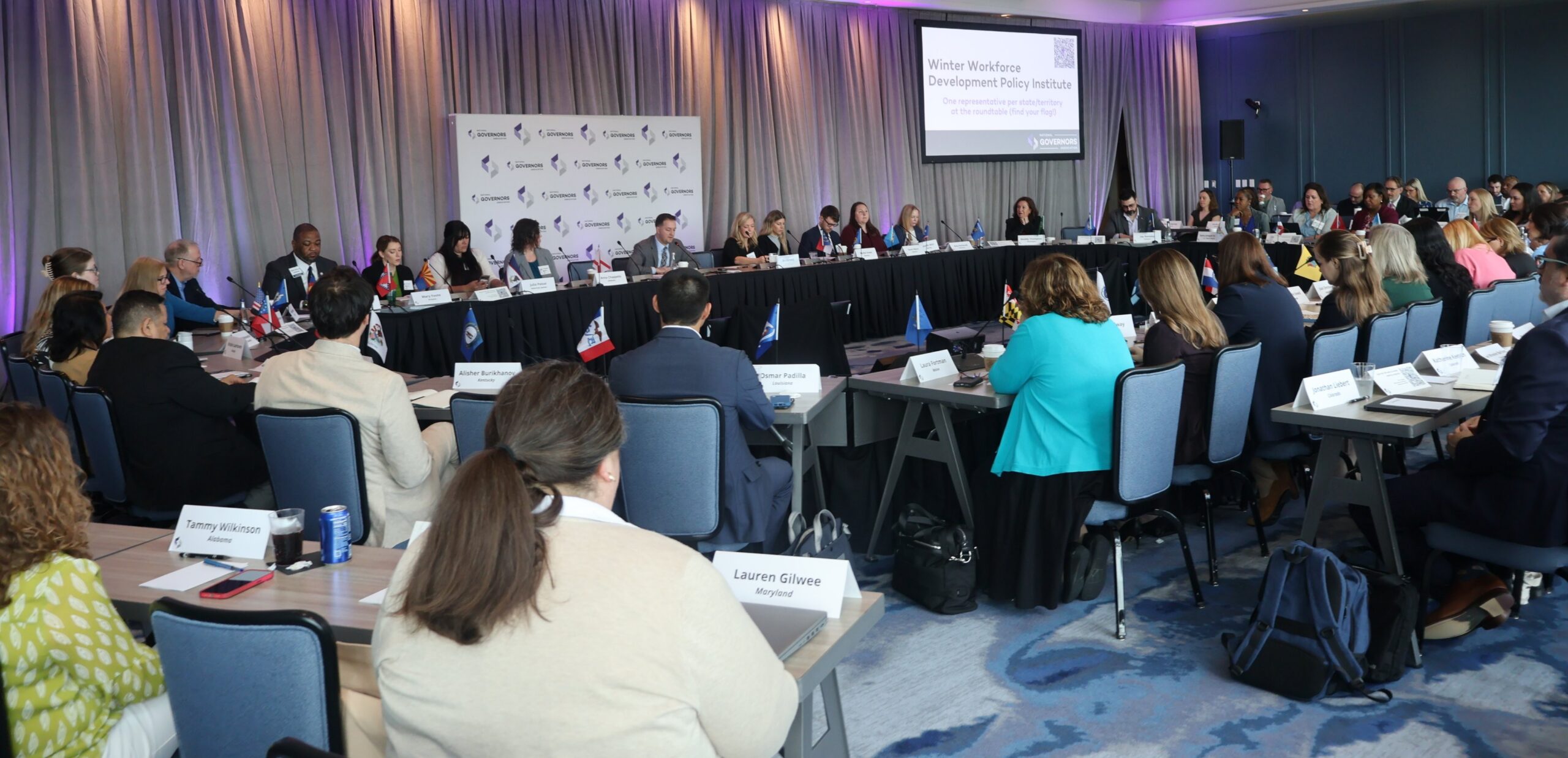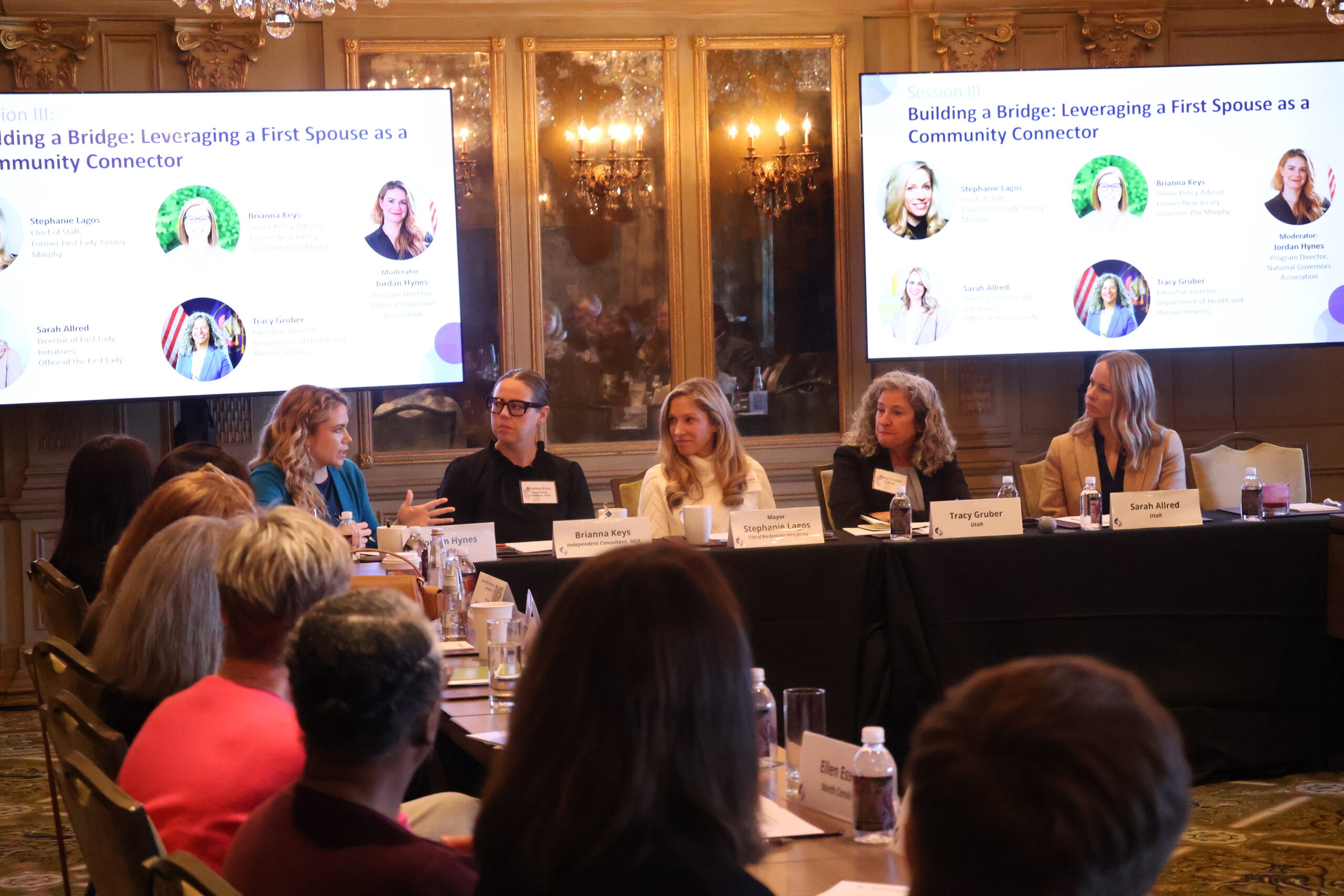
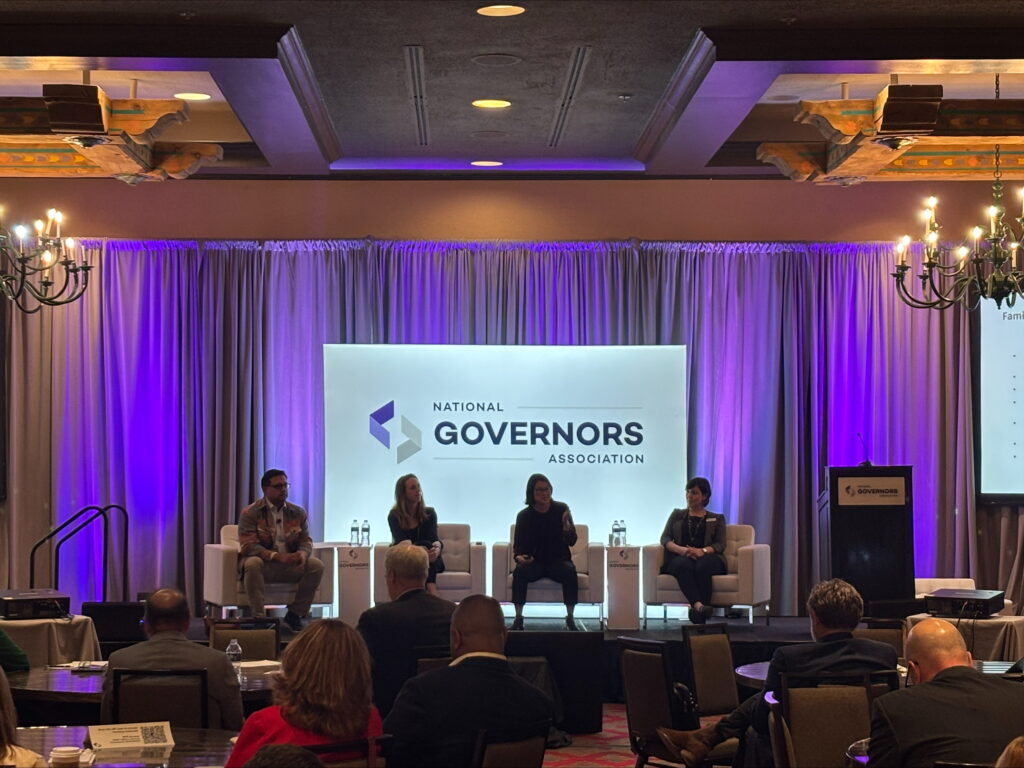
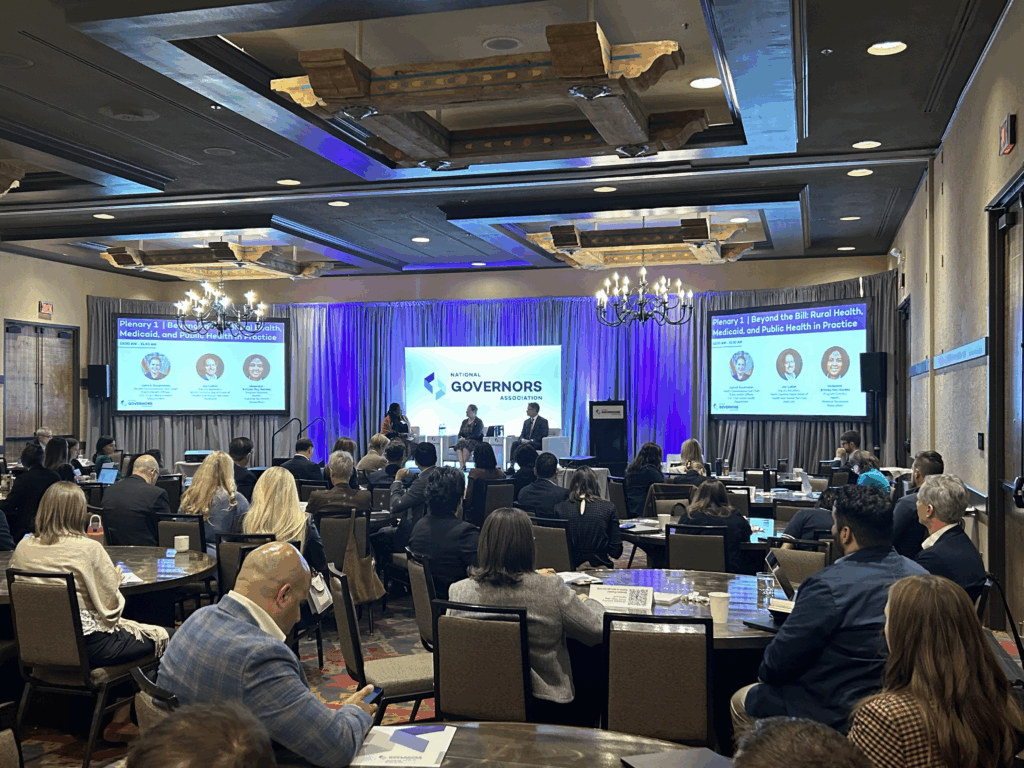
October 28-29, the National Governors Association Center for Best Practices (NGA Center) brought together Governors’ health and human services policy advisors representing 28 states and territories in Santa Fe, New Mexico, for the annual Health and Human Services Institute. This year’s institute explored the theme “Stretching the Dollar: Strategically Financing Health and Human Services,” including innovative solutions to funding health and human services policy priorities despite tightening fiscal conditions. The meeting provided a unique opportunity for Governors’ advisors, NGA partners, and invited guests to connect and share best practices.
Over the two days, several themes emerged from discussions with participants. The focus areas that emerged included:
- Strategic financing under budget constraints;
- H.R.1 implementation, including cross-agency coordination and improving benefits administration systems;
- Social drivers of health, such as homelessness and food security;
- Tech modernization and leveraging AI;
- Health care affordability;
- Child welfare and youth in foster care; and
- Addressing the youth mental health crisis.
Navigating H.R. 1 and Shifting Federal Policies
With H.R.1 implementation top of mind for many Governors, several sessions discussed strategies and considerations for Medicaid and Supplemental Nutrition Assistance Program (SNAP) policy changes as well as the Rural Health Transformation Program. A plenary session featured health officials from North Carolina and the U.S. Virgin Islands to discuss how H.R.1 provisions will shape Medicaid, rural health, and public health policy. In particular, the speakers highlighted the value of creating and maintaining relationships with rural community members to improve rural health care. With federal changes to SNAP implementation following the passage of H.R.1, attendees participated in a session with the U.S. Digital Response, Maximus and the American Public Human Services Association that discussed the benefit cost-share penalty, an increase in the state share of administrative funding, and expanded work requirements. State and territory attendees also had time to discuss long-term Medicaid and SNAP strategic planning, with considerations looking at their Governors’ priorities for these programs, both overall and related to implementation of H.R.1.
Reimagining Rural Health and Technology’s Role
The meeting also included a breakout session focused on rural health transformation with speakers from the National Rural Health Association and the American Academy of Physician Associates. The speakers shared considerations for states to adopt innovative approaches to expand health care access as they completed their rural health transformation program applications. Attendees also discussed innovative approaches in a breakout session dedicated to leveraging technology for health and human services. In this session, speakers from the Center for Civic Futures, Georgia Technology Authority, Open Contracting Partnership, and Families and Workers Fund discussed procurement practices and other considerations for using AI for state-delivered services.
Family Mental Health and the Behavioral Health Crisis
Recognizing that behavioral health remains a top priority for Governors, the meeting included a plenary session focused on family mental health. Speakers from the Sagamore Institute, Luminary Impact Fund, Children’s Hospital Colorado and the Colorado Department of Early Childhood shared strategies to improve mental health care by treating families together. The session explored opportunities to address the mental health crisis by expanding quality care without driving up Medicaid spending and the role philanthropy can play in supporting this work. Attendees also had the opportunity to discuss youth mental health and other health and human services policy topics in small groups at a session where they were able to select three different topics of interest and discuss each one for 15 minutes before shifting to the next topic.
Strengthening the Health and Human Services Workforce
States continue to grapple with workforce shortages across direct care, childcare and state agencies. A plenary session on navigating change management for HHS systems dove into solutions for state agency workers experiencing vicarious trauma and high turnover in their roles. This session featured speakers from the South Carolina Department of Social Services, Hope Rising, and former officials from the Tennessee Department of Children’s Services and the Washington Department of Children, Youth, and Families. Together, the speakers explored ways to expand workforce capacity and support resilience in the face of constantly changing environments.
A breakout session focused on the direct care workforce included speakers from the National Council on Aging, Virginia Commonwealth University, Nevada Aging and Disability Services Division, Public Health Supportive Services, and New Mexico Department of Aging and Long-Term Services. These speakers shared challenges facing direct care workers and budget-neutral strategies to bolster this workforce, such as aligning state strategic goals and messaging. Attendees also discussed strategies to maintain the childcare supply, with a speaker from the U.S. Chamber of Commerce sharing best practices for states to develop and strengthen partnerships with the employer community in support of the childcare workforce.
Public Health Priorities
Attendees also explored public health topics in breakout sessions covering HIV prevention and treatment and maternal and child health. The HIV-focused session focused on strategies for states and territories to expand access to effective HIV interventions in constrained fiscal environments. Speakers included experts from Gilead Sciences, Emory University, PRISMA Health, and a former official from the Massachusetts Department of Public Health. A session on maternal and child health featured a speaker from the Milken Institute School of Public Health at George Washington University who spoke about multisector, community-driven partnerships to address public funding gaps and improve health outcomes.
Looking Ahead
Governors and their health and human services advisors are facing budget constraints, federal policy changes, workforce shortages and funding uncertainties. Given these challenges, the HHS Institute offered a timely opportunity for states and territories to come together to share their perspectives. NGA appreciated the many state and territory attendees, partners and invited guests who shared their expertise in support of finding solutions for the future. The NGA team looks forward to continuing to support Governors and their advisors.