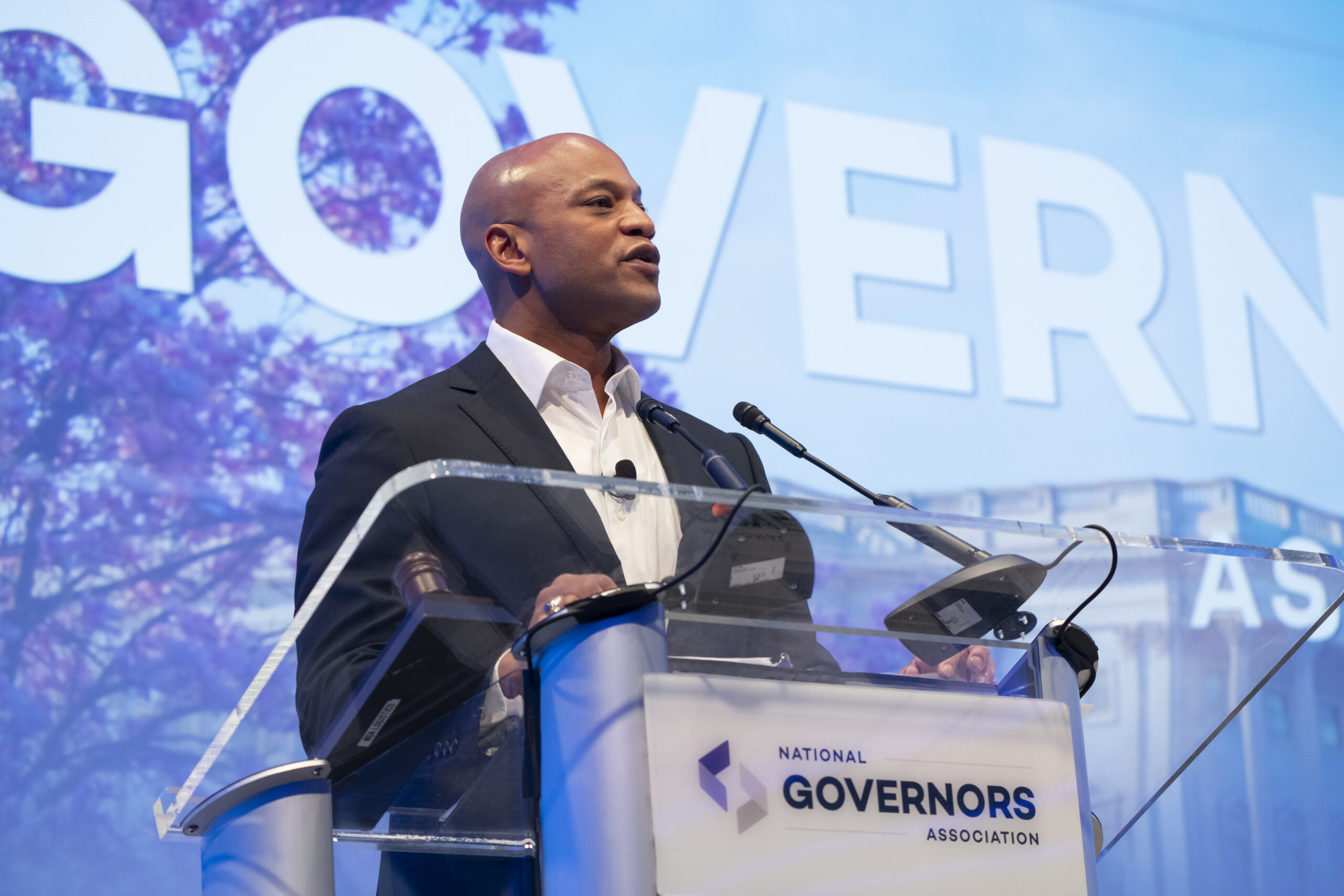
The 2025 Governors’ Education Policy Advisors Institute featured a panel conversation on lessons learned and best practices for mapping state and territory early care and education ecosystems (ECE). State and territory ECE ecosystems are a complex mix of state-administered and locally operated programs, which can pose challenges to states and territories looking to streamline their ECE services. Governors have a unique opportunity to lead these efforts, sitting at the nexus over agency leadership, funding streams and investments and state/territory priorities. The discussion featured perspectives from a panel of experts and state examples from Louisiana, Michigan and Virginia, to guide a conversation on best practices and lessons learned for Governors’ education policy advisors.
Speakers:
- Jeffrey Capizzano, Founder and President, Policy Equity Group
- Jenna Conway, Deputy Superintendent, Virginia Department of Education
- Taylor Dunn, Director, Watershed Advisors – Moderator
Key Recommendations for State/Territory Leaders:
- Activate the Governor as a champion to convene and empower disparate state administrative and oversight mechanisms to improve coordination across programs can stimulate collaboration and streamline management of ECE systems.
- Prioritize sustainability to ensure longevity of infrastructure improvements. Utilizing executive orders can help move items quickly, but when available, leveraging legislative vehicles can be a stronger tool for ensuring longstanding structural administrative and organizational improvements to ECE systems.
- Identify a north star to help guide and create urgency around these goals. Louisiana and Virginia both leveraged “school readiness” as their north star to anchor action to make sure every infant and toddler across the states h was prepared to thrive in kindergarten.
- Align programs under a single entity to allow one voice to break through across health, safety, quality and learning for ECE programs. This can look like a single state/territory agency coordinating all ECE programs, bringing programs under one umbrella agencyor aligning state/territory-wide goals for programs.
- Align outcome measurements across systems, especially around teacher-child interactions and curriculum, to ease barriers on parents and providers exploring educational opportunities for children across the system.
- Engage all stakeholders across the ECE sector, recognizing that there is no single provider or provider type that can serve all children birth to five. Children’s needs in educational settings vary, and supporting the full mixed-delivery system can ensure that these needs are fully met.
Background on State/Territory ECE Programs:
Government investment in child care and early education programs has evolved to address social values and economic changes of the American populace, resulting in the creation of a plethora of programs that address consideration of children’s care, safety and brain development. However, as federal and state actors have increasingly supported ECE investments contributing much needed resources into the system, fragmentation across these varied programs continues to be a barrier for states seeking to maximize their investments.
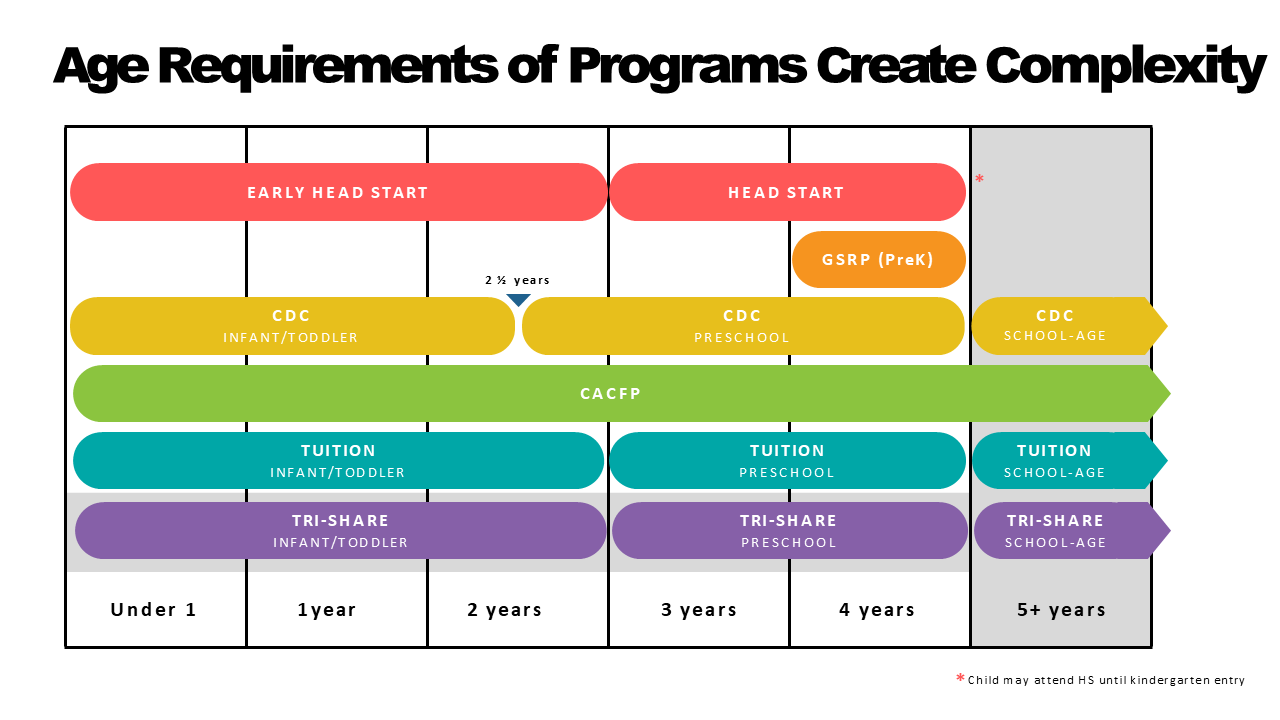
Several federal funding streams flow into state/territory ECE ecosystems. However, due to variance across state landscapes related to administrative organization and processes, operating these programs can entail significant challenges. The four main federal funding sources that flow into state/territory ECE systems —Child Care and Development Block Grant (CCDBG), Head Start and Early Head Start, State preschool, and IDEA Part B and Part C — all entail different administrative procedures, eligibility requirements and target populations, as well as conflicting performance standards, goals and metrics. Additionally, certain ECE programs are administered or overseen directly by the state/territory governments, but almost 40% of federal investments for ECE flows straight to early childhood program operators (Head Start), and states and territories have limited roles and responsibility for overseeing program administration. Such divergence in operations and oversight creates challenges for both providers and state/territory leaders looking to streamline their ECE systems and maximize available funding.
This fragmentation has real impacts: families face complex eligibility rules, providers struggle to blend funds, and states and territories cannot easily track the footprint of investments and outcomes or ensure consistent quality across programs. These inefficiencies weaken school readiness, reduce the effective reach of federal and state dollars and make it harder to scale successful models statewide.
CASE STUDY: To address the barrier around eligibility, Michigan mapped income eligibility thresholds to assist providers in blending funding across to ease the burden on families. As income increased, this sliding scale mapped where families continued eligibility. Michigan also mapped these eligibility thresholds around age requirements.