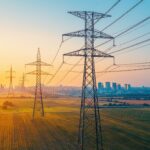

America faces significant energy and environmental challenges that necessitate a transformation in our policies and practices in these areas. Among these challenges are extreme price volatility in the oil and natural gas markets, costly electricity reliability issues, ever-increasing dependence on oil from unstable foreign nations and mounting environmental concerns, such as global climate change. Additionally, the United States economy depends heavily on the consumption of fossil fuels to produce energy. The burning of fossil fuels is one of the largest sources of carbon dioxide and other greenhouse gases that  cause climate change. The country is in the midst of an ongoing national dialogue regarding climate change and how to address the nation’s greenhouse gas emissions without jeopardizing national or regional economies.   

Within our federalist system, states have responsibility for the following areas:  land use planning; environmental protection; implementation of national clean air policies, public health and safety; and natural resources conservation and management. Because of their purview in these areas, many states are implementing or participating in initiatives to address greenhouse gas emissions. Successful development of national energy policies requires the active participation of state and local governments and must be flexible enough to allow for regional differences and diversity among states. In addition, any national greenhouse gas program must be informed by and recognize state-based activities, support their further development and not preempt or dilute their effectiveness.

Governors support using a variety of resources and tools to promote our nation's energy security while protecting its environment and addressing climate change. To begin, governors continue to promote the expansion of alternative fuels while moving toward the goal of life-cycle greenhouse gas reductions and being mindful of the effects on the agriculture industry and economic development.

Governors also support a variety of incentives, including those to speed domestic commercialization of advanced hybrid, clean diesel, electric, flex-fuel and hydrogen technologies; the solar and fuel cell investment tax credit and energy production tax credit; credits for carbon sequestration; and tax credits for energy efficiency and conservation.

Further, governors support the State Energy Program and the Weatherization Assistance Program as a means to address rising energy costs and help homeowners, small businesses, schools and hospitals save energy and reduce energy costs.  To maximize energy efficiency and conservation efforts, governors support programs to increase consumer awareness; increase technology transfer opportunities; encourage incentives for greater investment in energy efficiency and conservation technologies; promote and expand the U.S. Department of Energy (DOE) Energy Star programs; and eliminate unnecessary regulatory barriers to achieving greater energy efficiency.

The national security and economic well-being of this nation are predicated on securing economic and environmentally sustainable supplies of energy. To do so, governors support exploration and development of the nation's energy resources, to the extent they are competitive in energy markets and can be developed consistent with federal, state and local environmental requirements.

Domestic Energy
The national security and economic well-being of our nation are predicated on economic and environmentally sustainable supply and efficient use of energy. However, the United States is confronted by transformative energy challenges including price volatility in most energy markets, costly electricity reliability issues, continued dependence on oil from overseas nations, many of which are unstable, and mounting environmental concerns. Healthy and robust energy markets are a component of economic growth and job creation.

Responding to these energy challenges, governors have pioneered a wide array of innovative energy policies in their states. For example, governors have launched state energy efficiency programs and renewable electricity standards; initiated public-private partnerships to finance projects; adopted alternative transportation fuels standards; and created state and regional climate change initiatives.

Governors call on Congress to supplement state efforts by promoting federal policies that encourage environmentally responsible, secure, efficient and affordable energy production and use. Federal policy should enhance the nation’s energy security; promote domestic energy production and jobs; reduce energy price volatility; mitigate outstanding environmental risks; promote America’s diverse range of energy sources; reduce dependence on overseas sources of energy; increase energy efficiency and conservation; promote innovative methods to finance energy projects; and enhance U.S. global competitiveness.

Committee Letters:

  • NGA Letter - Renewable Tax
    April 4, 2012 letter (from Governor Malloy and Governor Daugaard) to Congressional leadership to support the continuation of the production tax credit for wind and renewable energy and the investment tax credit for wind as well as the recent legislative proposal to institute ITC for the first 3,000 megawatts of offshore wind facilities placed into service.

  • NGA Letter Regarding Renewable Energy Tax Credits
    July 23, 2008, letter to House and Senate leadership urging Congress to extend tax provisions that encourage the development of renewable energy sources and promote energy efficiency.

  • NGA Letter Regarding the State Energy Program and Weatherization Assistance Program
    June 16, 2008, letter to Senate Appropriations Subcommittee on Energy and Water Development Chairman Dorgan and Ranking Member Domenici and House Appropriations Committee Chairman Obey and Ranking Member Lewis urging Congress to support federal-state programs that assist states in promoting energy security.

  • NGA Letter Regarding Energy Tax Credits
    February 26, 2008, letter urging Congress to extend expiring tax provisions that encourage the development of renewable energy sources and promote energy efficiency.

  • NGA Letter Regarding Energy Programs Contained in the Farm Bill
    October 30, 2007, letter to Senate Agriculture Committee Chairman Harkin and Ranking Member Chambliss urging Congress to maximize a feasible level of funding for the programs in the energy title of the Farm Bill.

  • NGA Letter on Governors' Priorities in the Energy Bill
    October 26, 2007, letter to Senate Energy and Natural Resources Committee Chairman Bingaman and Ranking Member Domenici and House Energy and Commerce Chairman Dingell and Ranking Member Barton, detailing the governors' priorities in the Energy Bill.

  • NGA Letter Regarding the State Energy Program and Weatherization Assistance Program
    June 15, 2007, letter to Senate Appropriations Subcommittee on Energy and Water Development Chairman Dorgan and Ranking Member Domenici and House Appropriations Committee Chairman Obey and Ranking Member Lewis urging Congress  to provide $74 million for the State Energy Program and $275 million for the Weatherization Assistance Program from  the fiscal year 2008 Energy and Water appropriations bill.

  • NGA Letter Regarding the State Energy Program
    June 26, 2006, letter to Senate Appropriations Subcommittee on Energy and Water Chairman Domenici and Ranking Member Reid urging Congress to fund the State Energy Program at the President's fiscal year 2007 request of $49.5 million.

  • NGA Letter Outlining Strategies to Reduce Energy Prices
    October 19, 2005, letter to Senate Environment and Public Works Committee Chairman Inhofe and Ranking Member Jeffords and to Senate Energy and Natural Resources Committee Chairman Domenici and Ranking Member Bingaman urging that any new legislation ensures that federal jurisdiction fits with existing state authority, preserve environmental standards, and focus on directly relieving energy prices by promoting domestic energy production, increasing refining capacity, and further encouraging energy conservation and efficiency.

  • NGA Letter Regarding Liquefied Natural Gas Facilities
    June 21, 2005, letter to Senate Energy and Natural Resources Committee Chairman Domenici and Ranking Member Bingaman urging Congress to pass an amendment to the Senate energy bill that requires gubernatorial approval of proposed projects that would site liquefied natural gas (LNG) facilities onshore or in state waters.