

NGA Library
Our nation’s Governors are dedicated to leading bipartisan solutions that improve citizens’ lives. Through NGA, Governors identify priority issues and deal with matters of public policy and governance at the state, national and global levels. NGA teams work side-by-side with state leaders to identify challenges and develop solutions. View NGA products below, filterable by content type and topic.

NGA Convenes Governors’ Education Policy Advisors Institute to Boost Student Achievement, Create More Universal Career Pathways
Education leaders collaborate on early literacy, tutoring and other tools to support broad student success NEW ORLEANS – The National ...

NGA Convenes Governors Health and Human Services Policy Advisors Institute to Strengthen Healthcare Delivery and Sustainability in States
NEW ORLEANS – The National Governors Association (NGA) this week convened its annual Governors Health and Human Services Policy Advisors ...

NGA Convenes Annual Policy Summit to Support Collaboration on States’ Top Policy Priorities
Policy advisors and partners from across the public and private sectors discuss disaster response, AI and the future of work, ...

National Governors Association and Walmart Partner to Advance Skills-first Hiring and Workforce Development in States
Workforce leaders collaborate to move beyond degree requirements Washington, D.C. – The National Governors Association (NGA) this week hosted its ...
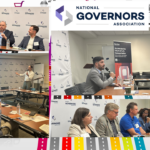
National Governors Association Infrastructure Workshop Explores What’s Next for Investment, Permitting and Partnerships
As the Infrastructure Investment and Jobs Act expires, leaders from 21 states collaborate with EPA, DOT to sustain infrastructure investment ...

NGA Helps States Prepare for Workforce Pell Rollout and Future of Workforce Implementation
Leaders from nearly 40 states collaborate with Department of Education on harnessing new Workforce Pell funding to boost job training ...
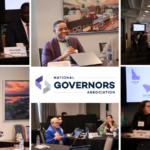
National Governors Association Policy Academy Convenes States to Strengthen SNAP Employment and Training Programs
Governors continue to develop creative workforce solutions and support economic mobility amid significant federal changes to SNAP Washington, D.C. – ...
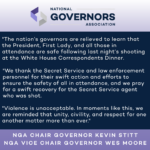
NGA Issues Statement following Shooting at White House Correspondents Dinner
NGA Chair Governor Kevin Stitt of Oklahoma and Vice Chair Governor Wes Moore of Maryland issued the following statement regarding ...

NGA Convenes Broadband Leaders to Promote Workforce and Community Development in States and Territories
Gov. Spanberger addresses national gathering of state broadband officials, federal partners and internet service providers Alexandria, Va. – The National ...

Governors Call for Energy Permitting Reform
Govs. Stitt, Shapiro, Meyer, Morrisey, Sherrill Join Forces in Philadelphia Philadelphia – A bipartisan group of governors gathered in Philadelphia ...

Governors Applaud Progress on Housing Affordability
Washington, DC – Wisconsin Governor Tony Evers and Wyoming Governor Mark Gordon, co-chairs of the National Governors Association (NGA) Education, ...

Governors Stitt and Moore Applaud the Leadership of America’s Governors
Washington, DC – NGA Chair Oklahoma Governor Kevin Stitt and Vice Chair Maryland Governor Wes Moore closed out the 2026 ...
