

Service United: A Bipartisan Call to Elevate Service, Bridge Divides, and Promote Workforce Development
Maryland Gov. Wes Moore opened his term as Chair of the National Governors Association with a challenge to his colleagues in both parties: give more Americans, and especially more young Americans, the chance to serve.
Service United is a bipartisan call upon governors across the nation to promote paid workforce and community development through state-based service programs. Modeled upon Maryland’s first-in-the-nation public service year program, the initiative will evaluate, scale and help implement a diverse array of service programs in participating states over the next year.
Over the coming year, Gov. Moore is asking every governor, Democrat and Republican, for three commitments:
- Identify one urgent need in your state that paid service can help meet.
- Build a model to recruit and support the next generation into that work.
- Make sure service leads somewhere — to a credential, an apprenticeship, continued education or a job — while also fostering relationships participants can rely on for life.
The long-term goal: 1 million Americans serving each year within the next decade.
Partners in Service
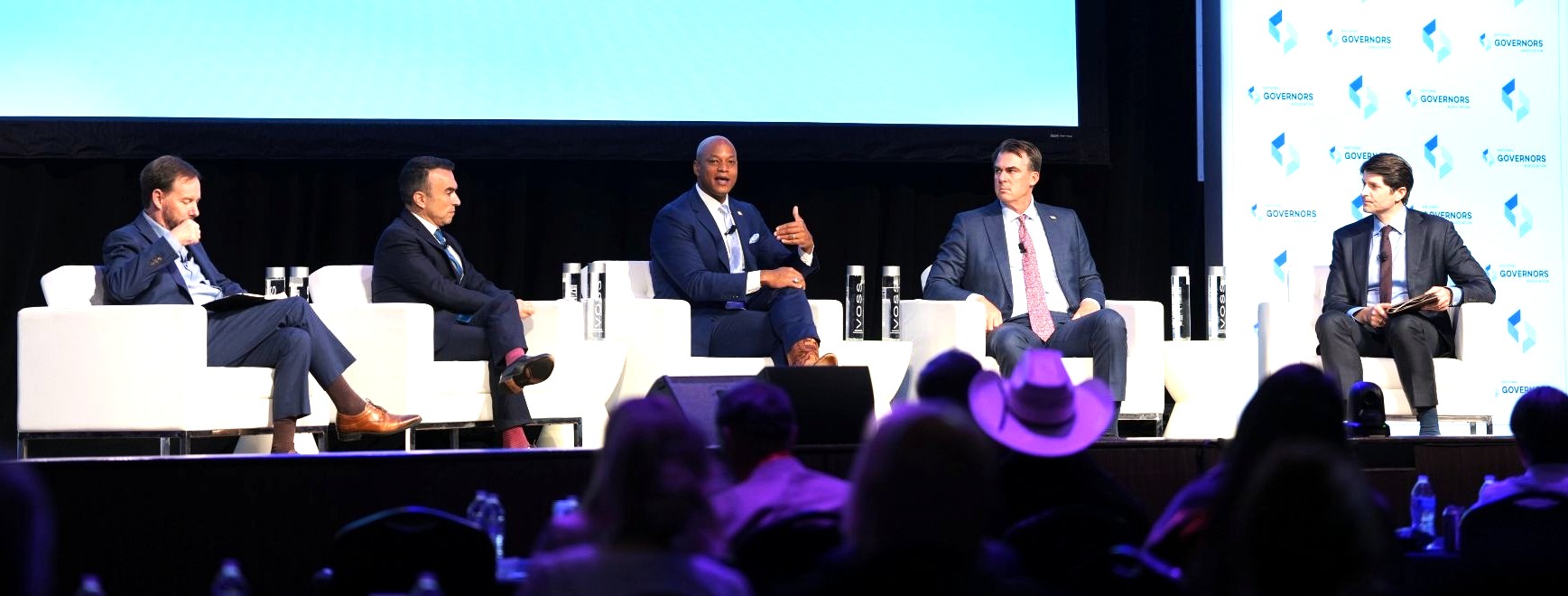
For the launch, governors, state service leaders and private-sector partners took the stage at the NGA Summer Meeting to answer the practical question behind the initiative: what does it take to make service a strategy rather than a slogan? Moderated by Dan Vallone of the Andrew Carnegie Foundation, the conversation moved from the personal to the operational — exploring why these leaders answered the call to serve and how states are turning that impulse into paid programs that meet real community needs and launch real careers.
Gov. Moore walked through the design choices that made Maryland’s Service Year Option accessible to young people from all 24 jurisdictions of the state and explained why paying participants was non-negotiable. Oklahoma Gov. Kevin Stitt made the case that service runs through the private sector too, describing the Be a Neighbor initiative that has connected some 23,000 Oklahomans to neighbors navigating foster care, reentry and struggling schools.
On the operational side, John Kelly, CEO of America’s Service Commissions, detailed how Colorado braided AmeriCorps funding with registered apprenticeships and industry credentials, including a partnership with the state’s National Guard. Dr. Bechara Choucair of Kaiser Permanente discussed his organization’s $10 million commitment to the Youth Mental Health Corps and why a looming behavioral health workforce shortage makes service a business imperative. Gov. Moore closed the discussion with his argument that loneliness, economic disruption and political division may share a single answer.
Watch the full conversation below to hear the panel offer a candid look at some of the proven ways to stand up or scale service programs.
Reflections on Service
The 2026 Summer Meeting also featured two “Reflections on Service” panel discussions with outgoing governors. Moderated by former NGA chair and Arkansas Gov. Asa Hutchison, the first panel discussion featured Kansas Gov. Laura Kelly and Minnesota Gov. Tim Walz, and the second discussion featured Oklahoma Gov. Kevin Stitt and Wyoming Gov. Mark Gordon.
Opening with his own reflection that a governor’s legacy comes down to leadership, trust and truth rather than any single accomplishment, Gov. Hutchinson drew out two paths into service that began long before either governor considered elected office. Gov. Kelly was born into a career military family, where service was simply the texture of daily life. A summer working with kids from New York City in the late 1960s convinced her that problem-solving with people beat problem-solving with numbers, and she switched her major from math to psychology on the way into a public-sector career. Gov. Walz joined the National Guard at age 17. Encouraged by his father’s lesson in being part of something bigger than oneself, the governor carried his experience through teaching, coaching and 24 years in uniform. Both framed their next chapters as an obligation rather than a retirement. Walz plans to return to the classroom, arguing the experience he gained belongs to the people of Minnesota and offering his belief that the country would be healed by every young person performing national service. Both Govs. Kelly and Walz also shared advice to young people, encouraging young Americans to build a real life first, because representation requires having something to represent.
The second conversation traced service through business, small-town obligations and the limits of the office of governor. Gov. Stitt described writing 50 lifetime goals as a college student, putting down “become governor of Oklahoma,” then erasing it as implausible and replacing it with “have dinner with the governor,” offering the story to argue no ambition is out of reach. He ran for governor two decades later, in 2018, after watching his state struggle, and found that the job requires the need for persuasion. What he has valued most about the job is the convening power to bring adversaries to one table. As an example, he noted this approach helped produced the largest single-day commutation in U.S. history and a sharp drop in Oklahoma’s incarceration rate. Gov. Gordon, raised in a town of 280 where everyone had a job to do, never anticipated becoming treasurer or governor. He framed the role of governor as problem-solving under accountability. When the governors’ terms end early next year, Gov. Stitt plans to return to the private sector in the Cincinnatus tradition, and Gov. Gordon plans to spend more time with his grandchildren and his cattle. Both governors urged young people to get real-world experience before seeking office, stay engaged rather than take their ball and go home, and pay attention to the school boards and town councils that shape their lives more than Washington does.
Watch the full conversations below.