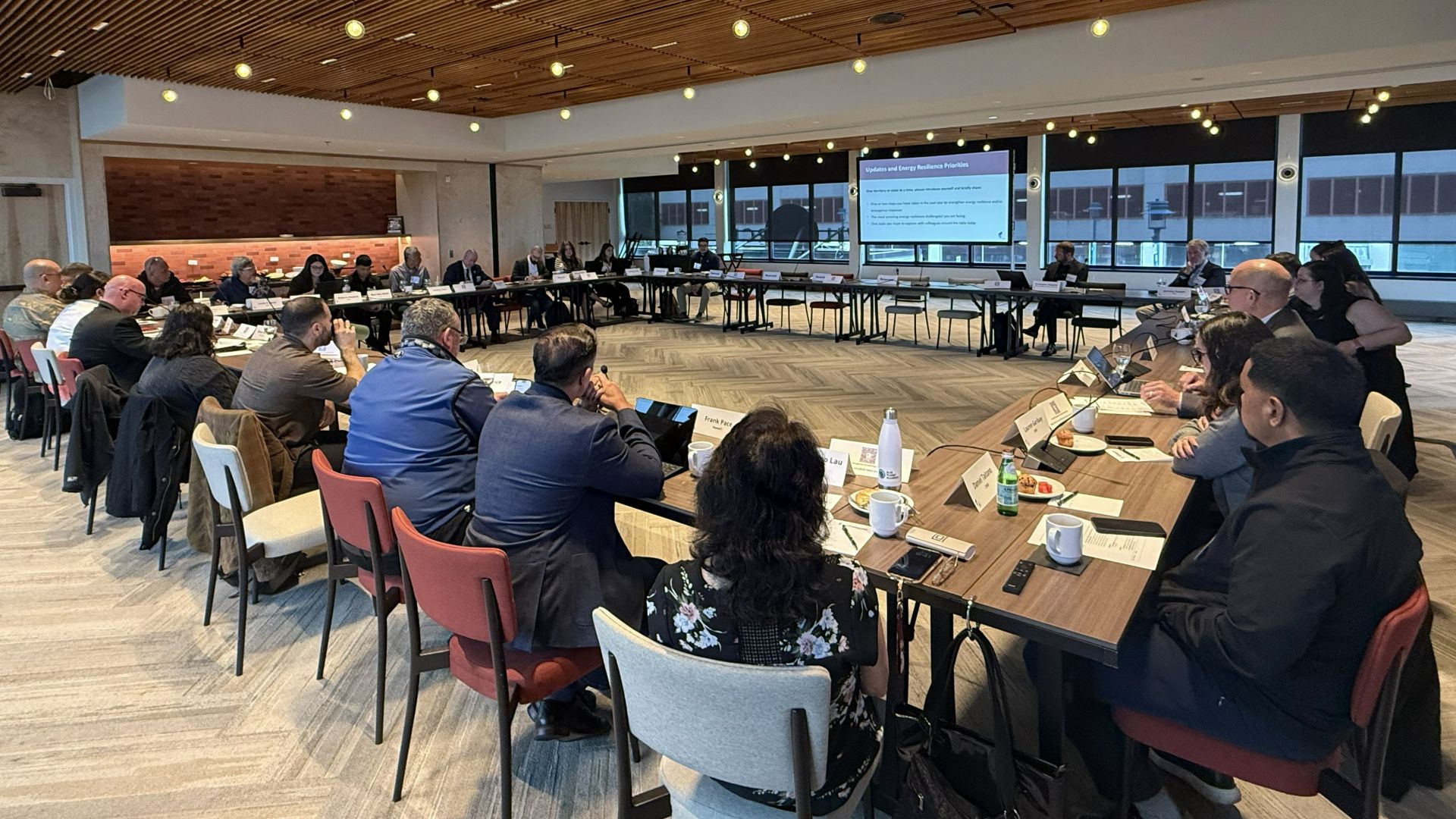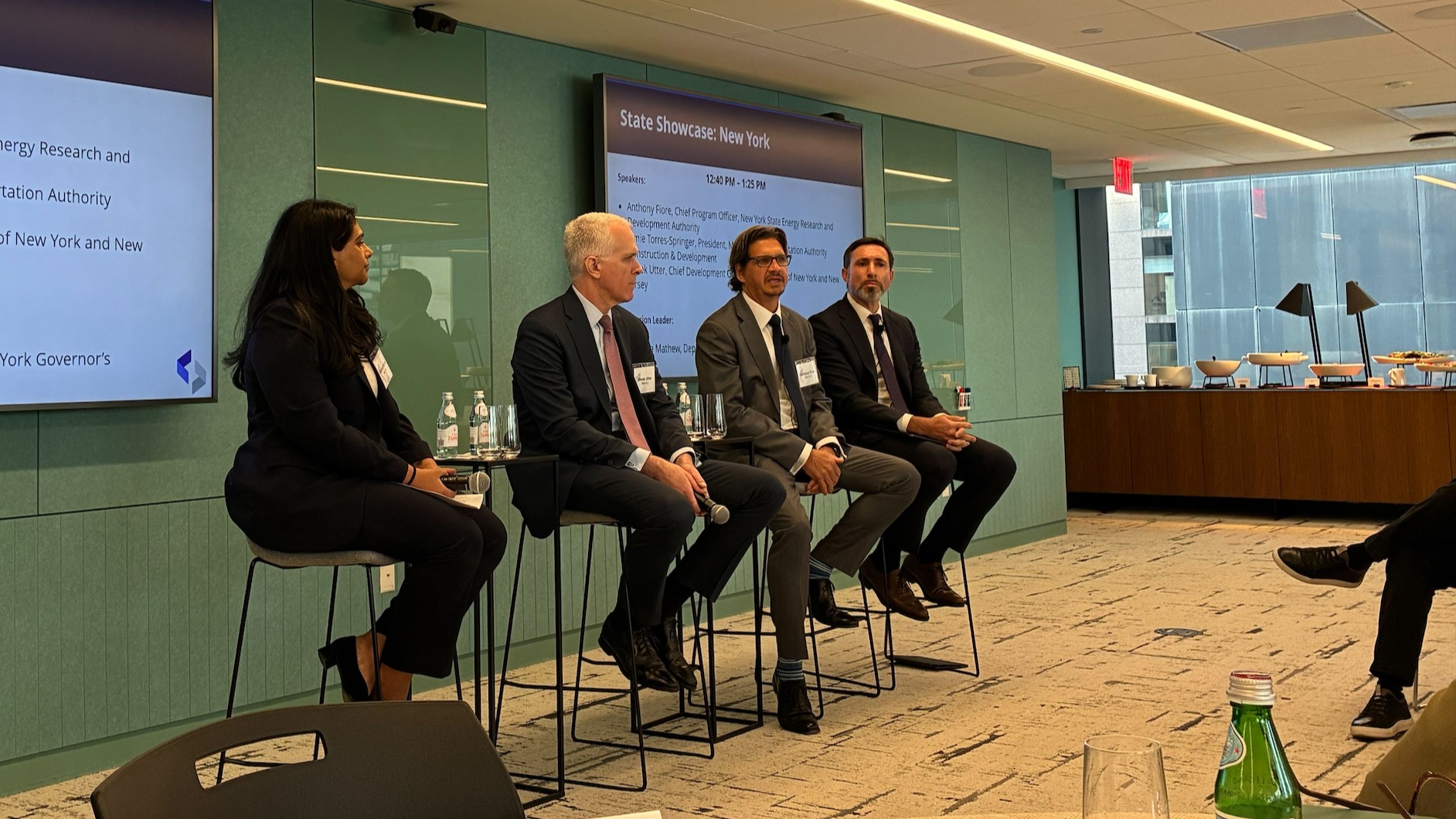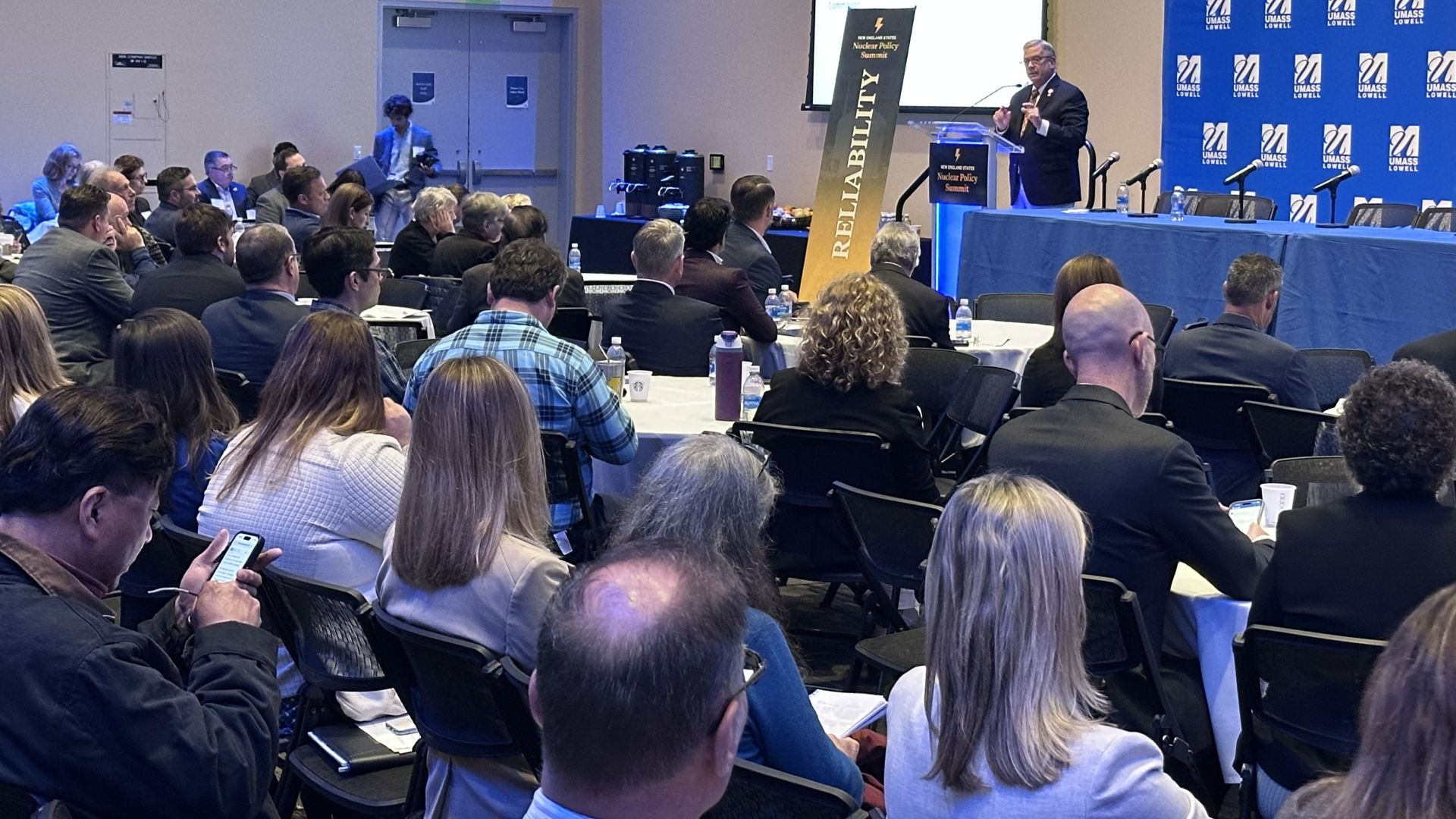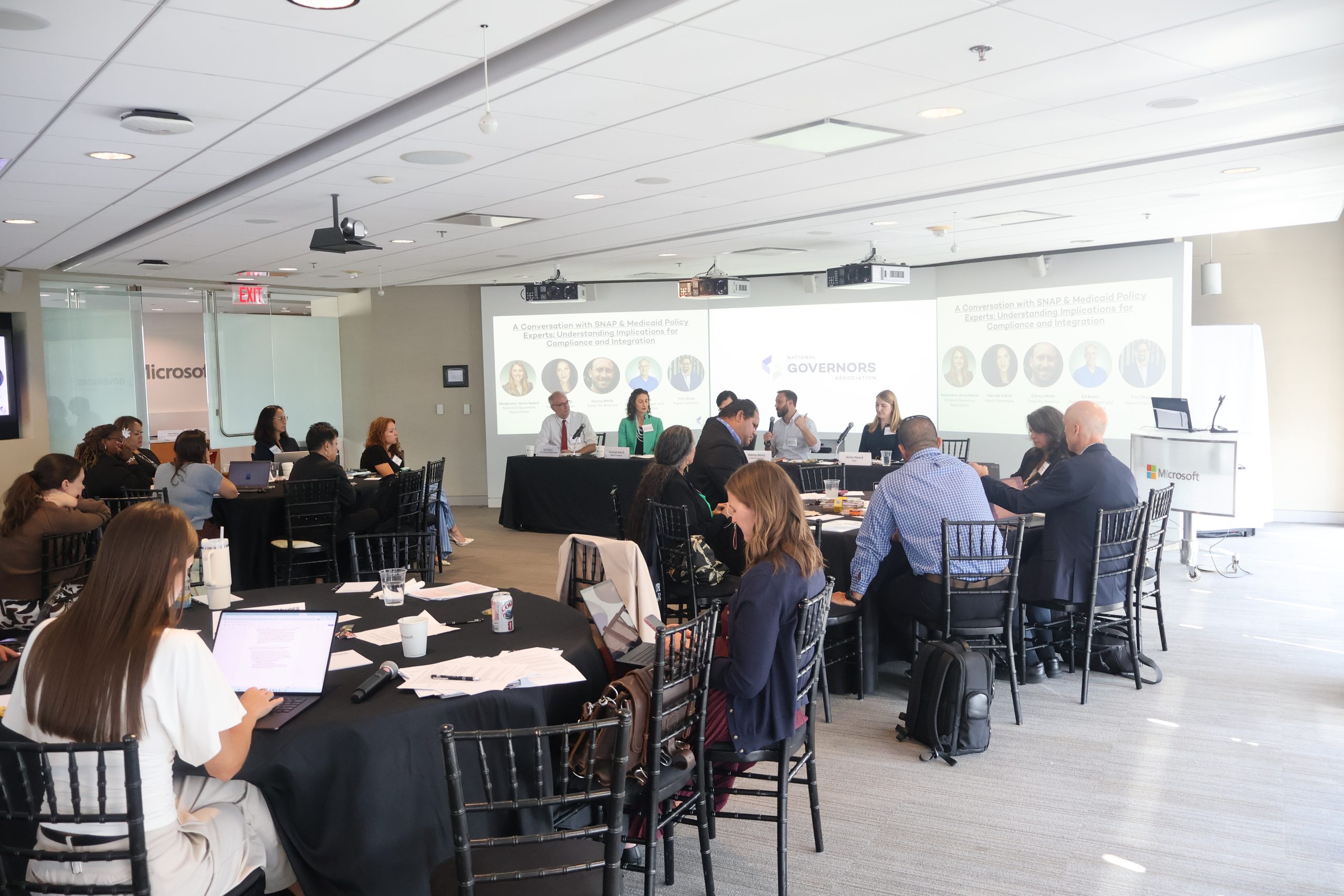
From May 5 through May 7, the National Governors Association (NGA) Center for Best Practices convened the NGA Workforce Pell Implementation Lab at the Omni Shoreham Hotel in Washington, D.C. Governors’ workforce and education policy advisors, state agency leaders, workforce board chairs and national partners came together to work through one of the most consequential near-term policy challenges facing states and territories: how to implement the new federal Pell Grant expansion to short-term training programs before it takes effect July 1. The Lab featured peer learning, direct federal engagement and honest conversations about what states and territories are finding most challenging. The through line across three days was consistent: July 1 is a starting line, not a finish line, and building carefully now will have an education and workforce infrastructure that lasts.
State and Territory Priorities and the Federal Perspective
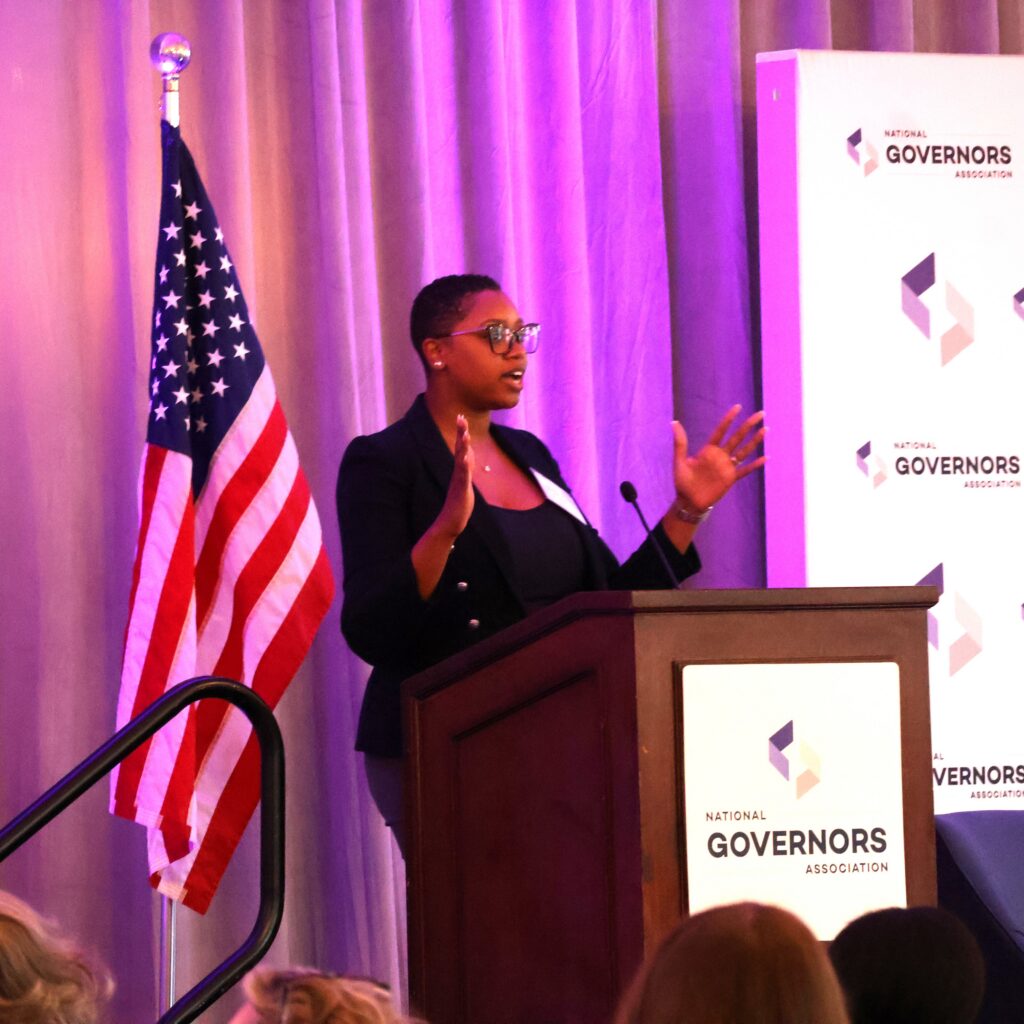
Wednesday morning opened with state and territory representatives sharing their primary focus for Workforce Pell implementation. What united the room was the weight of the moment and a shared commitment to getting it right. Nick Moore, acting Assistant Secretary in the Office of Career, Technical, and Adult Education, and David Musser, Deputy Director of Policy Implementation and Oversight at Federal Student Aid, then sat down for a fireside chat with state and territory leaders. The federal officials made clear that the flexibility built into Workforce Pell is deliberate, and the U.S. Department of Education sees itself as a partner in that work, not a compliance monitor. States pressed on the thorniest open questions and came away with a clearer sense of where federal guidance will land and where genuine state discretion remains. The morning closed with facilitated tabletop discussions led by NGA’s Portia Pratt to work through immediate launch issues and the longer-term post-launch questions that will define whether Workforce Pell delivers on its promise. Cross-agency alignment and data readiness surfaced again as key issues, and states further along in the planning process shared frameworks and hard-won lessons with those in earlier stages.
Building the Data Foundation
The afternoon data session, featuring leaders from Arkansas, Indiana, Kentucky, the Data Quality Campaign, and Strada Education Foundation, discussed the importance of getting the data infrastructure right. Non-credit workforce programs have long operated disconnected from financial aid records, labor market outcomes and credit articulation data. Workforce Pell is forcing states to close that gap quickly, and panelists were candid that it is a big lift. Data collaboration is fundamentally a relationship-building exercise before it is a technical one, agencies that have not historically shared definitions are now being asked to do both at once, often discovering mid-process that their definitions of basic terms diverge in ways that matter enormously for measuring outcomes.
Leveraging Industry Pipelines: A View from The Home Depot
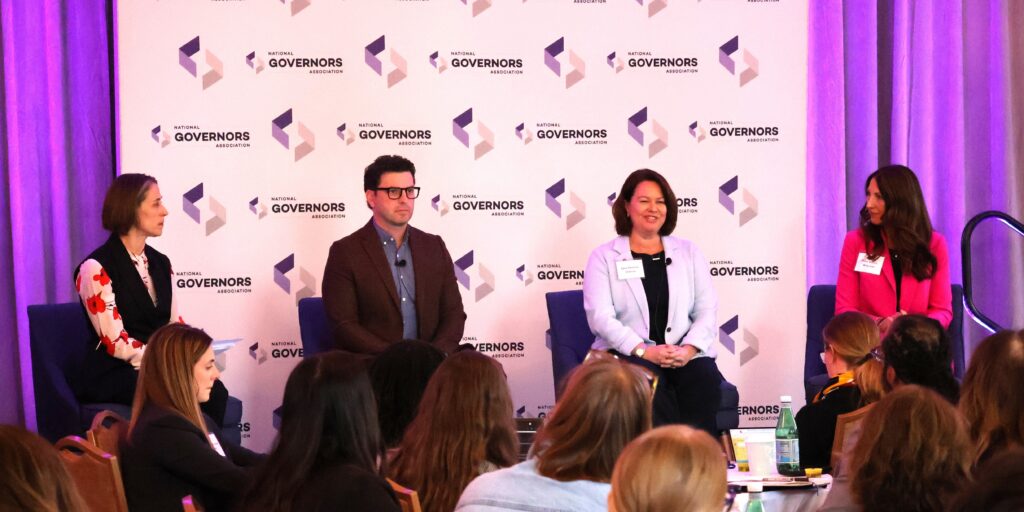
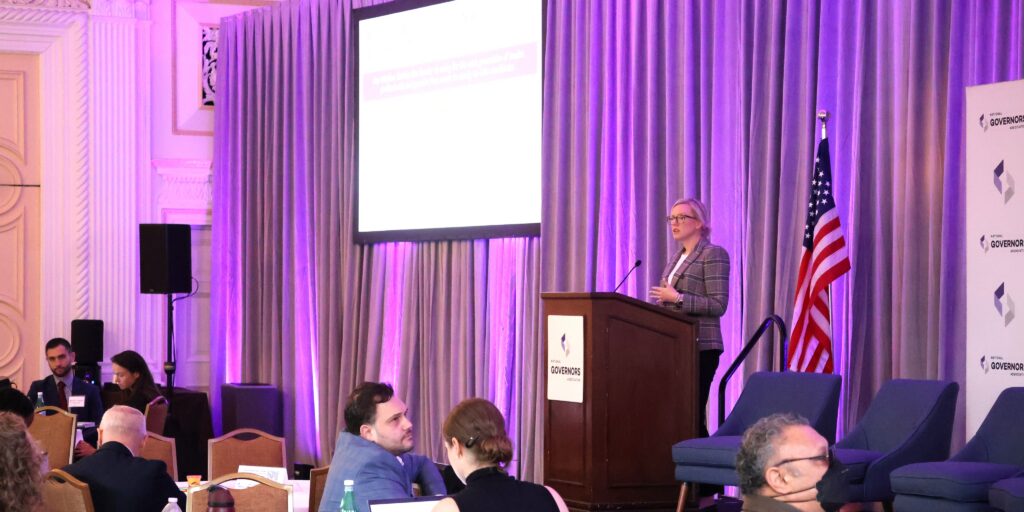
The skilled trades pipeline is a generational crisis, with experienced workers retiring faster than they are being replaced and younger generations who were never meaningfully introduced to trades as a career pathway. Jenna Arca, director of workforce development at The Home Depot, brought a private sector perspective that resonated with state leaders thinking about how to move Workforce Pell from policy to enrollment. The company’s Path to Pro initiative, a free, virtual, self-paced skills program available in English and Spanish, has graduated more than 175,000 entry-level workers and is designed specifically for people who cannot afford to stop working to pursue traditional training. The practical implication for states is that industry pipelines like Path to Pro can serve as a bridge between policy and the learners Workforce Pell is designed to reach.
Program Approval: Art, Science, and Compliance
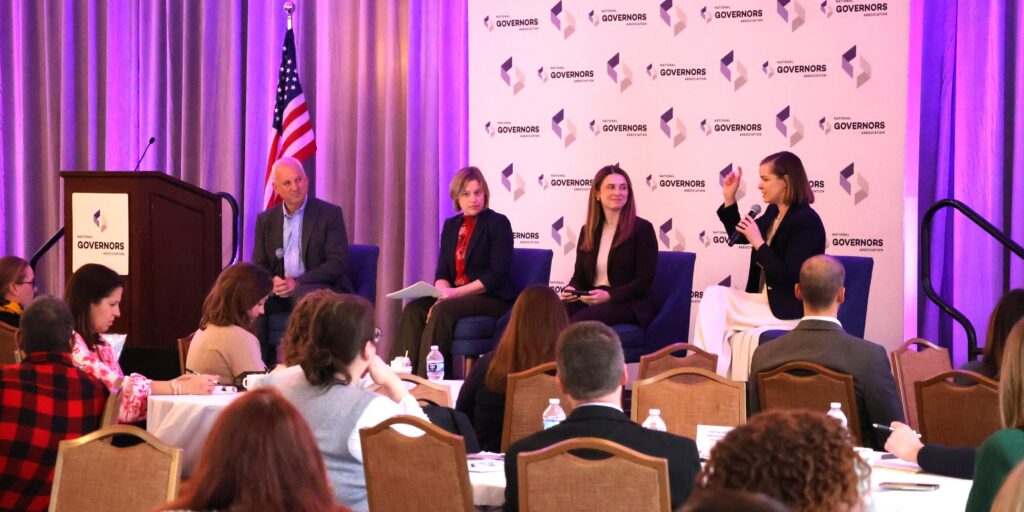
State experts from Iowa, Maryland and Minnesota joined a panel, moderated by Jon Schnur of America Achieves, on building program approval processes in real time, bringing both their frameworks and lessons learned. The clearest consensus was that success means people landing good jobs with better earnings, not programs meeting eligibility criteria. The risk of high compliance and low impact is real, and every policy decision should be traced back to the employment outcome question. Related to that, states were advised to start small and treat initial implementation as a pilot, deliberately approving a focused set of high-quality programs on day one rather than trying to approve as many as possible. Launching a durable program later is far better than rushing into something that is hard to walk back. Governance decisions shape everything; getting clarity on which agency leads which decisions is an essential prerequisite for everything else. Cross-agency working groups with regular meeting cadences make all downstream coordination possible. And when it comes to employer engagement, the panelists were direct: if an employer won’t fill out a one-page form to validate a program’s connection to real hiring needs, that tells you something important about the program’s value.
Are Colleges Ready?
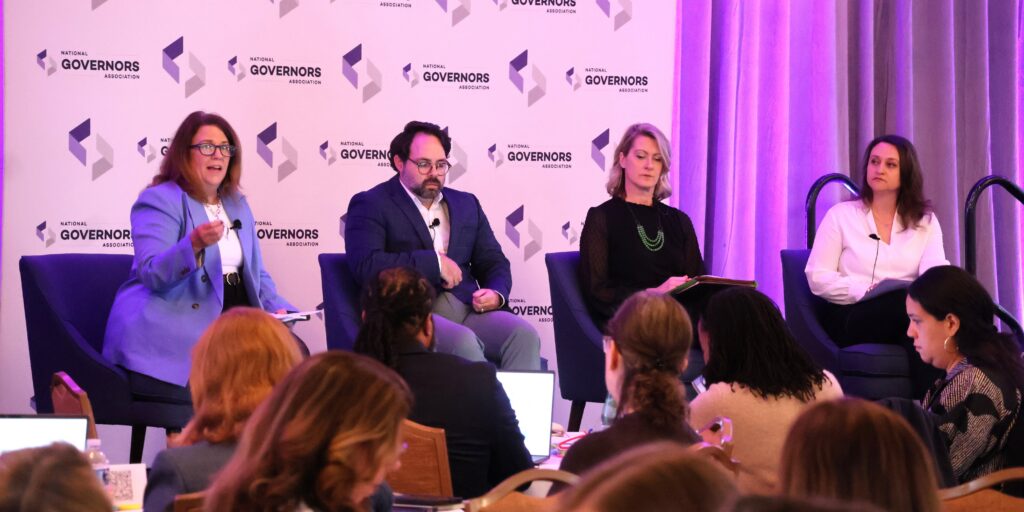
Leaders from Frederick Community College, Louisiana Community and Technical College, and New Mexico’s Higher Education Department, then joined Lisa Larson of Education Design Lab to offer insights from institutions. Traditionally, financial aid offices have had little to no involvement with non-credit learners at most institutions. Workforce Pell fundamentally changes that relationship, requiring new internal partnerships and integrated packaging approaches that most schools are building from scratch. Instructors are an underappreciated bottleneck. Condensing programs to fit Workforce Pell’s timeline is complicated when courses rely on part-time industry practitioners who simply may not have more hours to give. And there is a live tension between quantity and quality: master plans built around credential attainment numbers risk optimizing for volume over job placement. The best student-facing message, panelists agreed, is simple: we want to help make this affordable: come talk to us. Eligibility mechanics belong in the back office.
Registered Apprenticeship: A Ready-Made Pathway
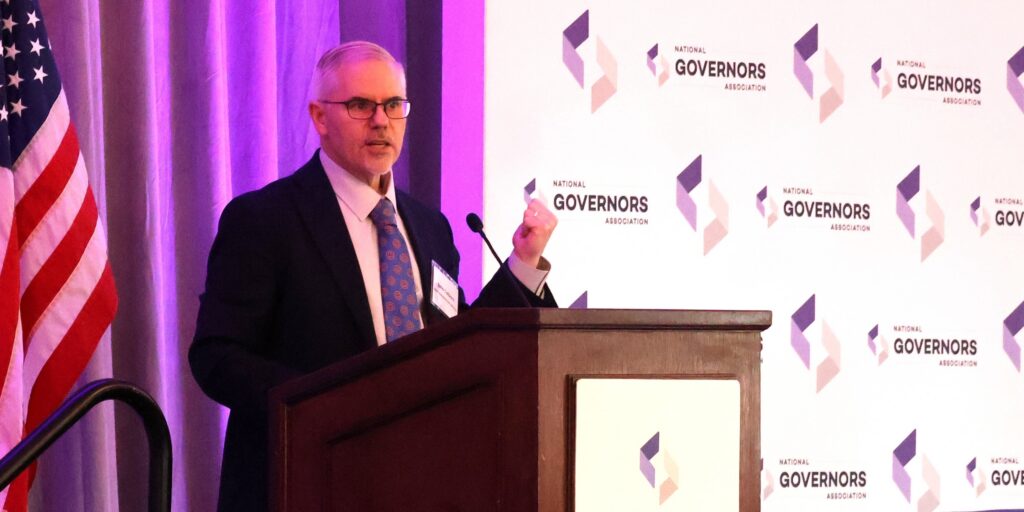
John Colborn of Apprenticeships for America made the case that registered apprenticeship fits Workforce Pell better than most people realize but with implementation conditions that states and territories need to work through deliberately. Several key requirements are satisfied out of the box: the 70 percent job placement threshold is effectively met on day one for most registered apprenticeship programs, and the apprenticeship completion certificate satisfies the credential requirement. The non-continuous instructional period provision is the critical regulatory flexibility that makes the connection workable. The central challenge is that nearly all registered apprenticeship programs charge no tuition, but Workforce Pell requires a tuition bill to offset. States will need to design funding structures where tuition is set, Workforce Pell covers eligible students’ share, and employer contributions fill remaining gaps, resulting in zero cost to the apprentice. The broader opportunity, Colborn argued, is to use this moment to redesign rather than just comply. To rethink curriculum designs, credit recognition pathways, and connections to further education rather than retrofitting existing structures.
Expanding Access: Reaching Rural Learners
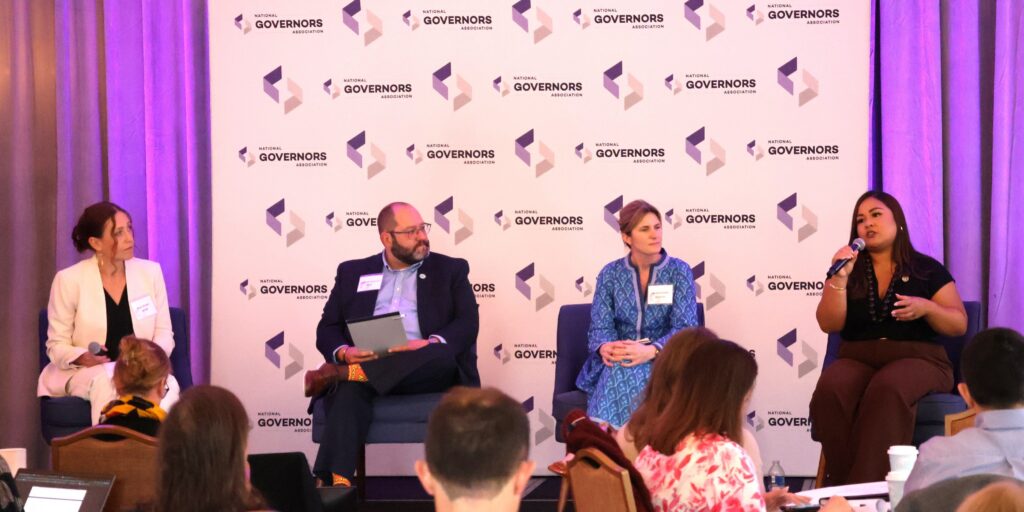
Rural learners face compounding barriers that a tuition grant alone cannot solve: transportation, childcare, digital access, and the opportunity cost of time away from work. Many of Workforce Pell’s guardrails, such as minimum hours, wage thresholds, completion rates, and the need for accredited providers, create structural barriers for rural communities rather than pathways, and advocates are pressing states and federal legislators to address those mismatches in the underlying rules. Experts from the Alliance for Research on Regional Colleges, Northern Marianas College, and Vermont’s Department of Labor, sat down to discuss these challenges and more, including that virtual delivery is not a universal solution in rural areas. Older populations, digital literacy gaps, and unreliable internet mean in-person delivery remains the strong preference, making instructor availability a binding constraint in ways that policy discussions often miss. State data systems aren’t built to capture granular rural needs, which means community listening tours and direct employer conversations are irreplaceable alongside labor market information when designing programs for rural communities.
Making the Case for Regional Compacts
Representatives from the Southern Regional Education Board and the Western Interstate Commission for Higher Education made a compelling case that regional compacts are a ready-made infrastructure for cross-state collaboration — and that states should reach out now, not when the need is urgent. Organizations with decades of experience in cross-state data sharing, program agreements, and stakeholder convening already exist. States don’t need to build that capacity from scratch. The panelists were careful to distinguish between two separate problems that often get conflated: cross-state data sharing agreements and bilateral program eligibility reciprocity. These are distinct efforts that can be pursued on different timelines, with data sharing moving faster because it doesn’t require full program approval alignment to be useful. The practical starting point for bilateral agreements is border regions and one or two high-priority sectors, not trying to align entire state occupational lists across multiple states. And common definitions, for things like “high-wage,” “high-skill,” and “in-demand,” are a prerequisite. States that get to a shared floor definition now remove a significant obstacle to future collaboration.
Looking Ahead
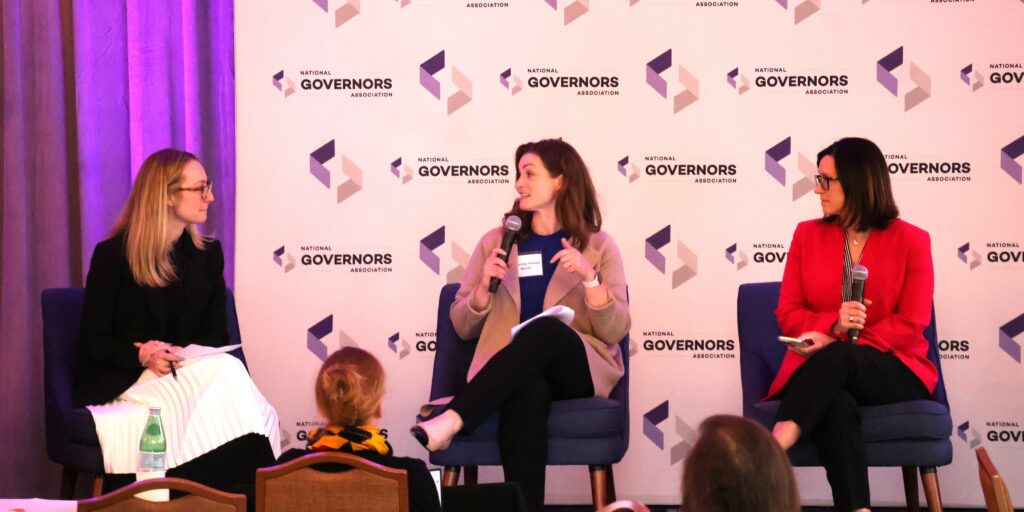
The consistent message across more than a dozen sessions was that Workforce Pell is not simply a compliance exercise, but an opportunity for Governors to make strategic improvements to workforce systems that will outlast this single funding stream. Approaching July 1 as a starting point by investing in data infrastructure, engaging employers seriously, and building cross-agency governance structures will position states to integrate Workforce Pell into their larger workforce development and education strategy and build a durable, long-lasting system. Another throughline: the data infrastructure states are building for Workforce Pell today is the same infrastructure they will need to respond to AI-driven workforce disruption tomorrow. By the time labor market data clearly shows displacement, the intervention window will have narrowed. These are not two separate priorities, they are one. And on both NGA remains committed to being the partner Governors can count on as implementation unfolds, providing the peer connections, technical resources, and federal relationships that help them lead with confidence.