As Americans head to the polls in November, survey finds voters see political life marked by disrespect and dehumanization; Companion report examines everyday conditions associated with well-being
WASHINGTON – The National Governors Association (NGA), Matter Neuroscience and Napolitan Institute today released “Dignity in American Political Life: What Registered Voters See — and What They Say They Want From Leaders,” a new national survey examining how registered voters experience the tone of American political life. The survey of roughly 5,000 registered voters reveals broad bipartisan support for a different kind of leadership, with 80% of Democrats and 75% of Republicans indicating they would be more likely to trust leaders who demonstrate dignity.
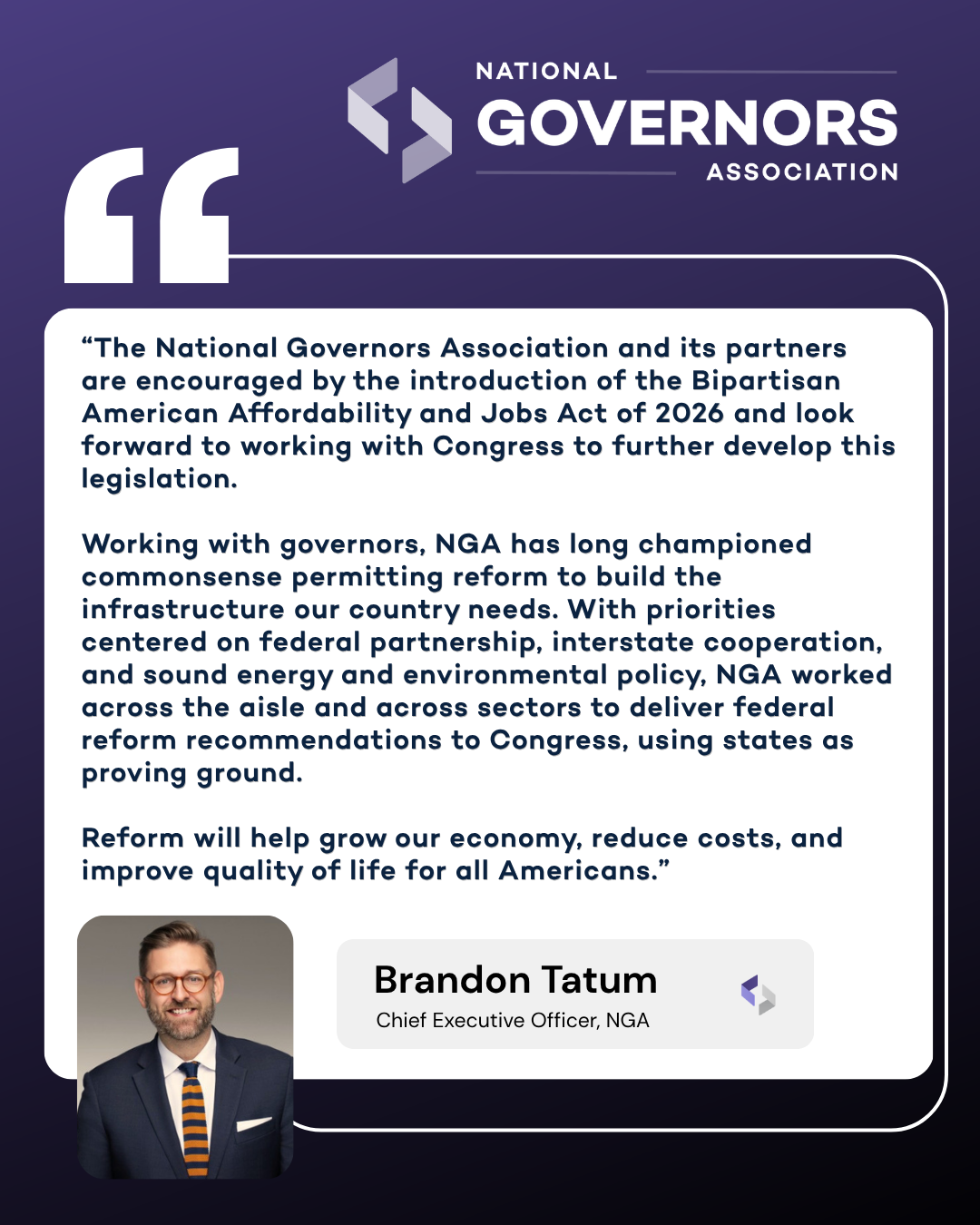
“Americans are telling us they want leaders who treat people with dignity, and that holds across party lines. The National Governors Association is in a unique position to answer that call,” said NGA Chief Executive Officer Brandon Tatum. “With a large class of new governors coming in after the November elections, our new Center for Dignity in Politics will use the findings of this new study to inform the practical tools we share to help governors lead through disagreement without losing respect for one another. Governors have always been on the front lines getting work done, and they are the leaders who can show what dignity in politics looks like. It’s one more reason Americans look to governors to deliver results.”
Survey findings will inform the work the NGA Center for Dignity in Politics will lead with newly elected governors following the 39 gubernatorial elections slated to be held this November, with 18 incumbent governors running for reelection, and 21 incumbent governors are either term-limited or not seeking reelection. Through advanced statistical modeling, RMG Research’s Precision Politics Geo-Targeting has made it possible to deliver state-specific data to every governor from a single survey.
According to the survey, Americans overwhelmingly view the current political climate as falling short of healthy disagreement, with 49% saying they most often see disrespect in political life and 34% saying they most often see dehumanization. Combined, 83% name disrespect or dehumanization as what they see more often.
“Americans are hungry for an alternative to contempt. Governors have a unique opportunity to show the country that we can disagree without demeaning one another, lead without deepening division, and bring people together even when we see the world differently,” said Tim Shriver, Co-Founder of Dignity.Us and Founding Chair of the Center for Dignity in Politics. “The Center for Dignity in Politics will partner with governors and provide practical tools, skills, and resources to ensure dignity is at the core of our democracy.”
One in five Americans also report that they feel politically outnumbered where they live. Among those who feel politically outnumbered, 36% report harm to family relationships and 38% report harm to friendships, compared with 14% and 19%, respectively, among those who do not feel politically outnumbered.
The survey also asked about life satisfaction. Respondents who are unhappy with their lives are more likely to see politics as dehumanizing. The survey also found politics spilling into personal relationships, with a sizable minority of Americans reporting politics has strained personal ties. Nearly four in 10 registered voters say political disagreement negatively affected at least one relationship during the past year, with respondents noting strains to relationships with friends, family, colleagues and neighbors.
The new findings complement Matter Neuroscience’s “The Well-Being Line,” a companion report drawn from the same survey that examines the everyday conditions associated with life satisfaction. The report suggests that alongside familiar measures of progress like jobs, income, graduation rates and economic growth, leaders can also track whether people feel supported, connected, safe and satisfied with their lives.
It finds that one in five registered voters rates their current life a 4 or lower on a scale of 0 to 10, placing them below what the report calls the well-being line.
“We must understand the correlation between our policies and our well-being. It’s critical to move top line economic metrics, but the end goal is a thriving population,” said Ben Goldhirsh, Chair and Co-Founder of Matter Neuroscience.“We look at brain scans every day and see what our biology prioritizes – an emotionally rich and balanced life that is not undermined by pervasive stress. This is the north star we want to support our politicians driving toward and the data on how well we are doing as individuals is critical to successful navigation.”
The “Dignity in American Political Life” survey was conducted by RMG Research on behalf of NGA and Matter Neuroscience. The survey was done in partnership with Jigsaw, a technology incubator inside Google, using Sensemaking AI – a suite of tools designed to help policymakers gather and understand public opinion at scale. Tatum served as lead researcher and principal report developer.
The “Well-Being Line” is a companion national survey from Matter Neuroscience, examining everyday experiences associated with life satisfaction. Taken together, the two surveys provide a broader picture of Americans’ experiences by considering how Americans assess leaderships, their relationships, and sense of belonging.
“By pairing Precision Politics Geo-Targeting with our AI powered Listening Suite, we are now able to engage voters in deep, nuanced conversations and deliver precise state-specific data that has never been possible before,” said Scott Rasmussen, Founder of the Napolitan Institute and RMG Research. “This new technology has revealed a clear national consensus. Voters currently see political life defined by the fringes, while majorities across both parties actively seek leaders who govern with the principles of freedom, equality, self-governance, and now we know dignity is also on that list.”
NGA announced the launch of the Center for Dignity in Politics in July. Co-created with Dignity.Us, the center will serve as a trusted, bipartisan resource for governors who are seeking to elevate the language, practice and culture of dignity in public leadership. The Center for Dignity in Politics will provide newly elected governors and their offices with strategies for leading through disagreement while maintaining respect, discipline and a shared commitment to public service.
To learn more about the Center for Dignity in Politics, visit https://www.nga.org/dignity/.