As the labor market rapidly evolves with advances in artificial intelligence (AI), governors stand at the forefront of innovative, bipartisan policy solutions to prepare workers and learners for the future of work.
Governors lead state and territory efforts to harness the opportunities and manage the risks of artificial intelligence, and no question is more consequential for their residents than how AI reshapes work. Through the National Governors Association (NGA) Working Group on AI & the Future of Work, a $1 million partnership with RAISE US, and a program of convenings, briefings and publications, governors’ offices are building the workforce systems, governance structures, and partnerships needed to make AI a net win for workers and the economy.
NGA Working Group on AI & the Future of Work
In January 2026, the NGA Center for Best Practices launched the Working Group on AI & the Future of Work in partnership with the Center for Civic Futures and McKinsey & Company. The working group is comprised of governors’ advisors from more than 20 states who have met regularly throughout 2026 to develop A Roadmap for Governors on AI & the Future of Work.
“Artificial intelligence is already shaping the workforce in profound ways, and the leadership of governors is critical to ensuring AI is a net win for workers and the economy,” said Timothy Blute, NGA Chief Policy Officer. “There are 39 gubernatorial elections this year, and navigating the impact of artificial intelligence on the labor market will be among the top challenges this class of governors will face.”
The working group convenes bimonthly to share best practices and common challenges, surface practical solutions and receive briefings from leading national experts.
Roadmap for Governors on AI & the Future of Work
In November 2026, NGA will release A Roadmap for Governors on AI & the Future of Work. The roadmap will be delivered to incoming and incumbent NGA members and will feature four primary elements:
- Description of AI technologies, trends and their potential impact upon the future of work;
- Survey of the current state and federal policy landscape regarding AI and the future of work
- Policy opportunities and potential principles on AI and the future of work for governors to consider; and
- Opportunities for governors to innovate and lead by example in developing AI-enabled state government workforce and organizational models.
For more information about the NGA Working Group on AI & the Future of Work, please contact Sophia Yager, Policy Director, Workforce Development & Economic Policy.
NGA Partnership with RAISE US
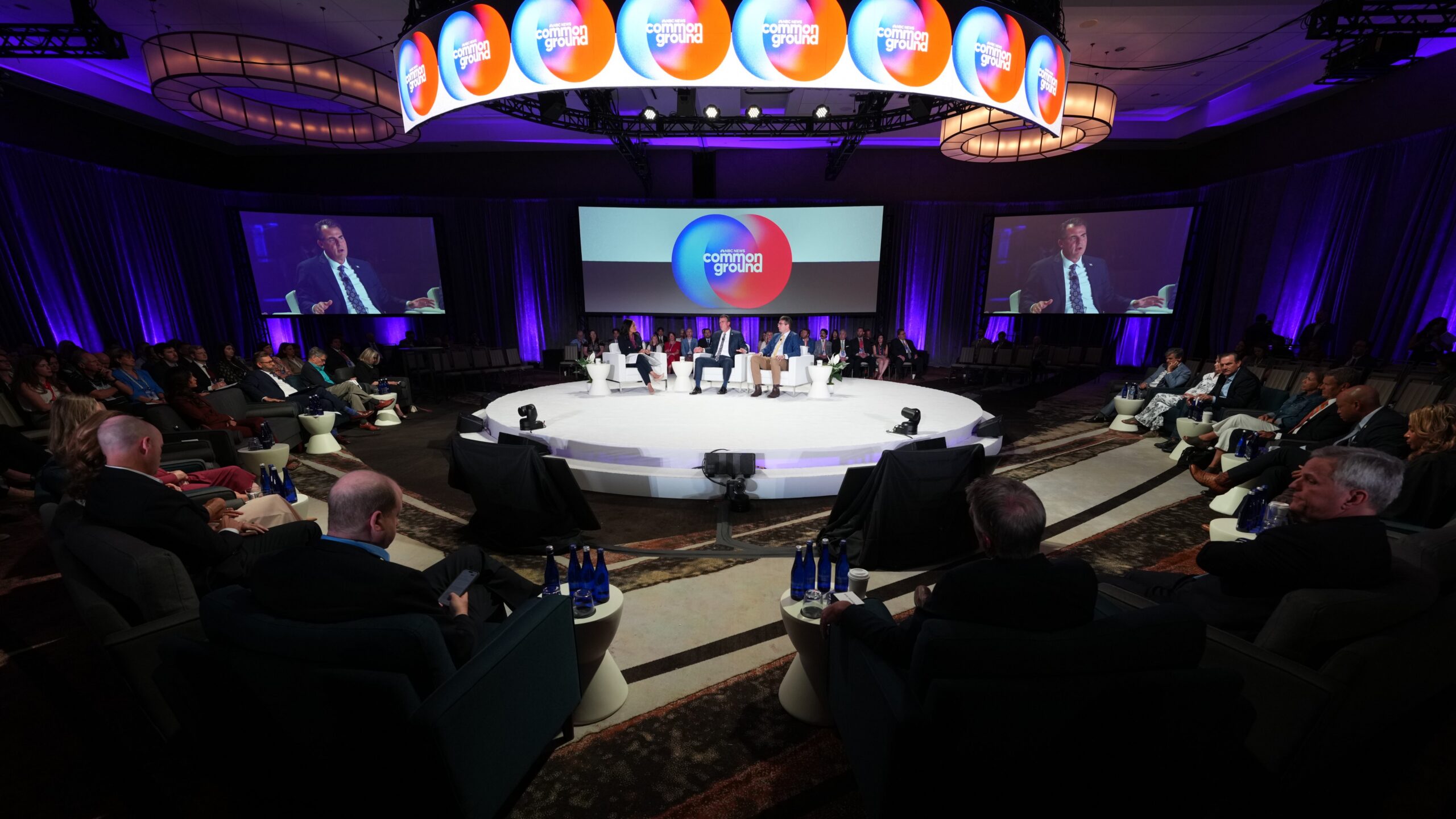
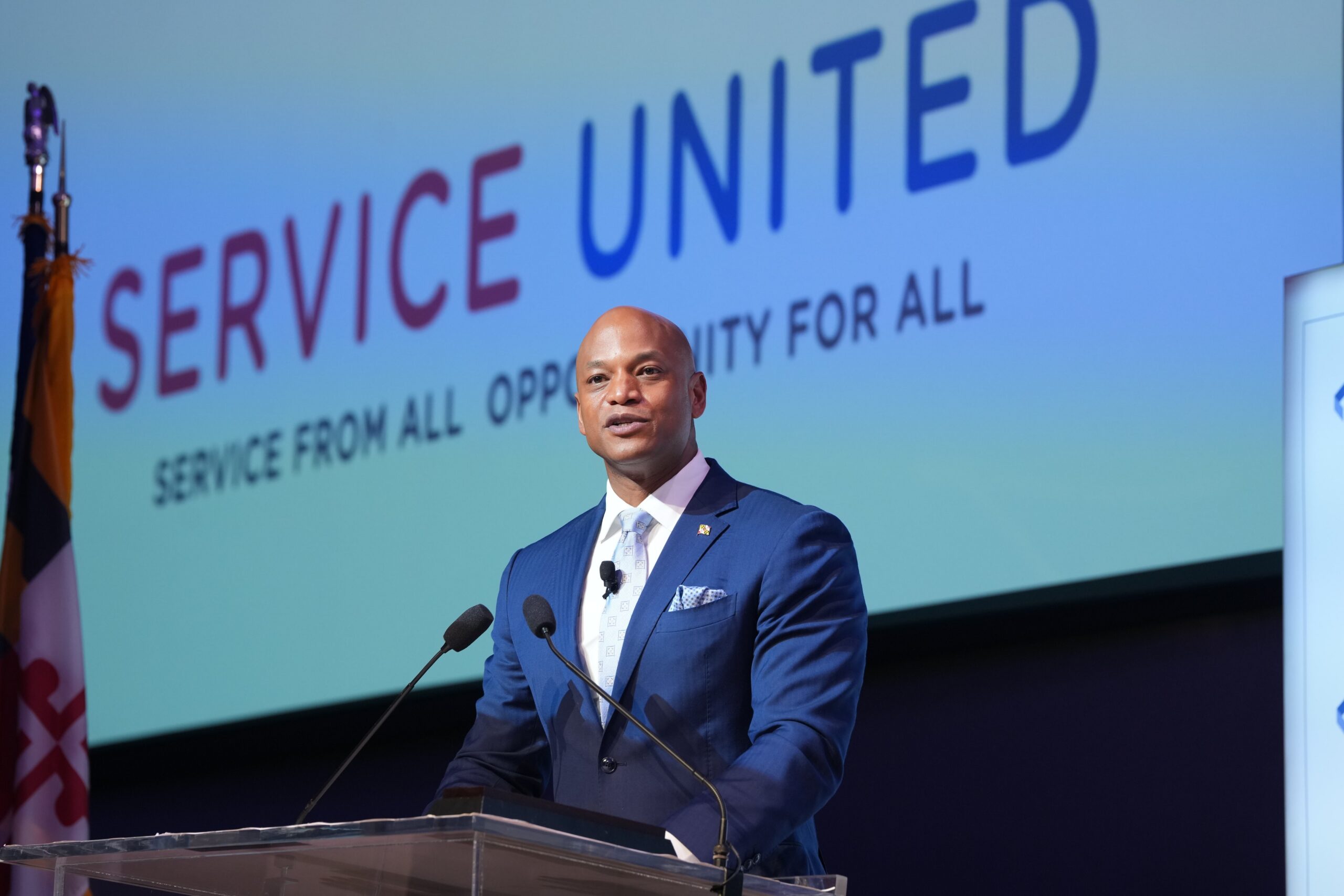
In July 2026, NGA announced a $1 million partnership with RAISE US — a nonpartisan, national organization that works with governors, employers, training partners and workers to help Americans make a successful transition to an AI economy — to promote state AI policy development. The announcement came at NGA’s 2026 Summer Meeting in Oklahoma City during a panel discussion moderated by Politico senior White House reporter Megan Messerly, with Maryland Gov. Wes Moore, Utah Gov. Spencer Cox, and RAISE US Co-Chairs former U.S. Commerce Secretary Gina Raimondo and former Indiana Gov. Eric Holcomb on the investments needed to reimagine America’s workforce systems for an AI economy.
The partnership will identify and amplify new policy models that help states design and pilot corporate incentives to retrain and redeploy workers, support people through job transitions, and develop training models tied to real employer demand. Findings will be shared during NGA’s 2027 Winter Meeting, Feb. 18–20, 2027, in Washington, D.C.
“Governors are taking the lead to ensure the United States wins the AI race — and that means investing not just in policy and infrastructure, but in people,” said NGA CEO Brandon Tatum. “NGA and RAISE US are both actively working to harness AI for the benefit of workers and economic growth. Our partnership will strengthen our efforts to find the best ideas and disseminate them throughout the country, so all governors are working from the best, most timely information.”
Through its AI-Ready States program, RAISE US is partnering with governors in Arkansas, Connecticut, Maryland and Utah to reorient public workforce and education infrastructure for a shifting labor market through policy solutions such as earn-and-learn apprenticeships, short-term credentials mapped to real employer demand, and incentives supporting employer programs to retrain and redeploy workers. Additional states will join in the months ahead. RAISE US has said it aims to be working with roughly a dozen states by the 2027 Summer Meeting and has invited any interested governor to bring forward a pilot.
Why AI and the Future of Work Matters
AI is changing job tasks in every sector of the economy from healthcare and education to manufacturing, agriculture, and public services. Employers report that demand is shifting fastest toward AI-related roles. Research shared with NGA through the AI Workforce Consortium, a collaboration of 11 major technology companies, finds that seven of the 10 fastest-growing information and communications technology jobs are AI-related, and that the single fastest-growing category is AI governance and ethics, with demand up more than 200%. The human skills layer—problem solving, judgment, adaptability—is in as much demand as the technical one.
The pressure is also reaching further up the credential ladder than earlier automation waves did: governors have pointed to law and accounting graduates finding fewer entry-level openings as firms automate first-year work, even as demand holds in roles built on human presence and judgment, from direct care and education to the skilled trades. That has sharpened a second question for states, which is whether the answer is only retraining or also earlier preparation — building AI fluency into K-12 so students grow up equipped to direct these tools rather than trained on any one of them, and protecting instruction in creative and strategic thinking that AI does not replicate.
Governors are on the front lines of this shift. They oversee the workforce systems that must retrain workers whose jobs change, the community colleges and universities that supply AI talent, the K-12 systems preparing students for AI-enabled careers, and the state agencies that are among the largest employers and earliest adopters of AI in their states. Governors are working to set policy through executive orders, task forces, targeted investments and public-private partnerships.
The workforce infrastructure states are building today —including skills data, portable credentials, modernized service delivery—is the same infrastructure they will need when AI-driven labor market disruption accelerates. Waiting for labor market data to confirm the disruption before acting narrows the window for intervention.
Governors Leading on AI and the Future of Work
Investing in AI Workforce Development and Training
Governors are making direct investments in AI skill-building, often in partnership with industry. Oregon Gov. Tina Kotek announced a $10 million investment in AI workforce development alongside a Memorandum of Understanding with NVIDIA to expand AI education and help state agencies identify responsible AI uses. Mississippi Gov. Tate Reeves launched the Mississippi AI Talent Accelerator Program, providing $9.1 million in grants to institutions of higher learning to build workforce programs supporting the expansion of AI industries in the state. Virginia launched an AI Career Launch Pad with Virginia Works and the Grow with Google program, giving working-age Virginians one place to explore, learn and connect to high-demand AI and tech-related opportunities.
Maryland Gov. Wes Moore announced a $4 million investment to prepare Maryland workers, employers and community organizations for an economy shaped by AI and emerging technologies. Administered by the Maryland Department of Labor through three grant programs, the funding includes $2.5 million for quality internships and upskilling in the state’s key industries and $1.5 million for supervised training of aspiring cyber professionals who provide cybersecurity services to community organizations and small businesses.
Utah is investing $10 million through Talent Ready Utah’s Targeted Workforce Accelerator to build an AI-ready workforce in three high-impact sectors — artificial intelligence, energy and deep tech — as part of Utah Gov. Spencer Cox’s pro-human AI initiative. The state also launched a statewide AI Workforce Credential designed to complement students’ existing technical and durable skills by adding AI credentialing within their field of study; more than 50,000 graduates from Utah’s public colleges and universities in the classes of 2025, 2026 and 2027 are eligible to earn it at no cost through a statewide online learning environment. A separate partnership with NVIDIA equips universities, community colleges and adult education programs across the state to build generative AI skills, beginning with the Utah System of Higher Education. In July 2026, Utah added $5 million in “AI moonshot” grants inviting residents, institutions and companies to propose applications of AI that measurably improve life in the state.
Supporting Workers Through Job Transitions
Preparing workers for new roles is only half the challenge; states are also building the connective tissue that carries workers between jobs. Maryland’s workforce partnership with RAISE US will design and pilot new corporate incentives to retrain and redeploy workers, fresh approaches to supporting people through job transitions, and training models tied to real employer demand. The partnership expands Maryland’s Service Year Option pathways into sectors such as health care and education, launches a competitive fund for innovative career transition models and creates an accelerator helping displaced workers pursue entrepreneurship. Utah has announced a parallel RAISE US partnership bringing together employers, educators and government to test worker-first approaches to the AI economy under Gov. Spencer Cox’s Pro-Human AI Initiative. Arkansas and Connecticut have since joined Maryland and Utah in the RAISE US AI-Ready States program, and NGA’s $1 million partnership with RAISE US is designed to capture what those states learn and put it in front of every governor.
At the 2026 Summer Meeting, RAISE US outlined several pilot concepts it is prepared to fund with states. They include wage insurance that temporarily tops up pay when a displaced worker takes a lower-paying job; employer incentives structured to reward retraining and redeployment rather than separation; unemployment insurance rules that let claimants keep benefits while starting a business, paired with accelerators that teach AI-enabled entrepreneurship; and service year programs that create a first job for young people as AI compresses entry-level hiring. Each is framed as a state-level experiment whose results can be measured and, if they work, copied.
Understanding the Labor Market Impact
States are building the evidence base for policy. The Maine Department of Labor’s Center for Workforce Research and Information delivered a report to the Governor’s AI Task Force on the workforce implications of generative AI, documenting potential AI use across a wide range of occupations and how likely each is to be affected, alongside current jobs, wages and educational requirements.
Building Skills-First Talent Systems
At NGA’s Skills in the States Annual Convening held in May 2026, governors’ workforce and education advisors, state HR officials, national employers and federal partners worked through what it takes to move from credential-based to skills-based talent practices. Themes included Learning Employment Records — portable, individually owned digital records of credentials, skills, courses and work experience that are verified and shareable across state lines — and the state’s role as a model employer when it removes degree requirements from its own job descriptions and hires on demonstrated competency.
Arkansas presented LAUNCH, an open-source talent ecosystem platform connecting job seekers, employers, high school students and supportive services, built on the Credential Transparency Description Language and National Labor Exchange job posting data, with more than 10,000 published competencies and a living skills taxonomy that uses AI and human review to detect emerging skills in near-real time. Participants also examined the National Guard as a distributed, federally trained talent pipeline in every county, and the rise of “skill phishing.” AI lowers the cost of misrepresenting skills on applications, verified portable credentials become a more critical trust signal for employers.
Modernizing Workforce Service Delivery with AI
States and territories are integrating AI into workforce service delivery, with early successes in unemployment insurance processing and customer-facing career matching tools, alongside online career exploration platforms, case management systems and training provider repositories that make workforce resources easier to reach. The Workforce Development and Economic Policy program page tracks this work.
Leading by Example: AI-Enabled State Government
Governors are also treating state government as the first proving ground for AI-enabled work — the fourth element of the forthcoming roadmap. Georgia’s Technology Authority mapped how AI could supplement key agency roles, from caseworkers to legal and HR. Pennsylvania piloted a program empowering public sector employees to integrate AI tools into their daily responsibilities. Washington launched an AI Community of Practice spanning state and local agencies to share best practices, develop guidelines and build accountability for responsible deployment. Many governors have designated chief AI officers or state AI leads to guide strategy, inventory current uses and build employee training.
Maryland has moved furthest on integrating AI into the state workforce itself. Gov. Moore announced a landmark AI partnership with Anthropic and Percepta to integrate AI models into a portion of the state workforce, with engineers working directly alongside agency teams to accelerate benefits delivery and streamline housing permitting. The state has since launched an AI Innovation Lab within the Maryland Department of Information Technology, giving agencies a controlled sandbox for secure testing, ready-to-use software packages for rapid prototyping, hands-on training and pre-deployment vulnerability testing. Separately, Maryland secured two grants through the Center for Civic Futures’ Public Benefit Innovation Fund: $1.2 million for a multi-state project developing AI tools to streamline work verification for SNAP and Medicaid, and $1.45 million for the Department of Labor to work with the Government Performance Lab and Computational Policy Lab on AI systems that help staff navigate complex regulations, process documents and train through simulators. On the service delivery side, Maryland is using AI to streamline eligibility processing for Summer EBT, the program that provides food benefits to school-age children over the summer.
The Policy Landscape
State Action
Over the past two years, governors in at least 14 states have issued executive orders pertaining to AI, particularly generative AI. These orders generally establish state AI task forces, outline principles for responsible use, direct agencies to inventory current AI use, develop employee training and designate AI leads. Workforce development, economic growth and education are recurring priorities. State legislatures have introduced hundreds of AI bills addressing state government AI use and oversight, private-sector governance and consumer protection, data privacy, algorithmic discrimination, deepfakes, companion chatbots, and accountability for AI developers and deployers.
States are also experimenting with new governance structures. Utah established a first-in-the-nation Office of Artificial Intelligence Policy, which consults with businesses, academic institutions, and other stakeholders on regulatory proposals and has authority to craft regulatory relief agreements that allow novel AI deployments to proceed under tailored terms. Utah has applied the mechanism to AI companion chatbots, pairing narrow regulatory relief with safeguards agreed upon with the developer and then carrying the resulting standards into legislation — an approach Gov. Cox has said other states and national governments have asked about replicating. Utah’s broader pro-human AI framework evaluates policy and investment against two tests—whether a use is human-guided and whether it is human-enhancing—applied across workforce, industry, state government, learning, and public policy.
Federal Developments
In March 2026, the White House released a National Policy Framework for Artificial Intelligence recommending federal legislative action across seven areas: child protection, community and infrastructure impacts, intellectual property, free speech, innovation, workforce development, and preemption of certain state AI laws. On workforce, the framework recommends non-regulatory federal support for AI training through existing education, workforce development and apprenticeship systems, further study of AI’s effects on job tasks and support for land-grant institutions providing technical assistance, demonstrations and youth programs. The framework signals a preference for a larger federal role while preserving some state authority over generally applicable laws, infrastructure siting, and state government uses of AI. NGA is monitoring these developments and supporting governors as they engage with Congress and the Administration. Governors of both parties have described the balance they are seeking in similar terms: a federal role on national security and baseline standards, coupled with room for states to keep running the pilots and writing the guardrails, on the grounds that states are currently the level of government moving at the speed the technology requires.
Related NGA AI Work
The Working Group on AI & the Future of Work sits within a broader NGA portfolio supporting governors across the full range of AI policy challenges:
- Signature workforce investments. Putting State Dollars to Work: How Governors’ Signature Investments Drive Workforce Transformation examines how governors are deploying state dollars to reshape workforce systems for a changing economy.
- GenAI Frontier convenings. NGA’s Navigating the GenAI Frontier: Strategies for Governors’ Offices convening brought governors’ advisors together with experts from McKinsey, Harvard Business School, Google Public Sector, OpenAI, Microsoft, and NIST on enabling the workforce with generative AI tools, managing risks, selecting high-impact use cases and building governance structures.
- Legal and policy briefings. NGA holds monthly briefings for governors’ legal counsel on legal and regulatory considerations related to AI, covering ethical governance and use, privacy, intellectual property, consumer protection, risk management and procurement.
- AI in criminal justice and human services. Recent briefings have examined AI use across criminal justice systems — and the due process, transparency and bias considerations that come with it — as well as how states can incorporate AI into human services by understanding impacts on workers, automating tedious tasks and designing around outcomes rather than outputs.
- Energy infrastructure for the AI economy. AI data center growth is driving the fastest power demand growth in decades. Governors are attracting investment while protecting ratepayers and ensuring local communities benefit. NGA has tracked the role of nuclear energy, including small modular reactors and restarted plants, in powering the AI economy.
Frequently Asked Questions
What is the NGA Working Group on AI & the Future of Work?
It is a group of governors’ advisors from more than 20 states, convened by the NGA Center for Best Practices in partnership with the Center for Civic Futures and McKinsey & Company. Launched in January 2026, the group has met regularly throughout the year — sharing best practices, surfacing common challenges and receiving briefings from national experts — to develop A Roadmap for Governors on AI & the Future of Work.
What will the Roadmap include?
Four primary elements: a description of AI technologies, trends and their potential impact on the future of work; a survey of the current state and federal policy landscape; policy opportunities and potential principles for governors to consider; and opportunities for governors to innovate and lead by example in developing AI-enabled state government workforce and organizational models. The roadmap is set for release in November 2026, with an in-person convening scheduled to be held in December 2026 to unveil it.
How can a governor’s office get involved?
Governors’ offices interested in participating in the working group, contributing state examples to the Roadmap or learning more can contact workforcedevelopment@nga.org.
What is the NGA–RAISE US partnership?
In July 2026, NGA and RAISE US announced a $1 million partnership to promote state AI policy development. RAISE US is a nonpartisan national organization working with governors, employers, training partners and workers on the transition to an AI economy; through its AI-Ready States program it currently partners with Arkansas, Connecticut, Maryland and Utah. The partnership will identify and amplify policy models including corporate incentives to retrain and redeploy workers, supports for people moving between jobs, and training tied to real employer demand, with findings shared at NGA’s 2027 Winter Meeting in February 2027. Governors interested in developing a pilot with RAISE US can reach the organization through NGA.
What role do governors play in AI and the future of work?
Governors set statewide AI strategy, direct the agencies that use and regulate AI, allocate workforce and economic development funding, oversee education and training systems, and coordinate with federal partners. They are also among their states’ largest employers, which puts them in a position to model AI-enabled work practices and skills-based hiring directly. Many governors have issued executive orders and appointed chief AI officers or state AI leads to guide these efforts.
How are states preparing workers for AI-driven change?
Governors are investing in AI training through community colleges, universities, apprenticeship programs and public-private partnerships with companies including Google, NVIDIA and OpenAI. States are expanding career navigation tools, modernizing public workforce systems, building portable credential and skills-data infrastructure, and developing skills-based hiring pathways. A growing number are also building supports specifically for workers moving between jobs, including retraining incentives, career transition funds and entrepreneurship pathways for displaced workers.
How are states using AI in their own workforce systems and operations?
States are deploying AI in unemployment insurance processing, career matching, benefits administration, case management and government communications, while building the governance structures, procurement guidelines and employee training needed for responsible use. For example, Georgia has mapped how AI could supplement key agency roles, Pennsylvania has piloted employee integration of AI tools, Washington runs an AI Community of Practice spanning state and local agencies, and Maryland has stood up an AI Innovation Lab that gives agencies a secure sandbox for testing and prototyping.
What does the federal AI policy framework say about workforce?
The White House National Policy Framework for Artificial Intelligence, released in March 2026, recommends non-regulatory federal support for AI training through existing education, workforce development, and apprenticeship systems; additional study of AI’s effects on job tasks; and support for land-grant institutions providing technical assistance and youth programs. It also proposes preempting certain state AI laws while preserving state authority over generally applicable laws, siting decisions and a state’s own use of AI.
What other AI resources does NGA offer?
NGA offers monthly legal counsel briefings on AI governance. These briefings look at issues such as the GenAI Frontier series, policy publications, a state resource list on AI, and best-practice forums. Recent analyses cover the White House AI framework, governors’ signature workforce investments, nuclear energy for AI infrastructure, AI in health and human services, and legal and regulatory considerations for states.
Governors’ offices interested in engaging with NGA’s AI and future of work portfolio can contact Sophia Yager, Policy Director, Workforce Development & Economic Policy.