Infrastructure works best when no one notices it. Clean water flows from the tap, goods move efficiently across highways and rails, and high-speed internet connects families to opportunity, all without a second thought. But this invisibility is hard-won. It is the product of sustained investment, strong partnerships between states and the federal government, deliberate planning and the leadership of governors who understand that the systems underpinning modern life require constant attention and bold action. For years, the National Governors Association (NGA) has worked alongside governors and their teams to champion that leadership, and NGA is shining a light on what has been built, what it has taken to build it and the impact on communities across the country.
Over the last few years, governors have leveraged generational infrastructure funding in the $1 trillion Infrastructure Investment and Jobs Act (IIJA) and other federal programs, alongside state funding and innovative financing tools, to deliver projects their communities have waited decades for. Through its infrastructure advisor networks, bipartisan convenings, technical assistance, and advocacy on Capitol Hill, NGA has supported states and territories as they have expanded broadband to unserved communities, rehabilitated aging bridges, modernized airports, strengthened energy grids and secured water supplies for future generations. The road ahead, however, brings new challenges: uncertainty as to what comes next after the IIJA expires in September, construction cost inflation, supply-chain bottlenecks, and the work of connecting every American to opportunity through high-speed broadband. Below are just a handful of projects that illustrate the progress states and territories have made – and NGA’s commitment to supporting governors every step of the way.
In June 2026, West Virginia Gov. Patrick Morrisey opened a new 11-mile, four-lane section of Corridor H extending from Kerens in Randolph County toward Parsons in Tucker County in the north central part of the state. This new section represents an important part of the 131.8-mile-long Corridor H Project, which will eventually link the Virginia state line with I-79 in western West Virginia. The West Virginia Division of Highways is executing an aggressive, phased strategy to complete corridor H, which is anticipated to be open to traffic by 2034. This project was funded in part by the U.S. Department of Transportation’s (USDOT) Appalachian Development Highway System Program, which received a boost from appropriations in the IIJA. This program, which was initiated in 1965, aims to improve a network of 33 distinct highway corridors within 13 Appalachian states.
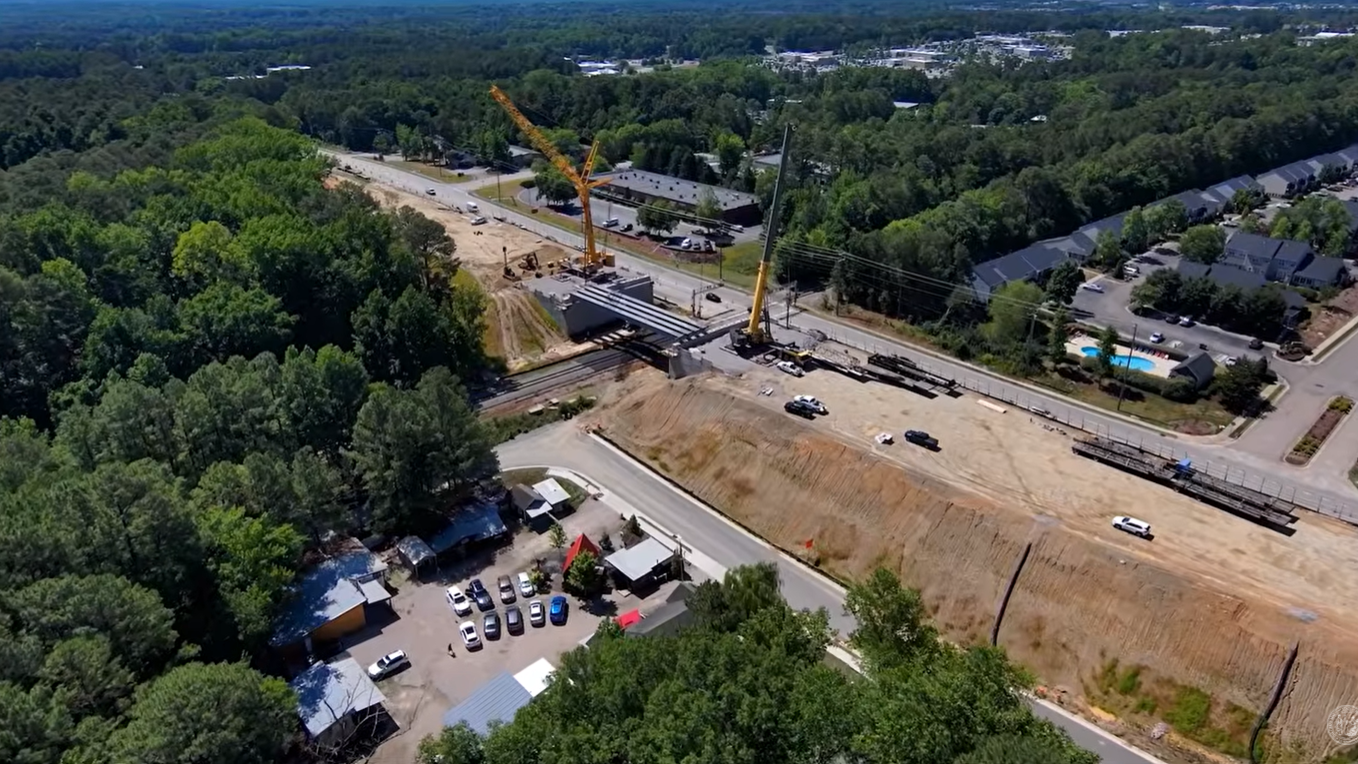
In July 2024, the North Carolina Department of Transportation broke ground on the first section of the S-Line Raleigh to Richmond higher speed rail project. The S-Line project will allow for fast and frequent passenger rail service, and rail freight service, between communities in North Carolina and Virginia. The project restores service along this corridor following the removal of track in the 1980s. Work is underway on a number of grade separation projects along the first part of the corridor where initial service is expected in 2030-2032. This project has been funded through a mix of state funding and several federal grants, including a 2020 $47.5 million Consolidated Rail Infrastructure and Safety Improvements (CRISI) grant from the Federal Railroad Administration (FRA) to purchase the right of way from CSX, a $57.9 million CRISI grant in 2021 for land surveying and preliminary engineering and a $1.09 billion FRA grant from the IIJA’s Federal-State Partnership for Intercity Passenger Rail Program (National Railroad Partnership Program) for the final design and construction of the initial segment from Raleigh to Wake Forest.
In September 2025, construction broke ground on the Kemmerer South Wildlife Crossing Project, which will provide a new wildlife crossing overpass, several underpasses and high barrier wildlife fencing along the US 189 corridor in southwest Wyoming. This project intends to mitigate wildlife-vehicle fatalities, eliminate 80% to 90% of collisions and improve wildlife connectivity for pronghorn and mule deer in this part of the state. This project was funded in part by a $24 million grant by USDOT made through the Wildlife Crossing Pilot Program, a new program created in the IIJA. It is scheduled to be completed by October 31, 2027.
In May 2026, Connecticut Gov. Ned Lamont announced the start of construction on major upgrades to four stations on the Metro-North Waterbury Branch Line, which connects residents of central Connecticut with other parts of the state and New York City. The upgrades will transform these stations with new platforms, covered canopies, real-time arrival information and enclosed windscreens to improve comfort in all weather. Each location will be ADA accessible, with better pedestrian access and safer passenger flow. These upgrades are funded in part through a $29.6 million grant from the Federal Transit Administration which was made through IIJA’s new competitive All Station Accessibility Program, and a RAISE grant (now known as BUILD) awarded to the City of Waterbury by USDOT. Construction is anticipated to be completed by the spring of 2028.
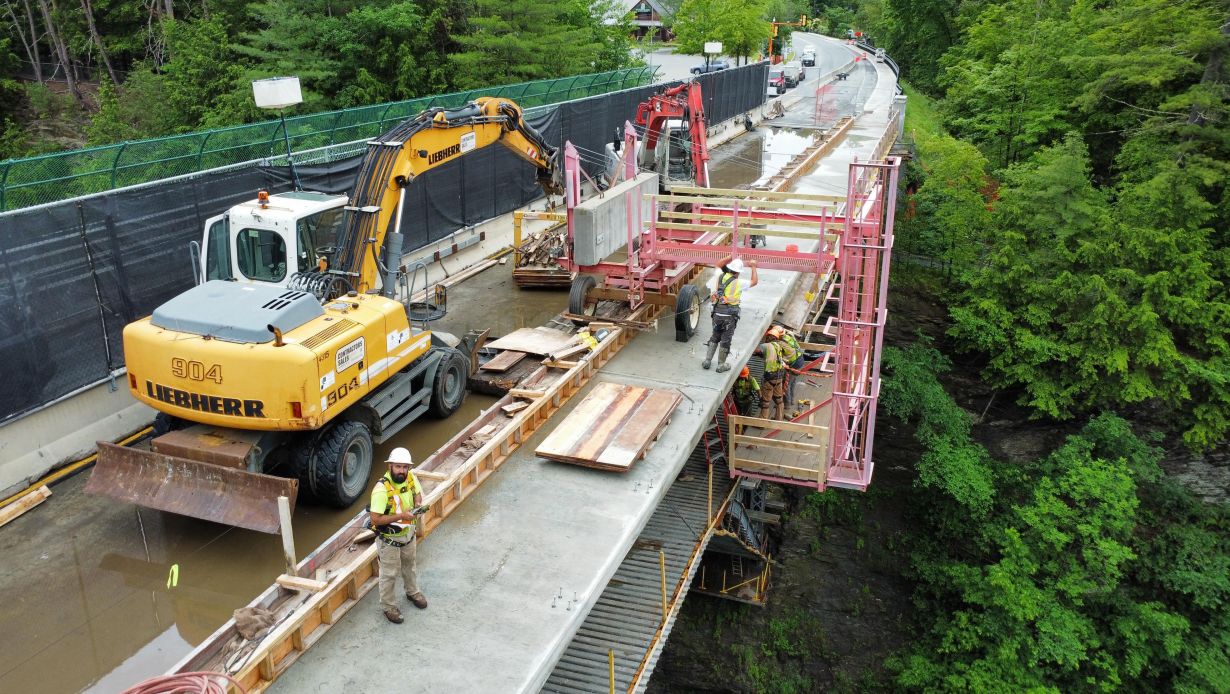
In 2023, construction began on Vermont Department of Transportation’s Quechee Gorge Bridge Rehabilitation Project, which is a major rehabilitation of a 115-year-old three-span steel deck arch bridge in the central eastern part of the state. This project involves structural steel member replacement and strengthening, a complete cleaning and painting of the steel components and the widening of the bridge sidewalks from 3.5 feet to 6 feet, providing improved safety for pedestrians that regularly visit the bridge to view the Quechee Gorge. This project was funded in part through money received by Vermont from the IIJA’s Bridge Formula Program. Construction is expected to be completed in August 2026 at a cost of around $25.2 million.
In 2023, the Michigan Department of Transportation was awarded $73 million from USDOT’s Federal Highway Administration to replace the Lafayette Avenue Bridge in Bay City, Michigan. This project was funded through the IIJA’s Competitive Bridge Investment Program to replace the 85-year-old bridge, improving safety and reliability for drivers, pedestrians and bicyclists. Demolition of the bridge started in December 2024 and finished in August 2025, and the replacement bridge is currently under construction. The project is set to be completed in mid-to-late 2027.
In May 2026, internet service provider Next Link internet activated a fixed wireless technology tower in Bienville Parish, Louisiana, providing high-speed internet service to 104 homes and businesses. This represented the first time households and businesses received service through the IIJA’s $42.5 billion Broadband Equity, Access and Deployment Program (BEAD), making Louisiana the first state in the nation to convert BEAD funding into live infrastructure. The tower was part of an overall $18.5 million subgrant provided to Next Link through Louisiana’s GUMBO 2.0 program, which was funded through $1.36 billion in federal BEAD grants.
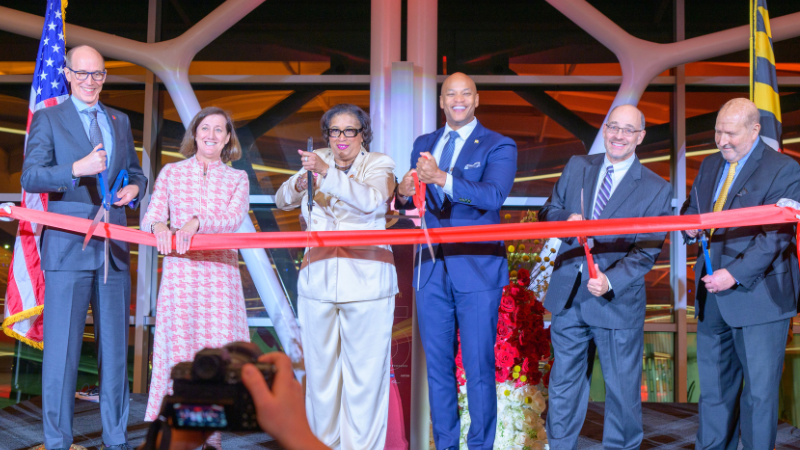
In January 2026, Maryland Gov. Wes Moore opened Baltimore/Washington International (BWI) Thurgood Marshall Airport’s Concourse A/B Connector and Baggage Handling System project. This airport, which is owned and operated by the Maryland Department of Transportation’s Maryland Aviation Administration, is one of the busiest airports in the region, serving more than 25 million passengers annually.
This $520 million Concourse A/B Connector project is the largest capital project in the history of BWI Marshall Airport, and includes a two-story building addition, a direct connection between concourses A and B, five modernized relocated airline gate areas and a new in-line baggage handling system. This investment was partially funded through a $38 million grant made from the IIJA’s Airport Terminal Program.
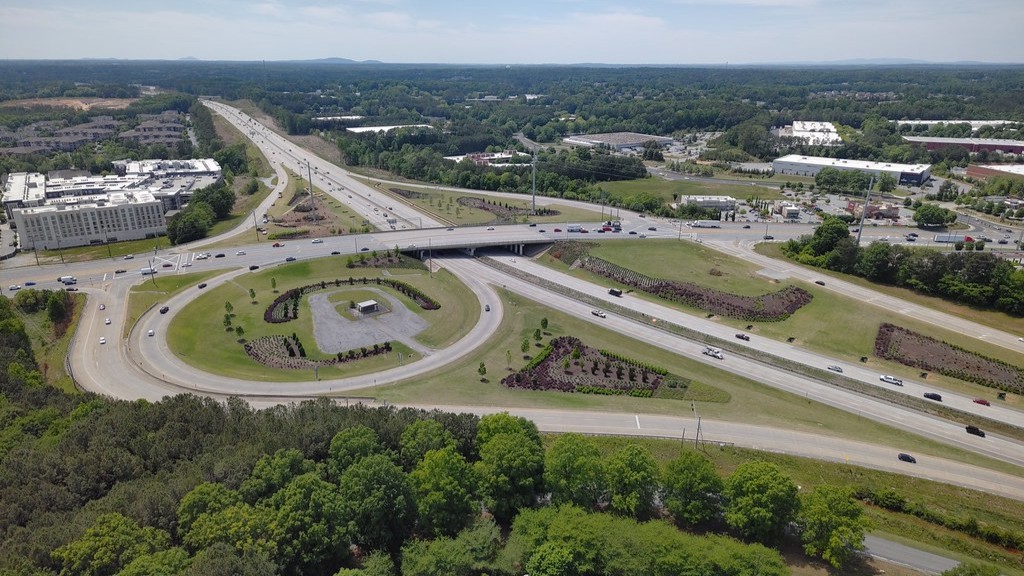
In April 2026, work broke ground on the SR 400 Express Lane project in Georgia. This 16-mile managed lanes project will add new tolled express lanes in both directions along SR-400, with the objective of reducing congestion and improving traffic flow along this major road corridor in the Atlanta metropolitan area. This $12.4 billion project is being delivered through a public-private partnership between the Georgia Department of Transportation, the State Road and Tollway Authority and SR400 Peach Partners, LLC, the private sector consortium. The project is being funded through a combination of private sector, state and federal dollars, including a $3.9 billion TIFIA loan from USDOT, representing the largest loan approved to a single borrower to-date under this IIJA-funded federal program. This express lane project is expected to be open to traffic in 2031.
In June 2025, Kansas Gov. Laura Kelly announced the groundbreaking of the $69.7 million Freestate Middle Mile Network Broadband Program. This project will deploy 682 miles of open-access middle-mile fiber to connect multiple new internet points for access by last-mile service providers, particularly smaller internet service providers that do not want to own their own backbone networks. This project was supported by a $43 million grant to the Kansas Department of Commerce from the National Telecommunications and Information Administration (NTIA) through IIJA’s Enabling Middle Mile Broadband Program. To-date, over 80 miles of the project have already been completed, with an expected completion date in 2028.
In November 2025, Atlas Broadband announced that high-speed fiber internet had arrived in the Tiawah area, located northeast of Tulsa, Oklahoma. The first live fiber connection was activated at the Tiawah Fire Station and came just five months after groundbreaking. This project at Tiawah was funded in part by a $17.1 million grant awarded by the Oklahoma Broadband Governing Board to connect 2,135 homes and businesses across four counties to high-speed internet. Oklahoma made this award as part of its implementation of the American Rescue Plan Act’s $10 billion Capital Project Fund broadband program, which is administered by the U.S. Department of the Treasury.
In 2023 and 2024, Colorado’s Department of Local Affairs (DOLA) received $19.2 million through the IIJA’s Grid Resilience State and Tribal Formula Grant Program which is administered by the U.S. Department of Energy. This grant was provided to directly support Colorado’s Microgrids for Community Resilience Program, a program designed to build community resilience regarding electric grid disruptions through development of microgrids. In March 2024, DOLA awarded San Miguel Power Association (Ouray County) $46,900 through its second round of the program to install a microgrid system comprising a 4.8 kW solar system and 37 kWh in battery storage at the Decker Community Room in Ridgway, CO. In September 2025, construction for the new Resilience Hub was completed, giving residents a place to gather during utility outages, to charge devices and access the internet.
In April 2026, the City of Fort Wayne, Indiana, started construction on a project to replace 2,100 lead drinking water service lines in disadvantaged neighborhoods in the city to reduce the risk of lead exposure and protect the safety and health of residents. This project, which is expected to take three months to complete, is being financed through a $13 million payment from the State of Indiana’s State Revolving Fund Loan Program. Indiana’s State Revolving Fund is supported by the U.S. Environmental Protection Agency’s Drinking Water State Revolving Fund, which received a significant increase in funding in the IIJA.
NGA remains committed to ensuring governors have the tools, connections and policy support they need to keep building. From advocating for a robust surface transportation reauthorization to convening governors’ infrastructure coordinators and transportation advisors, to supporting broadband deployment and permitting reform, NGA will continue to work alongside states and territories to deliver the infrastructure Americans depend on. To follow NGA’s work supporting governors’ infrastructure priorities, bookmark: https://www.nga.org/bestpractices/infrastructure/