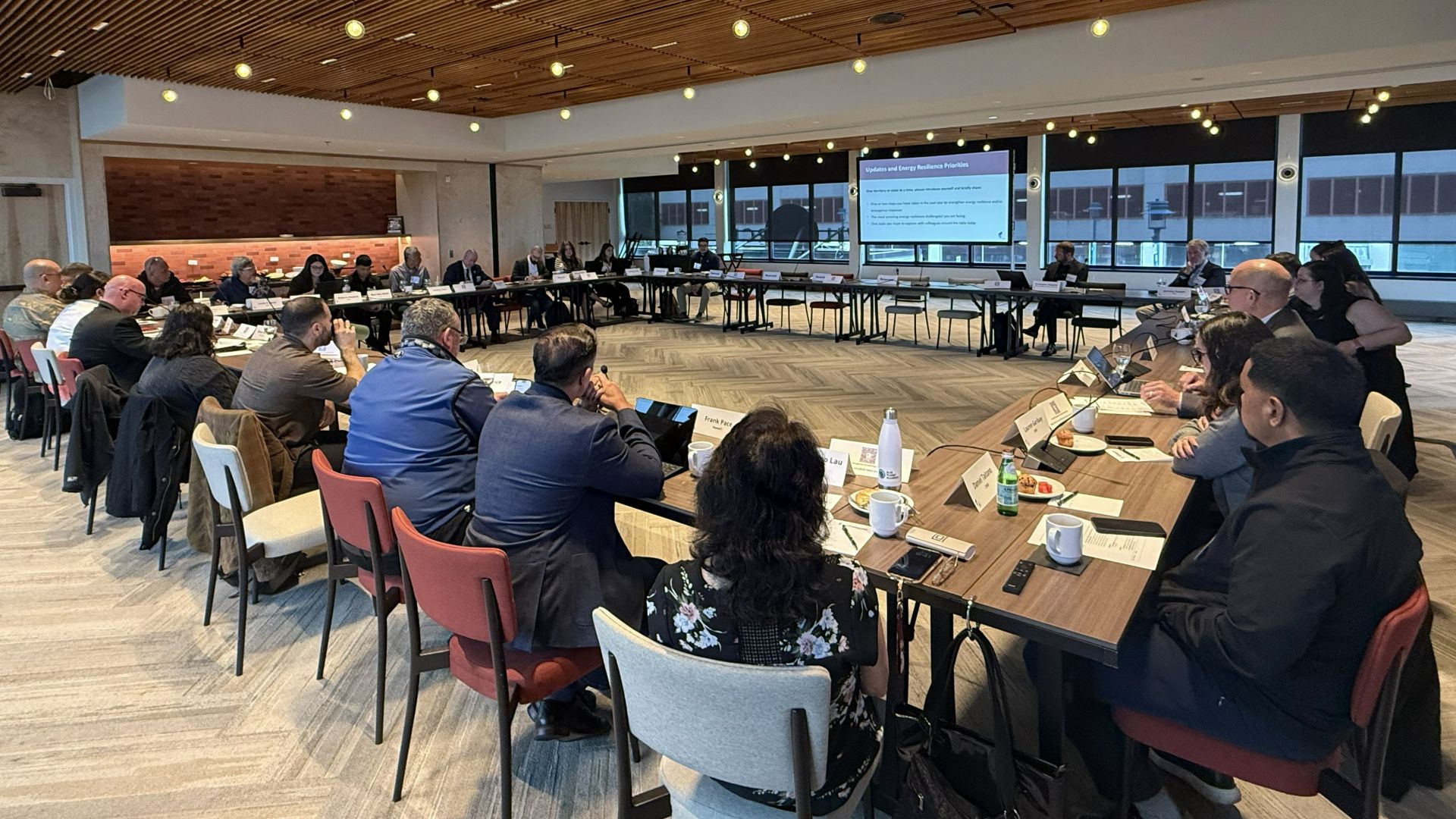
This week, the National Governors Association hosted a Protocol Master Policy Series session in partnership with Meridian International Center, a nonpartisan center for diplomacy based in Washington, D.C. The session was led by Natalie Jones, Executive Vice President at Meridian and former Deputy Chief of Protocol at the U.S. Department of State, where she worked with more than 100 foreign delegations and traveled abroad in support of presidential and vice-presidential engagements. Protocol officers and staff from governors’ offices across the country joined the call.
Protocol serves three roles: cultural bridge, relationship builder and logistical choreographer. Building on the previous session on diplomatic forms of address, this session focused on order of precedence, a foundational element of protocol that governs the diplomatic choreography of an event: who is seated where, who speaks first and last, who is introduced to whom, and how flags are arranged. Jones walked participants through a framework for determining precedence: identifying the host and guest of honor, categorizing officials into comparable subgroups, and applying established methodologies such as written hierarchies, date of establishment, seniority and alphabetical order. She emphasized that precedence reflects the rank of an office rather than a judgment about the individual who holds it, and that having a clear, defensible rationale is essential whenever rankings are contested or unclear. Participants were encouraged to consult the U.S. Department of State’s official Order of Precedence list, apply the position-of-honor rule (to the right, or the viewer’s left) consistently across seating, photos and printed materials, and default to alphabetical order when no other hierarchy applies.